
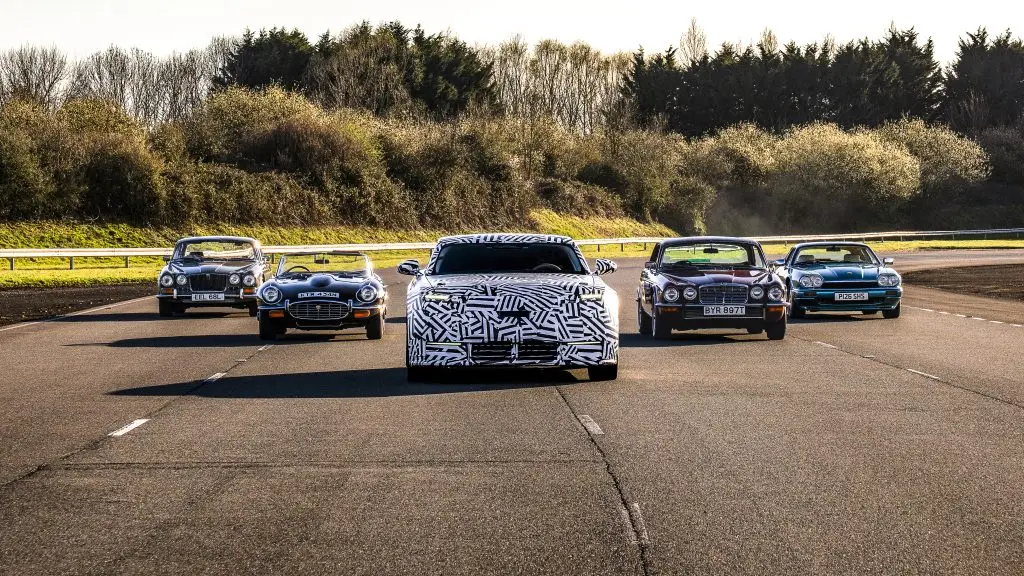
Jaguar looks back to move forward — and invites Jaguar Enthusiast Magazine along for the drive
A couple of weeks ago, I wrote about the marked shift in Jaguar’s communications around its new car. Since December, the narrative has changed completely. At last, Jaguar appears to have done what so many of us hoped: it has embraced its heritage again and begun sharing it with genuine pride.
For a time, it felt as though Jaguar had become almost embarrassed by its own longevity, hiding the brilliance of its past and, at moments, seeming reluctant to acknowledge it at all. That phase now appears to be over. The noise has quietened, the distractions have faded, and the engineers have stepped forward. Crucially, what they are now saying — and doing — is beginning to make sense.
Because Jaguar has a massive challenge to overcome.
It built its reputation on low-slung GT cars and elegant saloons — machines defined by long bonnets, intimate cabins and effortless performance. The world, however, has moved on, drifting upwards into SUVs, while compulsory electrification is now being forced upon all car makers, removing one of Jaguar’s defining traits: its engines. The question, then, is not simply how to replace that, but how to replace what those engines represented, the character, the theatre and that unmistakable sense of effortlessness and how to differentiate another EV into a truly aspirational example of luxury motoring.
Looking back to move forward
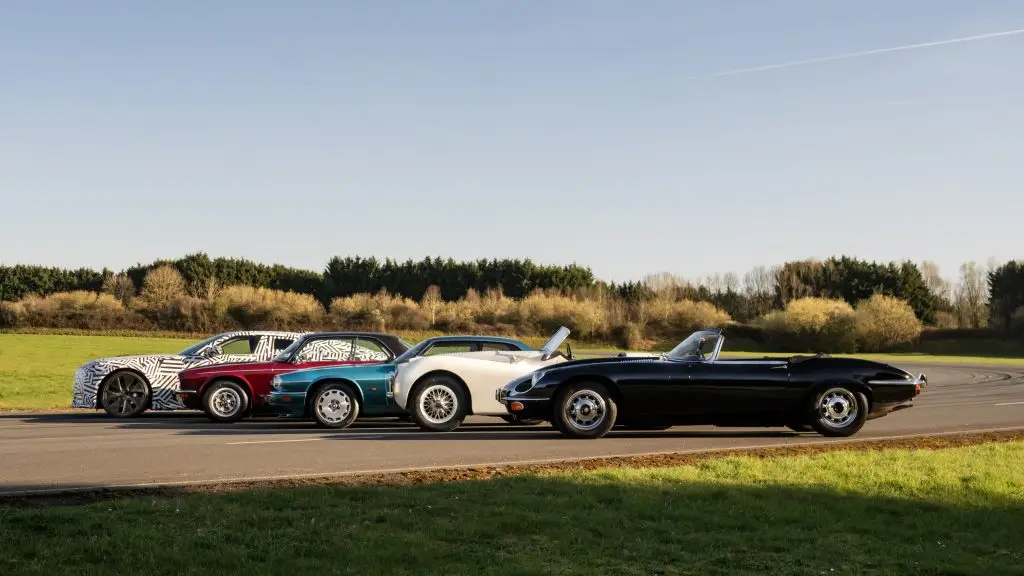
Jaguar’s answer has been to look backwards before moving forward. Rather than benchmarking rivals, its engineers returned to the cars that defined the marque, including the XK120, E-type, XJ and XJS, all drawn from the JLR Classic fleet and used as living reference points. The aim was simple: to understand what actually defines a Jaguar once you’re behind the wheel.
What emerged was not nostalgia, but clarity. Across those cars runs a consistent thread. A Jaguar has always been about proportion and position as much as performance: a compact, cocooning cabin; a long bonnet ahead; a low centre of gravity and a long wheelbase that deliver both stability and ride. Above all, it is about how performance is delivered, not aggressively, but with ease, depth and that ever-present sense of power in reserve.
Jaguar invited me to experience that same process, driving these historic cars in date order, just as they did in development, before getting behind the wheel of the new Jaguar GT (known internally as the X900), with those impressions fresh in mind to see if the translation of the Jaguar spirit of old into the modern world of EVs had been a success.
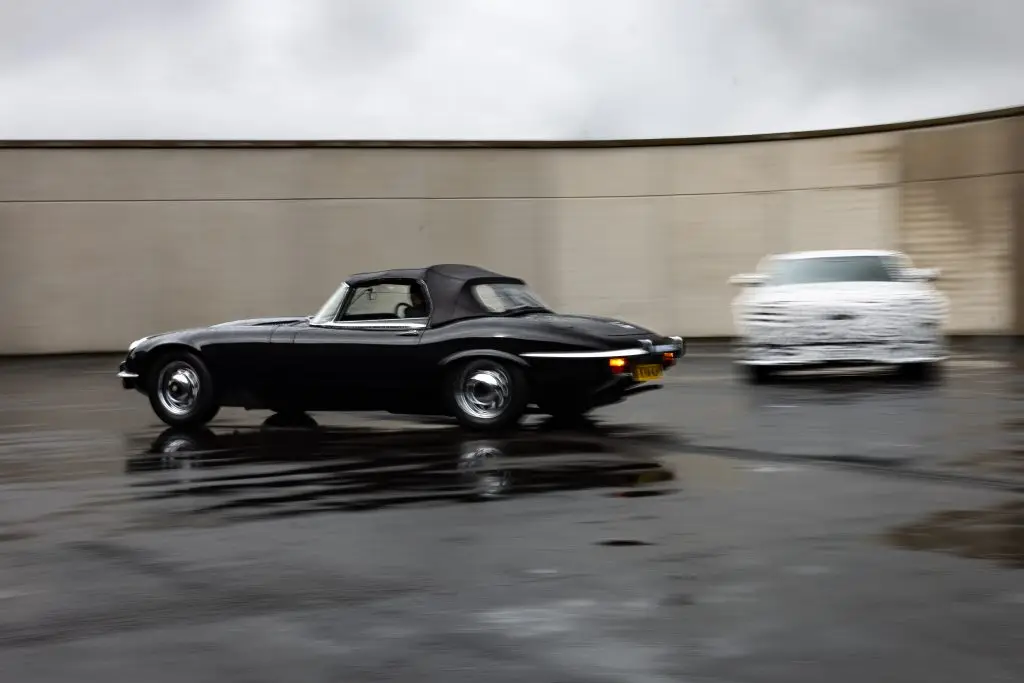
A day at Gaydon
After a week that had seen the wider motoring press pass through Gaydon, I arrived early on a Friday morning to a warm welcome from the JLR events team. After the usual round of security check-ins, I found myself once again deep inside the building, where Ken McConomy, Jaguar Enthusiast Magazine columnist and Head of Global PR for JLR, was waiting with a simple promise:
“You’re going to have fun today.”
I believed him.
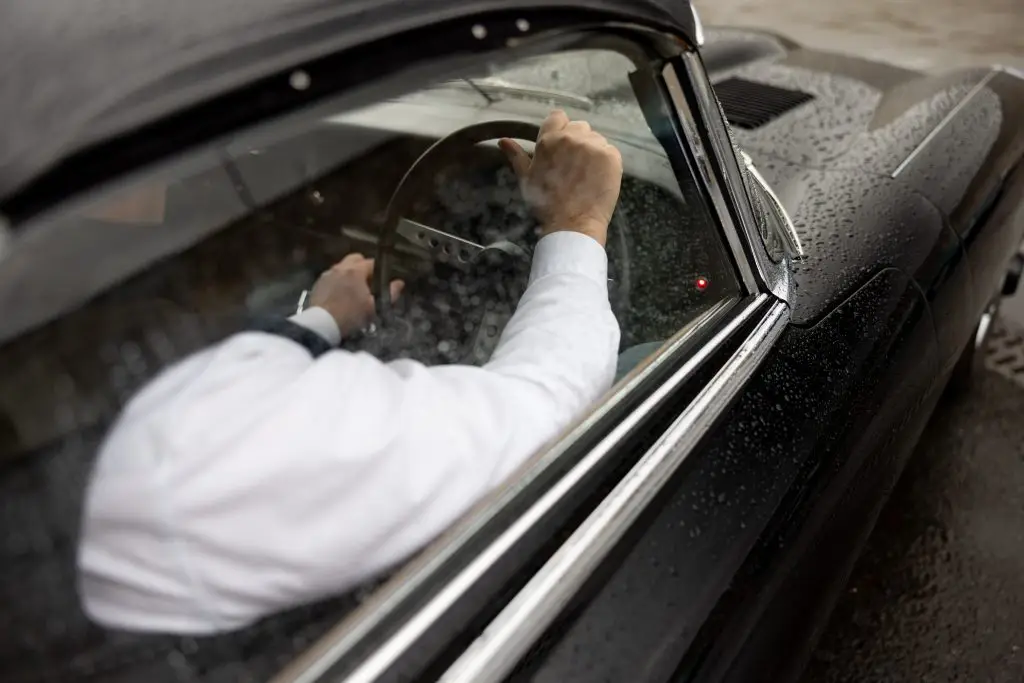
NDAs signed, phones surrendered, and cameras confiscated, we were ushered into the cinema room where we were shown a brief video and given some presentations by Ken and Joan Serra Tur, Vehicle Engineering Manager, who leaned heavily on the influence that the early SS1 saloon had created for the team in considering the new direction for Jaguar. Then we were guided downstairs into what Jaguar calls the ‘design garden’. Waiting there was an impressive line-up of historic Jaguars, the very cars that had shaped the thinking behind the new GT.
In truth, I felt I had a slight advantage. Thanks to our DRIVEN features and years spent around these cars, this wasn’t unfamiliar territory.
“You must get tired of driving these old things,” one modern car journalist remarked.
“It never gets old,” I replied. “The day an E-type doesn’t excite me is the day I stop doing this.”
I meant it, although I couldn’t help wondering whether the new Jaguar GT would deliver anything like the same feeling. Could a lifelong petrolhead really be won over by an electric car bristling with screens and software?
We were about to find out.

Relearning the Jaguar DNA
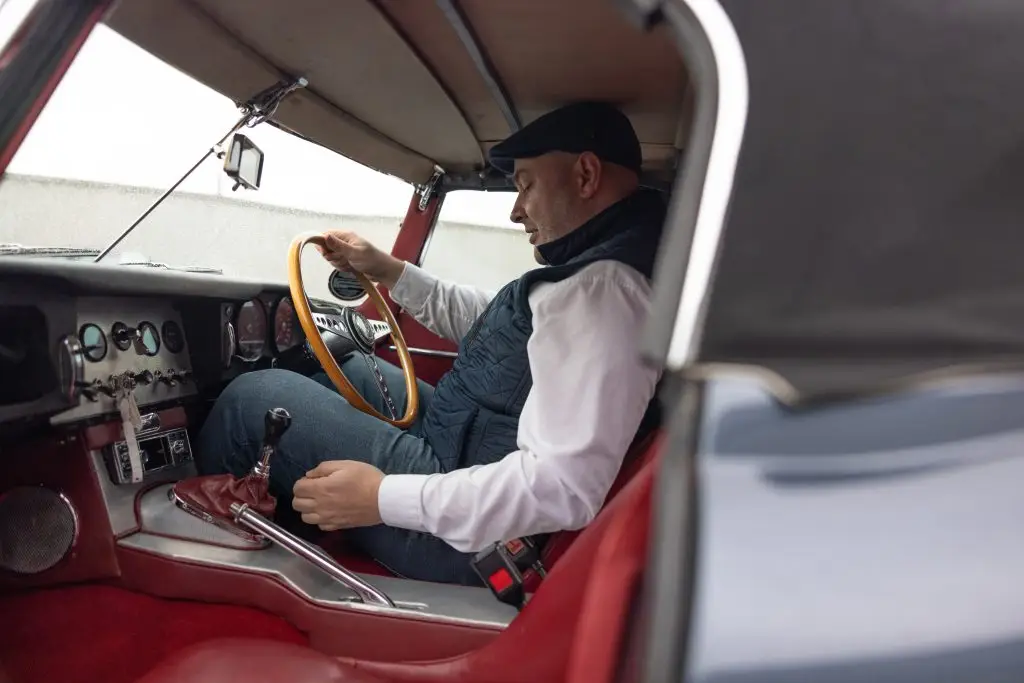
First up was a late Series 3 V12 E-type, a car I know well. Walking around it, I was reminded how these later cars — once overlooked — are finally getting their due. They represent the moment the E-type evolved from sports car to GT.
From the driver’s seat, the experience is immediate. You sit low, central, part of the machine, the car wrapping itself around you. The V12 is smooth, refined and deceptively capable; before long, the Smiths speedometer is nudging three figures with ease.
Next came a Series 1 XJ in deep green with matching leather — a car that takes that same character and adds refinement. It is calmer, more relaxed, yet no less capable, complete with its quirks: the umbrella-style handbrake and that delicate, large-diameter steering wheel. The cigar lighter had clearly been used extensively during the 1970s as well.
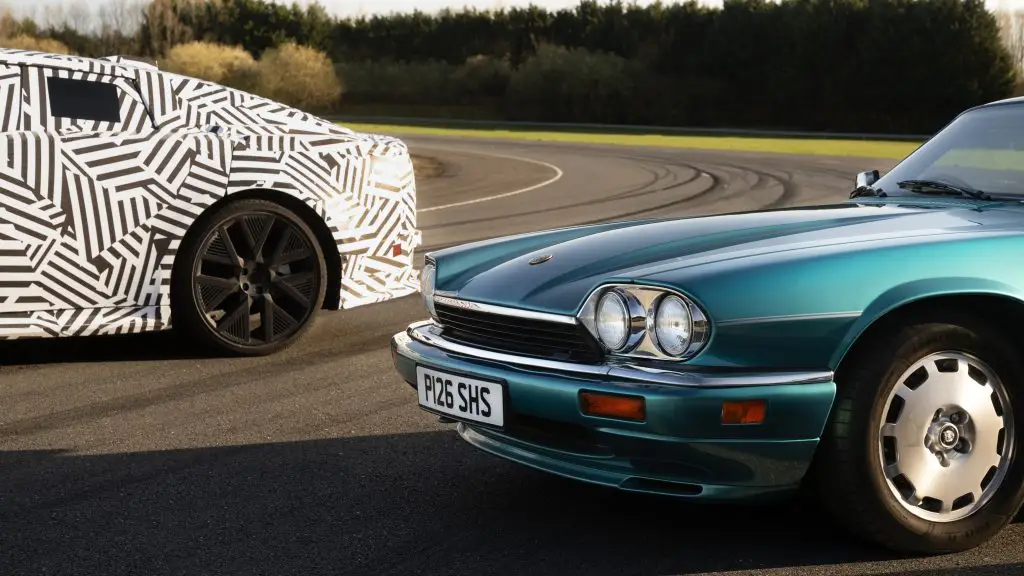
Even the XJS, controversial when new, tells the same story. A long-legged GT built for effortless pace and composure. Jaguar has never played safe, and its boldest cars have often been its most debated. The XJ-S may have shocked in 1975, but it endured for decades, helped return Jaguar to Le Mans and is now rightly recognised as an icon. The only difference, of course, was that when the XJ-S was launched in 1975, there was no such thing as ‘trial by social media’.
Then a lunch break before two more cars for me to try, an early flat-floor Series One E-type with its hard but rewarding-to-master Moss gearbox.
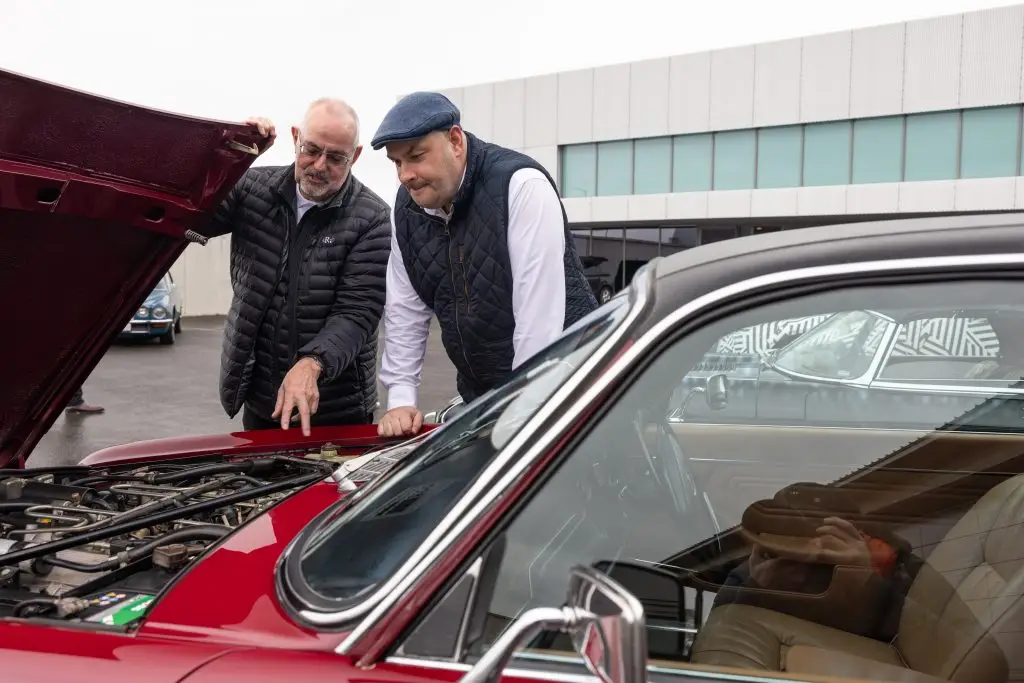
For the test drives, I jumped in the driver’s seat and proceeded out of the design garden, which is surrounded by concrete privacy walls and out onto the high-speed emissions circuit for two laps at speed, before the windy lanes of the various smaller roads that throw you test examples of different terrains from pot-holed B-roads to alpine passes, wet roundabouts and country A roads. .
With each car, the pattern became clearer: small cabin, long bonnet, low proportions, long wheelbase, and performance delivered with comfort and ease. That is what Jaguar has always been.
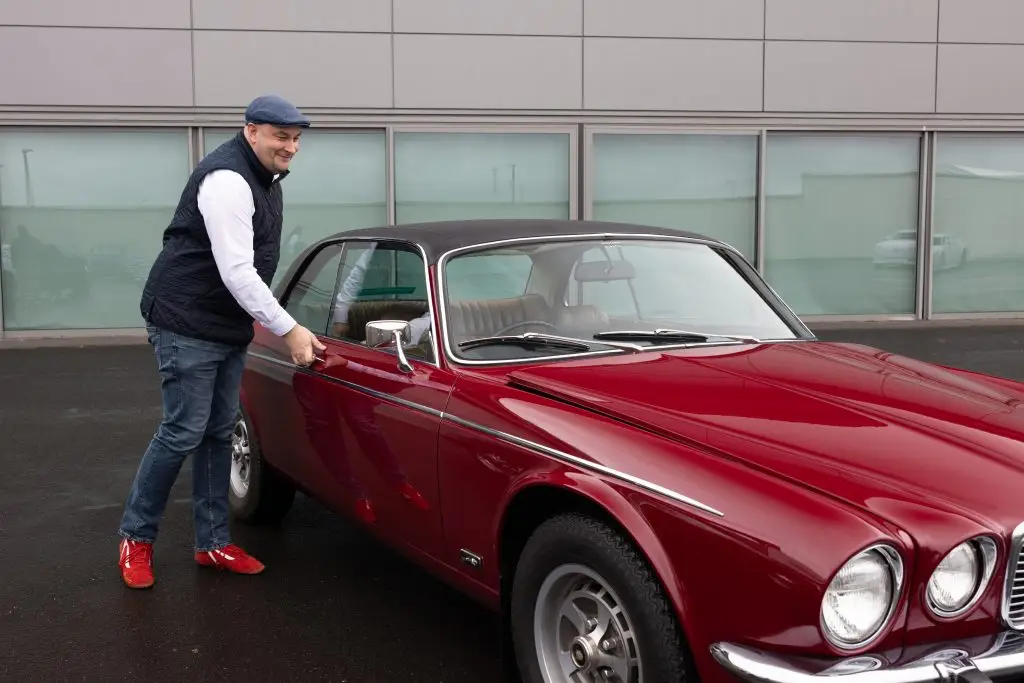
The benchmark: XJ-C
The final car before the main event was the one Jaguar’s engineers themselves had settled on as ‘peak Jaguar’: the 1973 V12 XJ-C.
In fairness, the XJ Coupé was probably best compared to the XJ Series One I had tried earlier. Throttle response was keener thanks to fuel injection, but you are reminded of the wonderful absorption of road imperfections these old Jaguars offered. Even by today’s standards, the ride quality is incredible, and of course, the high-walled tyres of the era help to cushion the blows felt in the E-types. In the corners, sure, it rolls and wallows a bit, but it is always in a communicative, controllable way; indeed, the XJ-C allows you to come on and off the throttle to control and correct a high-speed turn. Then, it all settles in for another surge of straight-line power. The XJ-C has a better, tighter-feeling suspension, and the V12 gives a sense of dignified power rather than aggressive performance, but as a package, it still has huge appeal even today.
You begin to understand exactly what Jaguar was trying to capture.
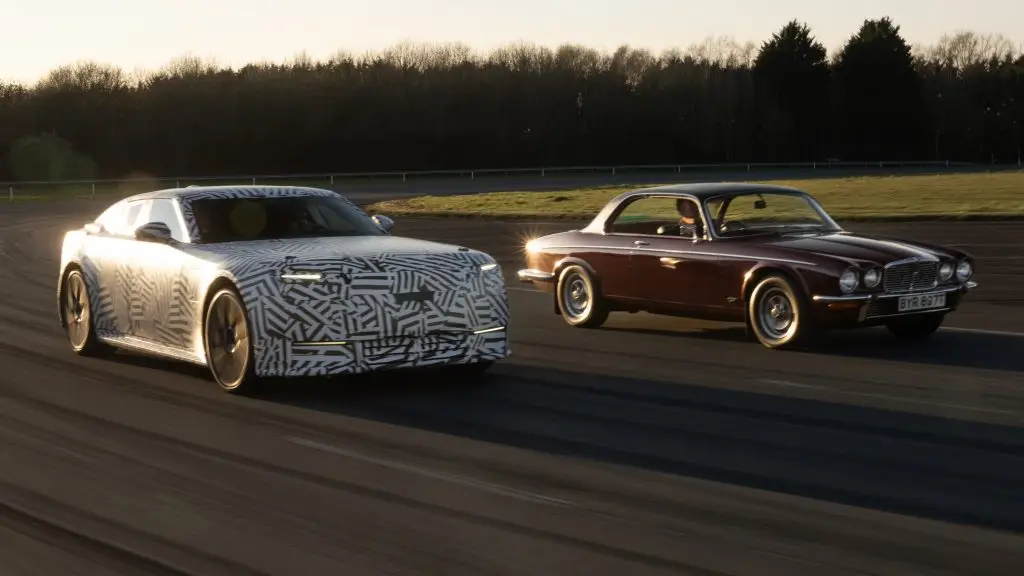
Driving the new Jaguar GT
Then it was time for my first drive of the most important Jaguar in a generation.
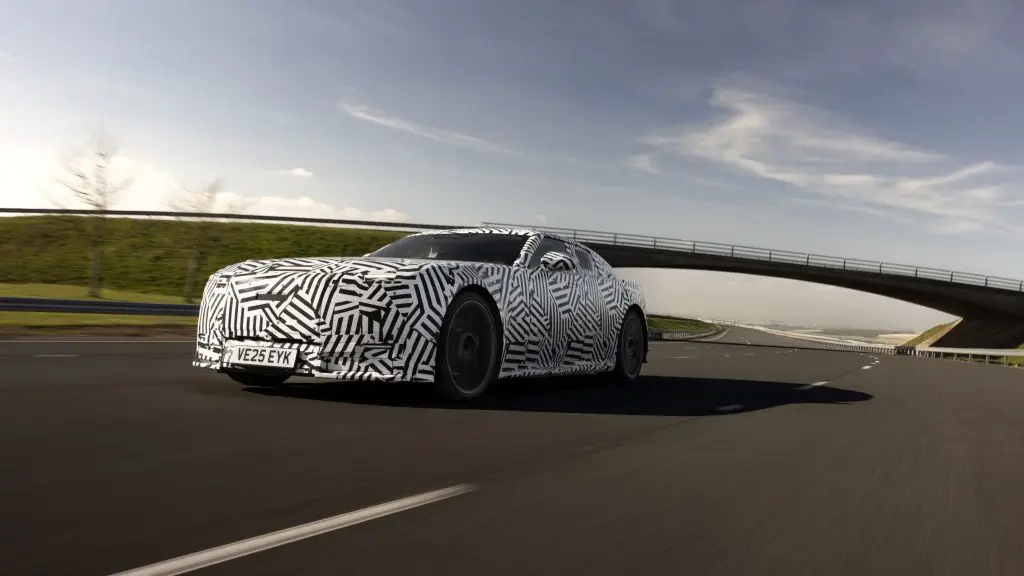
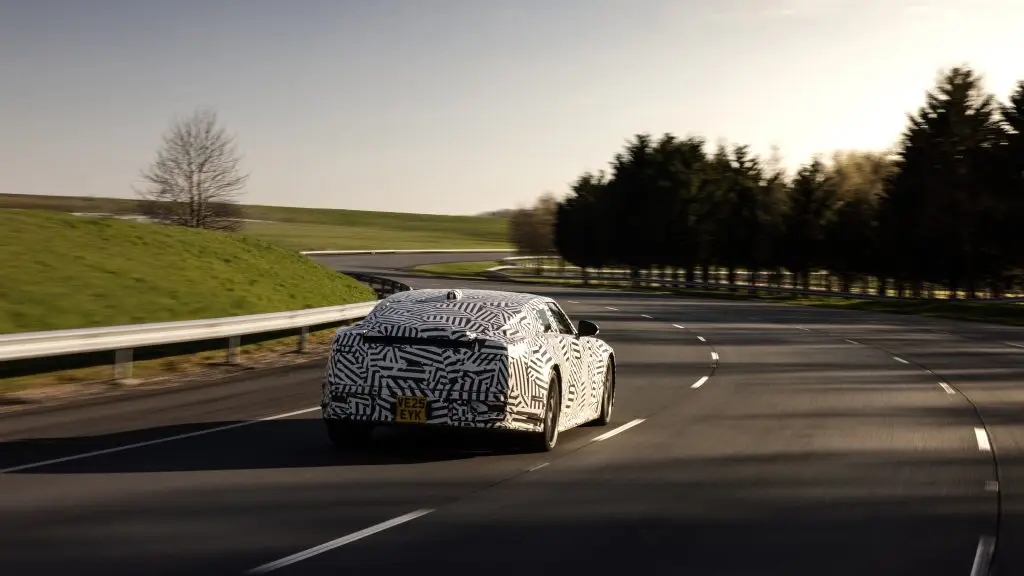
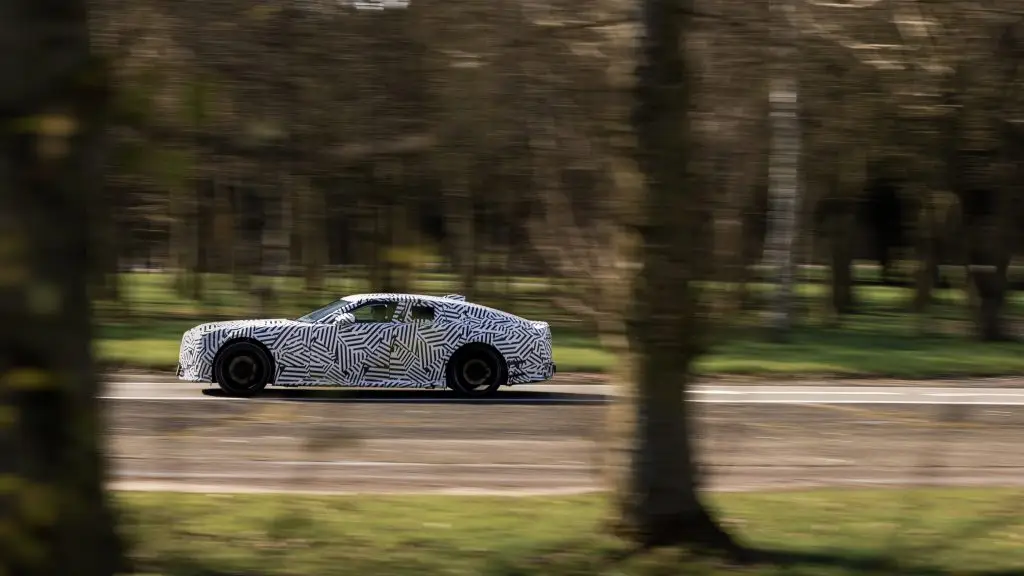
Against that backdrop of the XJ-C, the new four-door GT begins to make sense. On paper, it should not work. It is a vast machine, stretching to around 5.2 metres in length, a whole metre longer than the XJ-C. It is powered by a tri-motor electric drivetrain producing close to 1,000 horsepower. There is no engine note, no mechanical theatre in the traditional sense, and every reason to assume that this is a clean break from everything Jaguar has been before.
And yet, from the moment you sit in it, the familiar begins to surface. The proportions feel right. You are placed low in the car, rather than perched upon it, just 6cm above the centre of gravity. There is the cosseting, cuddling, cosy cabin, which is so, so Jaguar-like but with enough headroom for my 6ft 4 frame. The interior draws in around you rather than leaving space unused. The sills are up next to you, just like the XJ-S. Ahead, that long, sculpted bonnet provides a visual link not just to past Jaguars, but to the way they positioned their drivers within the car. It does not feel like a generic modern EV interior; it feels deliberate, considered and, above all, recognisably Jaguar.
The interior was still cloaked in camouflaging cloths and as this was a prototype, screens flashed telemetry data and numbers at me. I have seen the interior on a mock-up model, but I can’t tell you about it – yet.
The windscreen feels close for a modern car and the cosy cabin with relatively small doors won’t suit everyone – but visibility is good. Then, I selected D for drive on the column-mounted mode selector, and we are off.
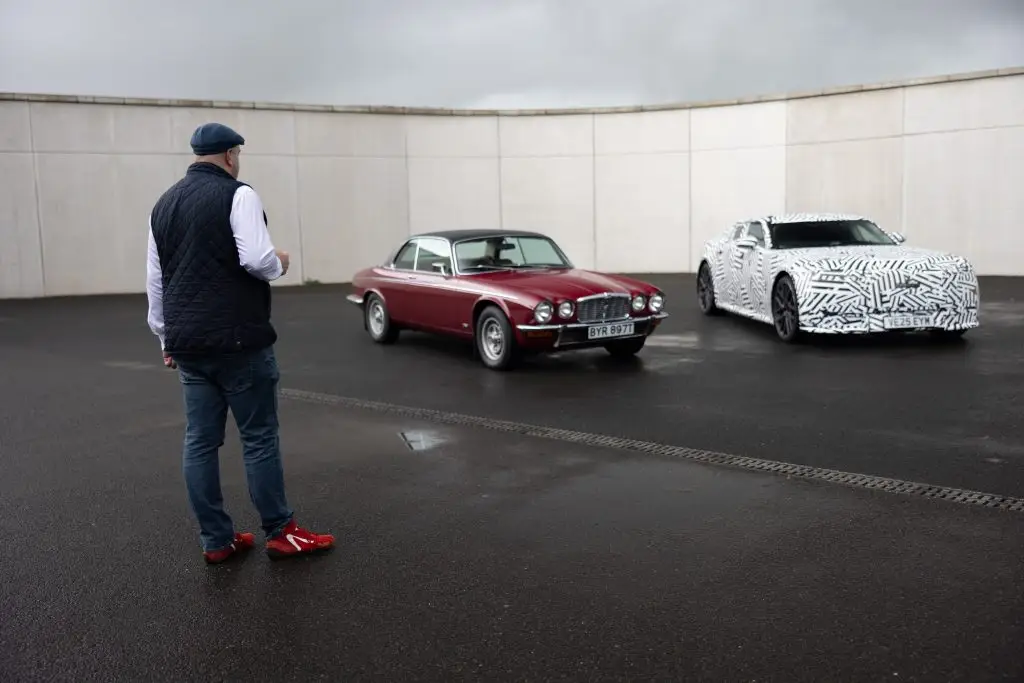
The impression of it being something out of the ordinary deepens the moment the car begins to move. There is no aggressive lurch or artificial sense of urgency, but instead a measured, progressive step-off that feels entirely in keeping with the marque’s traditional character. Only when you ask for more does the performance reveal itself, and when it does, it arrives not as a sudden spike but as a seamless, relentless surge. The acceleration is immense, yet it never feels frantic or overwrought; instead, it builds with a smoothness and inevitability that recalls the very best Jaguars of the past, translated into a new and rather different language.
The steering has a lovely, communicative weight to it, and it steers quickly and deliberately, all adding to the illusion that this car feels much smaller than it is. It feels – dare I say – rather like a sports car!
Underneath, we are riding on massive, but very low-profile 23-inch wheels with all-weather tyres, but testament to the suspension technology is the fact that it has the same suppleness I described with the high-walled XJ-C tyres. This is down to the Dynamic air suspension, which works alongside twin-valve active dampers to finesse ride comfort. Composure is never compromised, and even when pushing on, this car gives you utmost confidence and reassurance that all is in check, even when throwing it sideways around the slimy bends of the Gaydon test track.
Intelligent torque vectoring and tri-motor technology deliver more than 1,000 PS and over 1,300 Nm of torque, putting power where and when it’s needed, with embedded software developed from Jaguar’s Formula E success that responds in as little as one millisecond for an engaging and rewarding drive. You start to understand why Jaguar is the most successful team in Formula E history and how that is instructing things on the road cars.

What is most striking, however, is how quickly the car feels familiar. Despite its minimalist, screen-led interior and its thoroughly modern execution, within twenty minutes it felt less like a new car and more like one I had owned for years. Everything fell naturally to hand, the driving position, the responses and, most tellingly, the way the car rode and flowed down the road, all speaking a language that any Jaguar enthusiast would recognise instinctively. It is a rare quality. Many modern cars feel like machines you have to learn, systems you must adapt to; this one feels like a car that already understands you.
That sense of familiarity is rooted not in nostalgia, but in the way the car has been engineered around the same core principles that defined its predecessors. The ride has the suppleness and fluency long associated with Jaguar, and in particular, the XJC, which the team settled on as the model for recreating the dynamics. The steering carries a natural weight and consistency, and the entire experience is underpinned by a composure that prioritises the driver’s comfort as much as the machine’s capability. It is, in the best possible sense, a car designed with the human Jaguar enthusiast behind the wheel in mind, rather than one engineered solely in pursuit of lap times or headline figures. I have no doubt that some might find the ride too ‘floaty’ as a result, especially if they have been brought up on German products, but its subtle compliance is what makes this a Jaguar experience.
And yet, when called upon, the performance figures it delivers already are nothing short of extraordinary. Delivered in near silence, with a smoothness that borders on the surreal, the car gathers speed with a kind of nonchalant authority that feels entirely in keeping with Jaguar’s long-held philosophy of power in reserve. There is no need to shout about what it can do; it simply does it, and does it with a degree of effortlessness that few cars of any type can match.
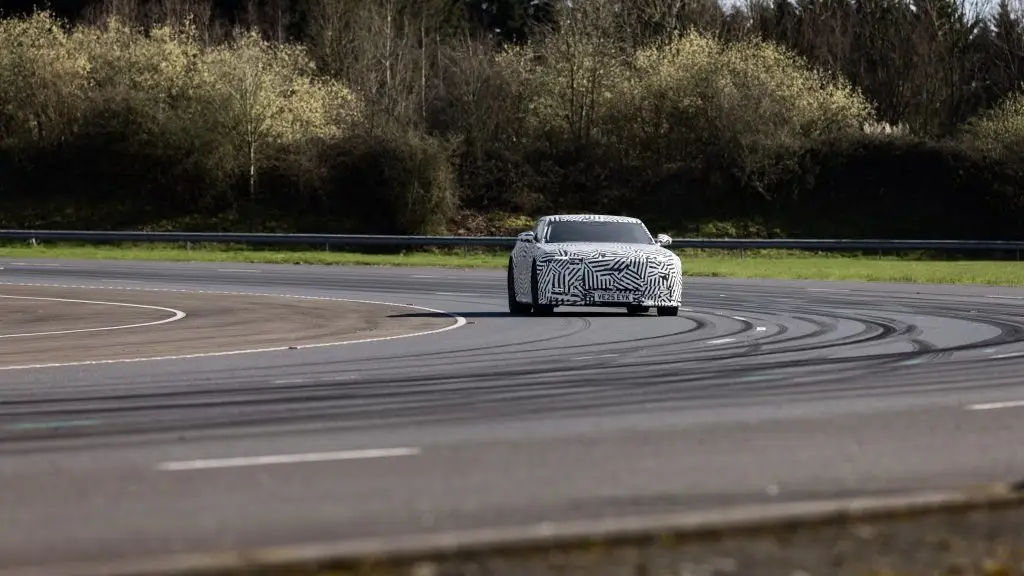
Other EVs are fast as well and I was always impressed with the IPACE. But, this is on a whole other level entirely. Not only is the acceleration mind-bendingly fast, but the car also lets you use it all with reassurance, confidence, and safety. Furthermore, when the inevitable high speed is reached, you feel completely in control, comfortable because of the car’s soft handling dynamics and able to enjoy eating up the miles as a true Jaguar GT should. As the video shows, I was able to do a piece to camera with no shouting, intercoms, helmet or safety suits at 150 miles per hour. Quite incredible.
Yes, I know you are going to be travelling no faster than 70mph in the UK unless you head to an autobahn on holiday, but testing it at the extremes of high speed, I hope, demonstrates how laws of physics define it as good at delivering pace with grace.
There will, inevitably, be those who question it. Jaguar has been here before. The XJS was criticised for not being an E-type, just as the XJ once redefined expectations of what a luxury saloon could be. In both cases, time has been kinder than the initial opinion. Jaguar has always been at its most compelling when it has been prepared to take risks, to push forward rather than retreat into the familiar.
This new GT is very much in that tradition. It is ambitious, unapologetic and, in many ways, unconventional. But it is also something more significant than that. It is a car that does not merely reference Jaguar’s past, but understands it — and, crucially, translates it into a form that feels relevant now.
For all the uncertainty that has surrounded the brand in recent years, this is the first time in a long while that its direction feels coherent. Because this car feels right. Not because it looks backwards, but because it captures the essence of what Jaguar has always been about and carries it forward with conviction.
Driven in isolation, it is an impressive piece of engineering. Driven by an understanding of what Jaguar has been, it becomes something more meaningful. It becomes clear that this is not simply another electric GT, but a genuinely important moment in the marque’s history.
Jaguar’s engineers tell me they are nearly there, and the remaining work is fine-tuning the battery management software and making other tweaks to on-board systems. I can’t draw conclusions on range or charging until that is complete. Our visit included a first glimpse at how the production car looks without all the camouflage on and an interior demonstrator, but we can’t tell you about those yet. The final launch is expected in September 2026. For me, having driven it, there is no ambiguity at all that this is a Jaguar in the proper sense.
And not just in principle, but in practice, in the way it rides, the way it responds, and the way it delivers its performance with such quiet, assured authority. It is innovative, certainly, and bold in a way that will not please everyone. There will be those who say a real Jagar cannot be electric, but we’ve heard it all before. It wasn’t a ‘proper’ Jaguar when they ditched the straight-six for a V8 or when they introduced diesels – except it turned out that they were proper Jags, weren’t they?
This is an innovative moment in automotive history that will be derided by some for its bold, unapologetic bravery, yet celebrated by others for years to come for the fresh ground it broke.
Now, can we all just get on with putting it on sale already? I want another test drive!



10 Responses
So Jaguar have got the car right, after all. I’m relieved after the daft and bizarre advertising campaign, and ditching of brand identity and legacy. This was a major mistake and alienated a lot of Jaguar fans and drivers.
Among my Jaguar owning friends I was alone in seeing the point of the change in Jaguar. I felt there was no way in which they could compete with the Chinese in the mass market and the move upmarket returns Jaguar to the status of aspirational vehicles which was the case in its heyday. I could never afford a new one! Even the early advertising certainly got people talking about the marque. Finally the reference to the XJ C makes me happy, always my favourite!
Among my Jaguar owning friends I was alone in seeing the point of the change in Jaguar. I felt there was no way in which they could compete with the Chinese in the mass market and the move upmarket returns Jaguar to the status of aspirational vehicles which was the case in its heyday. I could never afford a new one! Even the early advertising certainly got people talking about the marque. Finally the reference to the XJ C makes me happy, always my favourite. I believe it was Sir William’s too!
lets really hope their is sufficient market place for this car, to keep a production line ticking over, for jaguar’s and all our sake .
nigel webb
All a little too late!
I was sure from the beginning that electric was the way to go, this article confirms that they are right. The current war in Iran shows how much oil controls our lives and stopping burning it for transport is the right thing to do. It’s a shame the car wasn’t being launched now as it would have a good reception. If this war continues more car makers will rethink decisions to continue with ICE because it could be a serious mistake.
How is it possible that a company with such a rich heritage as JLR is pursuing two such diametrically opposed strategies?
Do people at JLR not talk to one another? Has no one been keeping an eye on the (European!) competition – such as BMW?
Whilst Land Rover is racking up successes and celebrating victories, Jaguar is alienating its fan base.
Although, in my opinion, Jaguar has more icons than Land Rover. Instead of making use of these icons, they’ve simply consigned the legendary sound of the V8 to the museum. Was that all that English tradition and marketing were capable of achieving? We – in Austria – still listen to Mozart today. And every year on New Year’s Eve, we dance the Blue Danube waltz. It works; it fits very well in the 21st century.
What can Jaguar do? It would be immensely important to retain and support its loyal fans and customers. Anyone still driving a Jaguar today belongs to the ‘hardcore’ clientele. But now it is high time (!!) to support this clientele with revived service offerings for ‘Classic Cars & Co’. Prices must also be adjusted downwards to achieve this.
In a second step, consideration should be given to technology, see BMW > technological openness. This point also has geopolitical relevance, moving away from dependence on China’s ‘battery monopoly’.
Greetings from Austria, Jörg Längle (XJ 6 and Freelander)
I love my Jaguar and previous Jags I have owned, however I was disappointed with the initial advertising of the new prototype. I have not lost hope because there is nothing like the feeling you have behind the wheel. I am a petrol gal and do have misgivings about the EV. A choice would be lovely! Thoroughly enjoyed this video and the article was very well done. Thank you, and I look forward to the future of Jaguar!
Everything said above is true. However, it omits one of the MOST significant factors; a Jaguar without it’s “ripping canvas” growl has lost half of its very Jaguarness!! If I need “quiet”, I will visit the Karoo, a forest, or my living room.
I own a number of Jaguars, including both saloons and sports cars, spanning the 50’s to the 70’s, and they all induce a grin factor when the throttle is energetically operated!
I also sit in the “mancave/garage” with a glass of wine and enjoy their stunning beauty, plus how fast they’re going, while parked.
I have no doubt that Jaguar’s engineers have done a fantastic job in the power delivery/handling/ride/comfort departments. But I live in trepidation of the final reveal of the appearance of the car. Perhaps the camouflage has deceived me, but I rather doubt that the car will have anything of the elegance of the Jaguars we love. That horrible blunt nose might be terribly fashionable among the current crop of Chelsea Tractors (and even Rolls-Royce), but to me it just looks ghastly. Please prove me wrong Jaguar, and produce another masterpiece of elegance!