
Opinion piece
There was a time when you instinctively knew where each Jaguar Land Rover product belonged. Jaguars were lithe sporting saloons, elegant sports cars and graceful grand tourers. Defenders were capable off-roaders. Range Rovers occupied the luxurious end of the SUV market, while Discovery was the go-anywhere family vehicle.
Over the past few years, JLR has gone to great lengths to separate its brands more clearly than ever before. Land Rover has quietly faded into the background as Range Rover, Defender and Discovery have become standalone marques, each with its own identity, audience and design language. Jaguar, meanwhile, as we have documented within Jaguar Enthusiast Magazine, has embarked on perhaps the most radical reinvention in its history.
The message has been simple. Four brands. Four distinct personalities.
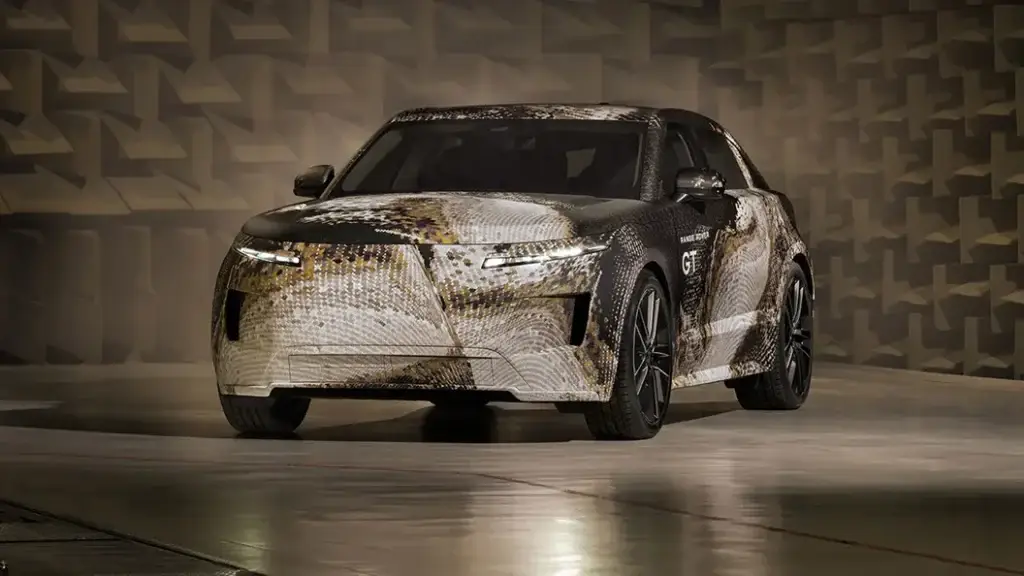
Which is why the unveiling of the new vehicle to carry the Range Rover brand as a low-slung, sleek GT raises such an intriguing question.
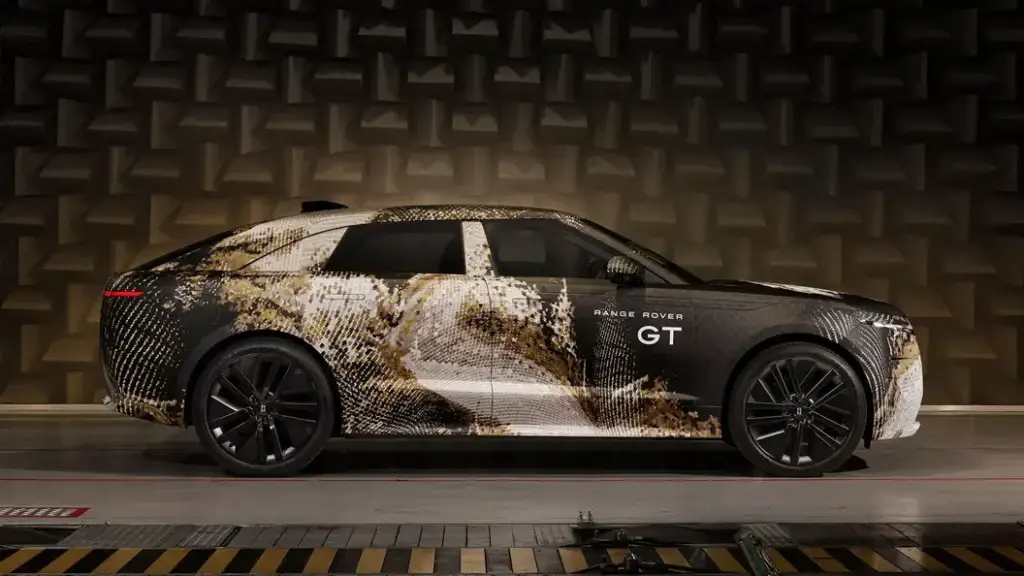
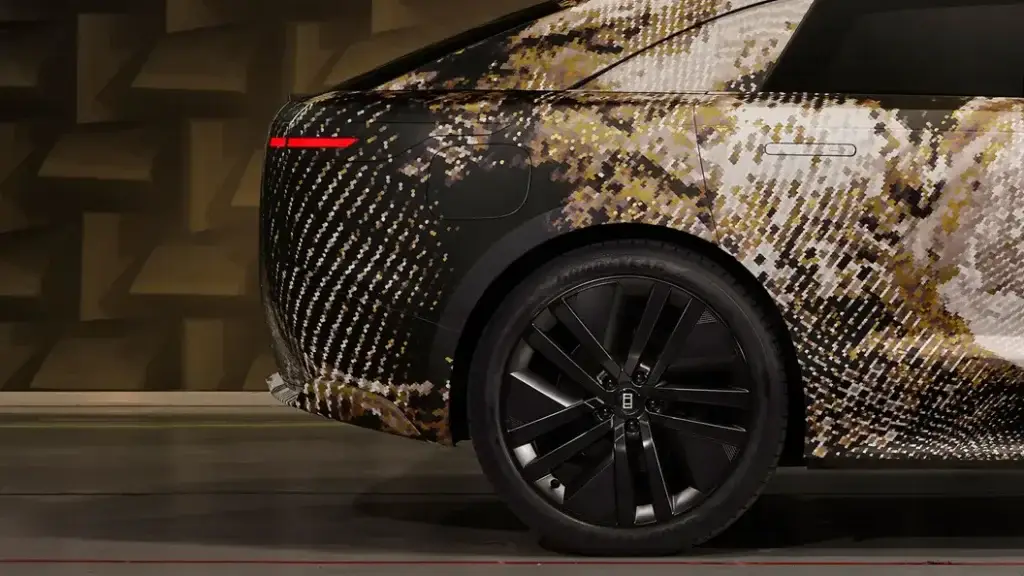
It looks like an attractive car underneath the ‘designer’ camouflage and in the face of the constant successful challenges to the norm from the Chinese manufacturers, who seem to be winning hands down on the sales front at present, it makes a lot of sense. But for the first time since Jaguar’s dramatic rebirth was announced, it feels as though two members of the JLR family may be competing for the same piece of road.
Having seen the production Jaguar GT and driven the Type 01 prototype at Gaydon, I couldn’t ignore the similarities when the first official images of the Range Rover GT appeared.
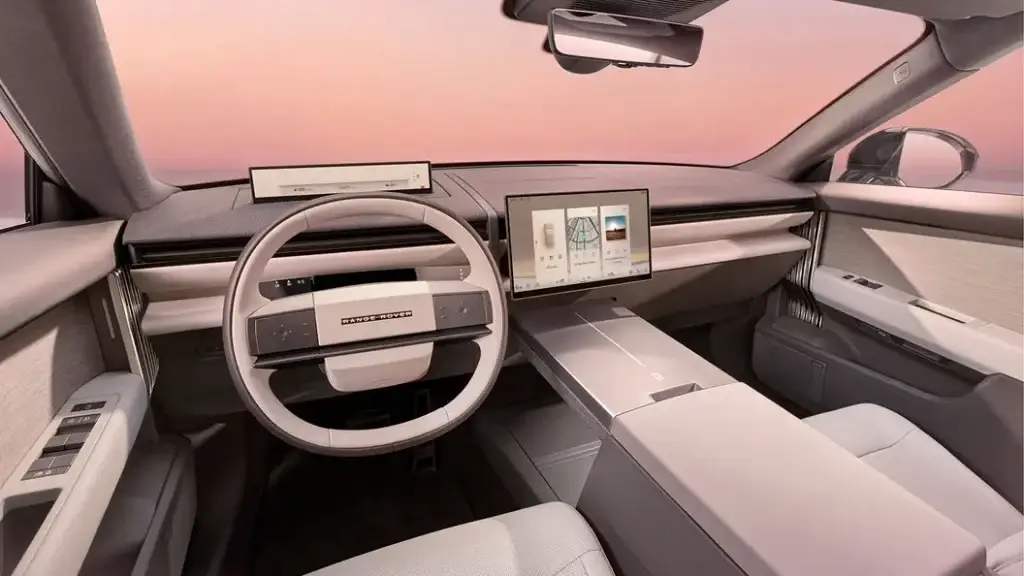
The long bonnet. The sweeping fastback profile. The low roofline. The broad shoulders. The uncluttered surfaces. Inside, the same philosophy of concealed technology and pared-back luxury and that central spine that runs down the middle of the cabin all appear to underpin both cars. Even the proportions tell a remarkably similar story.
Of course, similarities between cars from the same automotive group are nothing new. Shared platforms, components and design philosophies have existed for decades. So is this just the same as we had with the Range Rover Velar and F-PACE? They shared not only the same components but were also built on the same line. However, sit in those two cars to compare, and you’ll notice the difference very quickly.
The Velar is a car you sit up higher in, with a commanding view and the unmistakable sense that you are driving an off-road vehicle. On the road, it handles and feels completely different from the F-PACE. The Jaguar is far more capable in the handling stakes and, with a much lower seating position, feels more car-like and fundamentally sporty. Drive them back-to-back, and despite the architecture and engines being the same, the result is completely different.
What feels different here than the comparison between F-PACE and Velar is that Jaguar has spent the past two years convincing the world that Type 01 represents the future of the brand and that it will be a ‘copy of nothing’ to provide a unique experience. Jaguar didn’t just update a few models; it has attempted to reinvent itself from first principles – except it now appears that another brand within the same company has arrived with a car that occupies remarkably similar territory. That is what makes the Range Rover GT so fascinating and confusing in equal measure in these early stages.
JLR tell us that, underneath, these two cars are built for different purposes. The Range Rover GT sits on JLR’s new EMA architecture and has been conceived as an electric-first model, with hybrid versions expected to follow. Incidentally, that is an important point, as the penny now drops on where those rumours came from that were apparently “leaked” from within JLR, suggesting that there were Type 01 Jaguars running around with combustion engines in them – they may simply have been Range Rover GT development cars instead.
JLR says that the Range Rover remains, fundamentally, a Range Rover, meaning buyers will still expect genuine all-terrain capability and the combination of exceptional refinement and the ability to venture well beyond the tarmac should the need arise.
Jaguar’s Type 01 exists solely as an electric luxury GT with superior road performance and power and forms the foundation upon which the reborn Jaguar brand will be built.
All makes sense, except: will the buying public really pick up on that nuance? After investing so heavily in telling the world that Type 01 is unlike anything else, the last thing the brand needs is for people to look at another JLR product and ask, “Haven’t I seen something very similar already?”
History reminds us that competing products within the same group can blur brand identities rather than strengthen them. British Leyland provides the obvious example, although today’s market is a very different place.
Grand touring has been part of Jaguar’s DNA since the XK120 evolved into the XK150 through to the Series 3 V12 E-type, XJ Coupé, XJS and XK8. Elegant long-distance performance has always been one of Jaguar’s defining characteristics.
Range Rover, by contrast, built its reputation on something entirely different and has become one of the world’s most desirable luxury marques, commanding waiting lists, extraordinary profit margins and a customer base that stretches far beyond traditional SUV buyers. Today, there is little doubt which badge carries the commercial weight. Range Rover has become JLR’s powerhouse, and this new car reflects exactly that position.
So whilst it does make commercial sense to do this, the question is whether that leaves Jaguar with enough space to establish its own identity. I will withhold full judgement until we have had an opportunity to explore the two cars side-by-side to understand the differences, as we did with F-PACE and Velar. What differentiates these two new GT models needs to be as obvious and compelling because Jaguar is still re-introducing itself to the world, and while its first chapter has barely begun, yet another JLR brand has now entered broadly the same conversation. Type 01 now finds itself sharing the spotlight with another remarkably elegant GT, one that just happens to wear a Range Rover badge, so no longer will it have the conversation entirely to itself.


6 Responses
The truth of the matter is that JLR believe that from a sales and marketing point of view a Range Rover GT is a better proposition than a Jaguar GT, given that they appear to be remarkably similar vehicles. It seems to make little commercial sense to sell such vehicles side by side so I really do question whether the Jaguar GT will see the light of day. JLR probably think they can sell more Range Rover GT’s because the brand is seen as a better commodity in a global market than Jaguar unfortunately. I’ve said it before and I will say it again that despite our learned editor’s eulogies about the new Jaguar, it is within reach of the very wealthy only and so far from the original concept of value for money which Sir William espoused. Again the truth of the matter is that for many years, Jaguar has not made a profit for whatever reason but Range Rover has ( despite patchy quality control and reliability ) so the new head of Tata, a person with a strong financial background, will have to decide on the commercial realities as far as the future of JLR is concerned with or without Jaguar. Like any company, they need to be making a profit in what they sell.
This doesn’t bode at all well. The similarities between this and the camouflaged Type 01 are very strong. And why give a non-camouflaged picture of the Range Rover when the Type 01 is still – still – not revealed? There can only be 2 reasons to hold back the Type 01 this long past its expected launch date; either the car is not ready, or the market isn’t. Whichever way isn’t good news for Jaguar.
When I first saw this side-on picture I thought the car had been recovered as a burnt-out joyrider’s wreck. Oh, it’s a snake. I hope, but rather doubt, that someone at JLR has a long memory and my sense of humour in using the image as a reference to the snake joke from season 2 of The Sopranos. Inappropriate to repeat here, but for me that joke sums up JLR’s attitude to Jaguar.
It’s a real worry all round ! I’ve been debating what comes after my XF. To see Jaguar further undermined by JLR, with Type 01 still under camouflage and still not actually launched while this freak is neither, is devastating.
Where the JEC goes from here will be a major ‘discussion’ point at our September Club AGM at JLR Classic. I sure hope the Board has a plan for once.
And also – for once – reveal the plan 🙂
Perhaps, having said that Jaguar will only produce electric vehicles, rather than swallow their words JLR have decided that the design is “so good “ that they can make a petrol/diesel version to “complement “ the electric Jaguar model??
I have a Range Rover and love it for all it does, and it does it in so much comfort. The model that I have happily carries 8 sacks of sheep feed over rough ground or highway. I am not so certain that this new Range Rover GT would have the same load capacity for us who live in the country.