

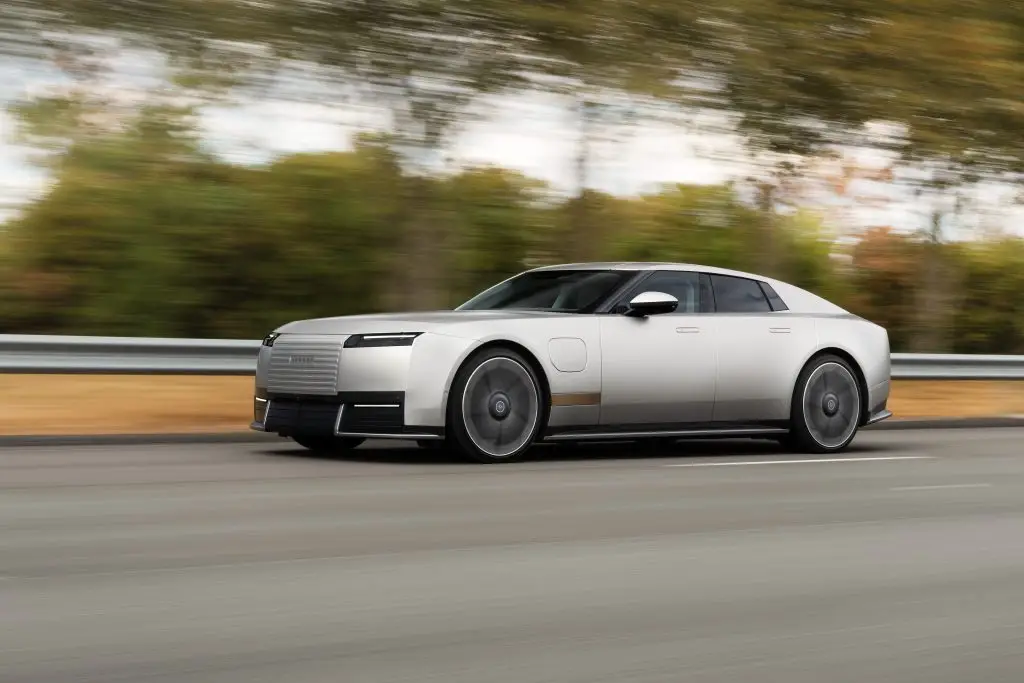
From the first pink concept at Gaydon to a camouflaged drive alongside the cars that inspired it, Wayne Scott, Jaguar Enthusiast Magazine editor, has followed Jaguar’s reinvention up close. Now, with Type 01 finally revealed, the details tell a more interesting story than the arguments that preceded it.
When I first saw the Type 00 concept car at Gaydon in November 2024, I never imagined that, looking at something so radical, I’d spend so much time exploring its connections to the beloved Jaguars of old.
That first social media film, with its extravagantly dressed characters and otherworldly setting, had encouraged people who had barely considered Jaguar for years to become deeply concerned about its future. Some debate was worthwhile; some optimistic, some never progressing beyond small-minded politics.
Our approach in Jaguar Enthusiast Magazine was to look behind the endless ill-informed noise, examine why Jaguar believed such fundamental change was necessary and discover whether the car could justify all that upheaval of the past couple of years.
A reminder of how we got here
The Miami Art Week unveiling in December 2024 introduced Miami Pink and London Blue versions of Type 00. An invitation to JLR Classic brought another viewing among Jaguar’s “friends and advocates”, while further colours and appearances followed. By late 2025, London Red was appearing alongside an SS Jaguar outside The Chancery Rosewood in Mayfair, celebrating ninety years of the name.
Late that year, a passenger ride in the camouflaged X900 prototype at Gaydon finally moved our discussion from what Jaguar was saying to what its engineers were creating. December then brought a poignant visit to Lode Lane, Solihull: as the final F-PACE marked the end of internal-combustion production, prototypes of its electric future were coming through the factory. Seeing both together made the change feel very real.
In early 2026, I drove the prototype myself, after sampling the heritage cars used to investigate Jaguar’s character. The XJ Coupé made most sense to me, as it had to the engineers: comfortable, composed and carrying considerable reserves beneath its relaxed manner. Stepping from the V12 into the electric prototype made the connection surprisingly clear.
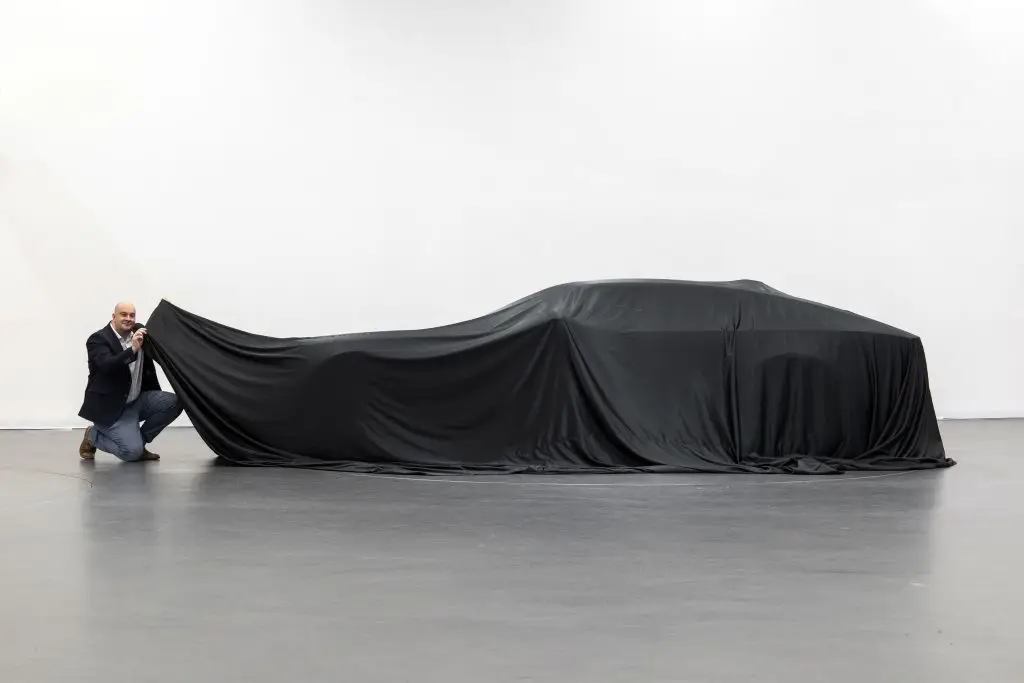
There were further glimpses, including a production design beneath a silk cloth that I could not discuss. Alongside our visits, prototypes faced winter testing in Arjeplog, Sweden, and extremes elsewhere. We learned the Type 01 name, saw the interior revealed and returned to Gaydon for a final private viewing of the production launch car.
Jaguar’s explanation had changed too, with unmistakable back-pedalling towards cars, engineering and heritage. I welcomed it, although my interviews confirmed that the engineers’ study of older Jaguars long preceded this change in emphasis. Now I wanted everybody else to share what we had experienced.
The launch: A social media countdown
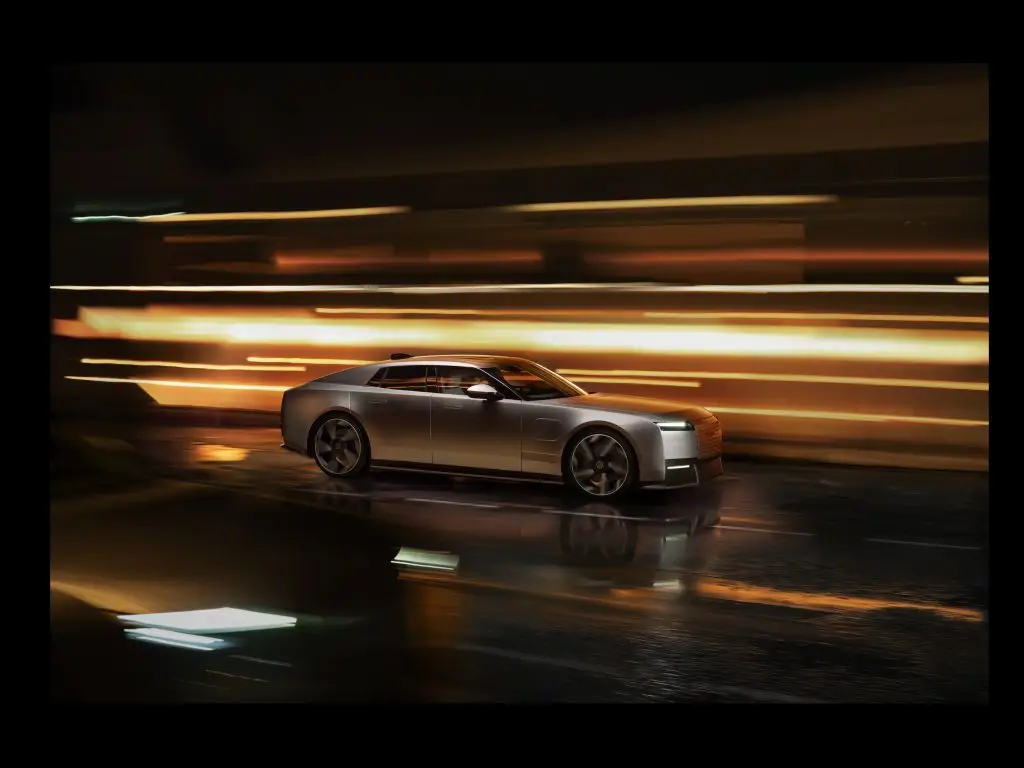
Cinematic graphics counted down to New York, persuading those of us in Britain to stay up rather later than was sensible. After all that anticipation, though, I ended up watching much of the launch through somebody else’s phone.
Instead of one proper live broadcast, there was a stream of polished Instagram reels and YouTube shorts, plus an e-newsletter whose links didn’t work for me. I still miss the theatre of an old-fashioned launch and the feeling that everyone could share the moment together. I wasn’t expecting another F-PACE loop-the-loop; I just wanted to watch Type 01 arrive without hunting through other people’s social media.
Still, that has to be balanced against the unprecedented access Jaguar has given us here in the UK. Enthusiasts, advocates and existing customers have been brought unusually close to the car and the people behind it, which has made the whole journey open for everyone who wants Jaguar to succeed.
The resemblance surprised me
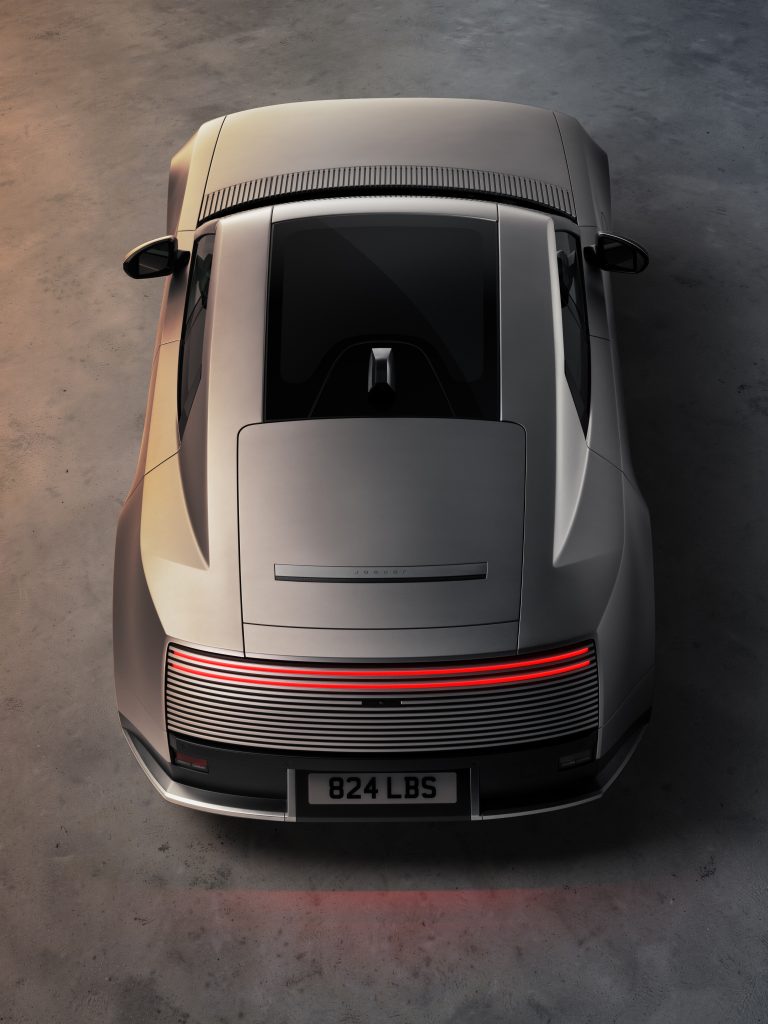
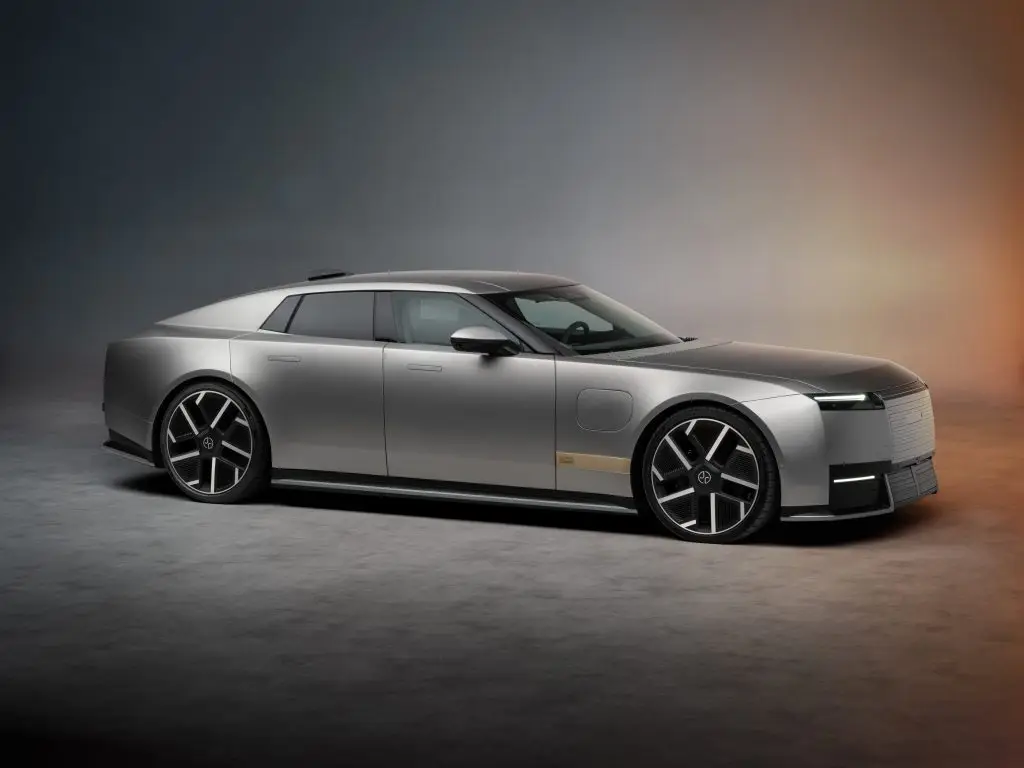
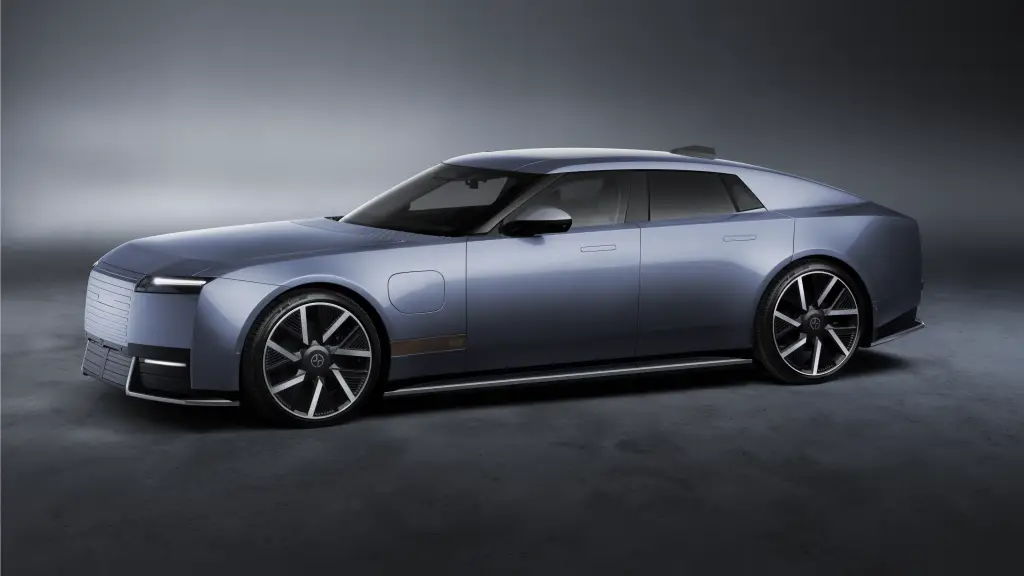
What surprised me was how closely Type 01 resembled Type 00. The bonnet, roofline, shoulders and uninterrupted surfaces were recognisable, despite the change from a two-door concept to a four-door grand tourer. Yet the sequence was the opposite of what most of us assumed: the production design had already been settled in 2021, during the Covid pandemic.
Jaguar then worked backwards from that design to create Type 00, exaggerating its features into something deliberately more shocking. Rather than toning down a concept for production, it had turned up the drama of an existing production design. The engineering still needed developing, but the shape was established long before the public argument began.
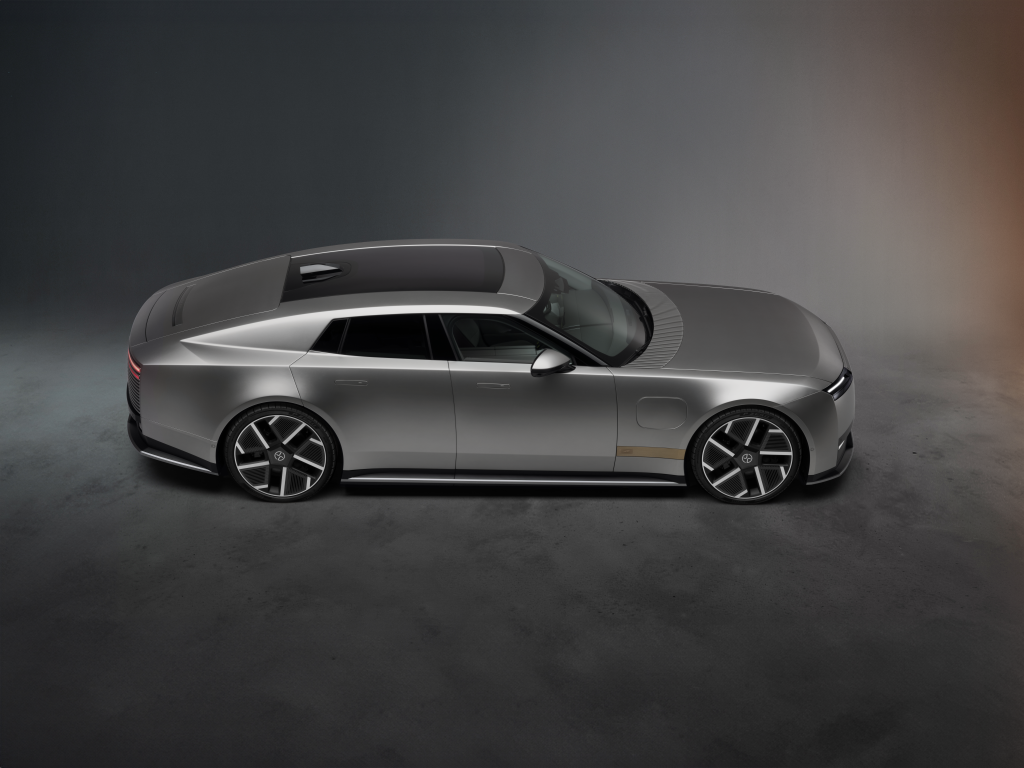
At 5,235mm long and 1,403mm tall, Type 01 occupies considerable road space without SUV height. Including their tyres, two of its standard 23-inch wheels stacked vertically would stand higher than the roof; 21-inch alternatives will also be available.
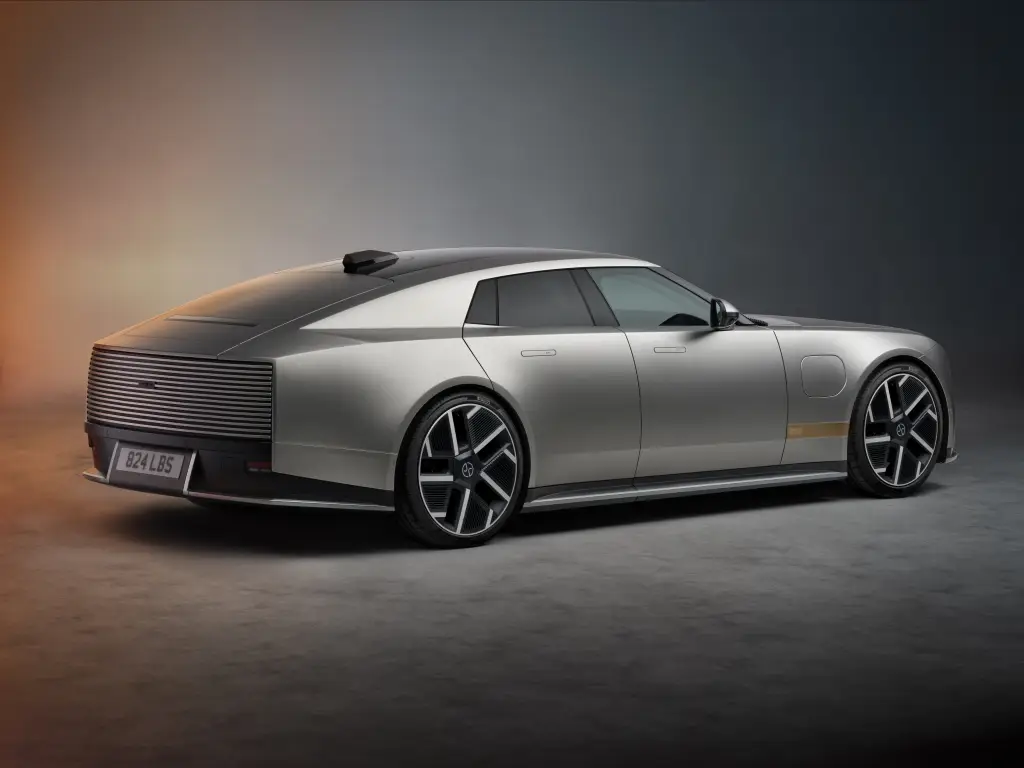
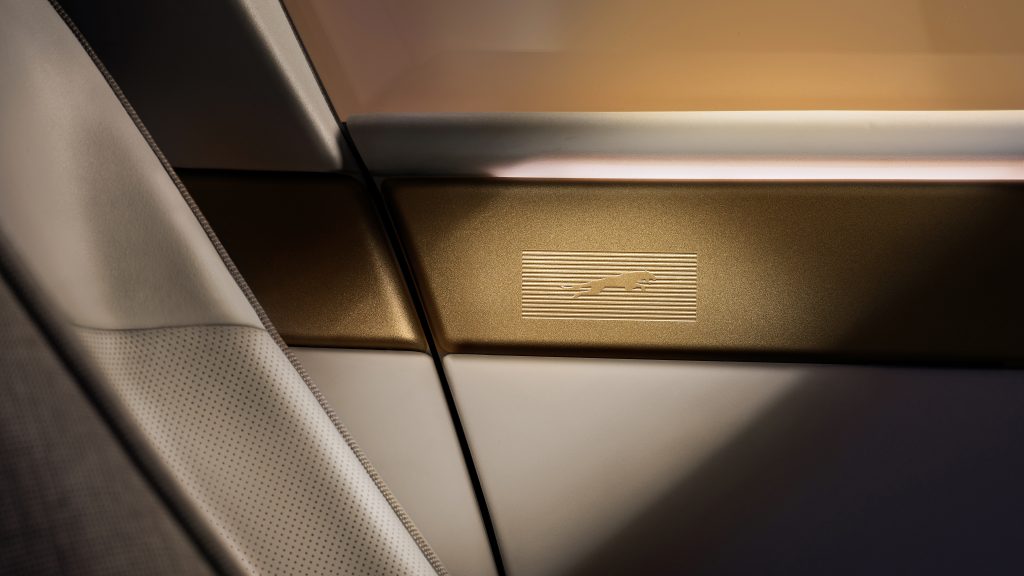
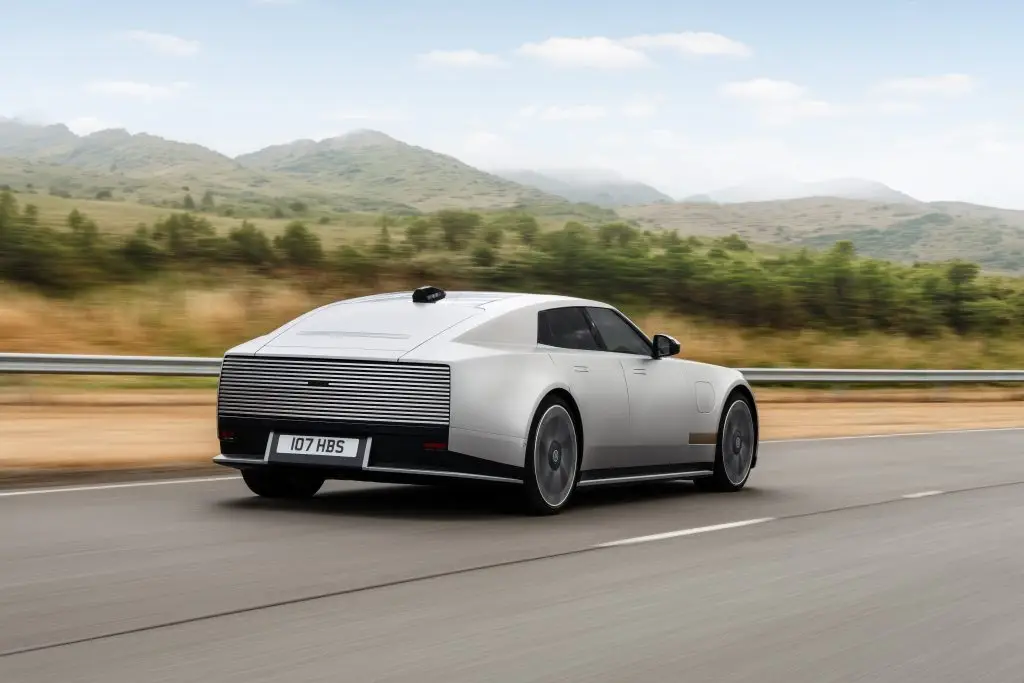
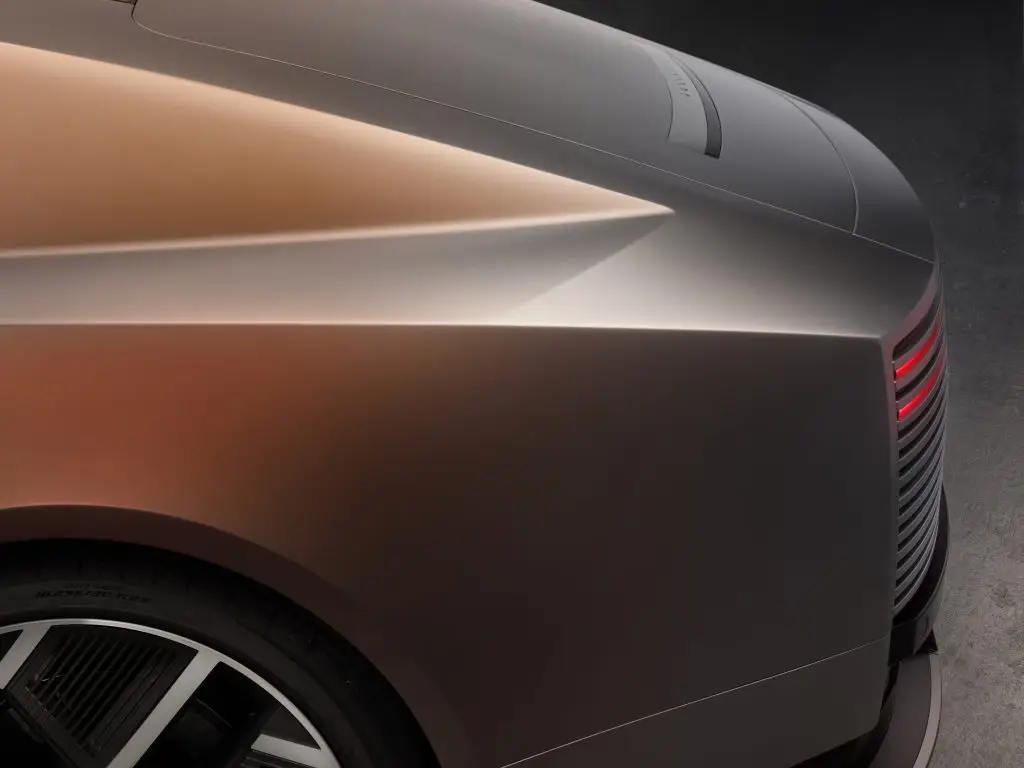
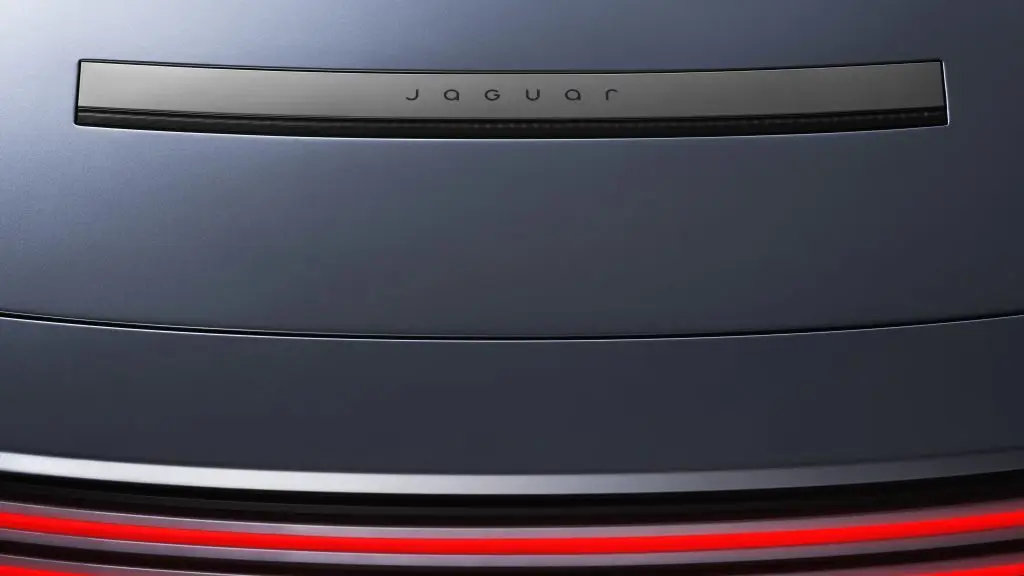
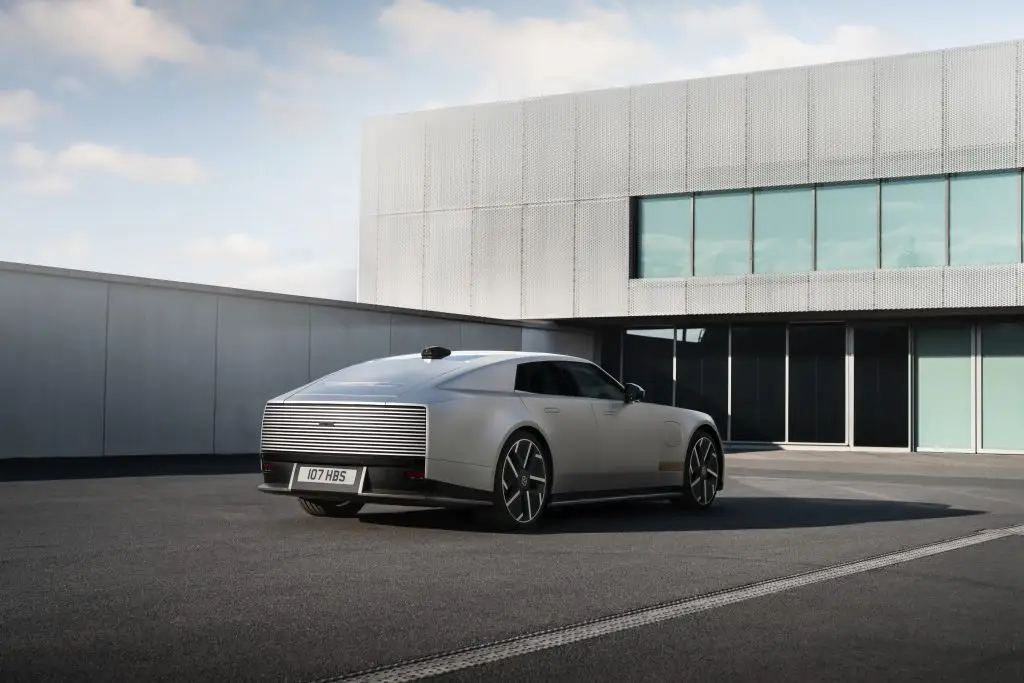
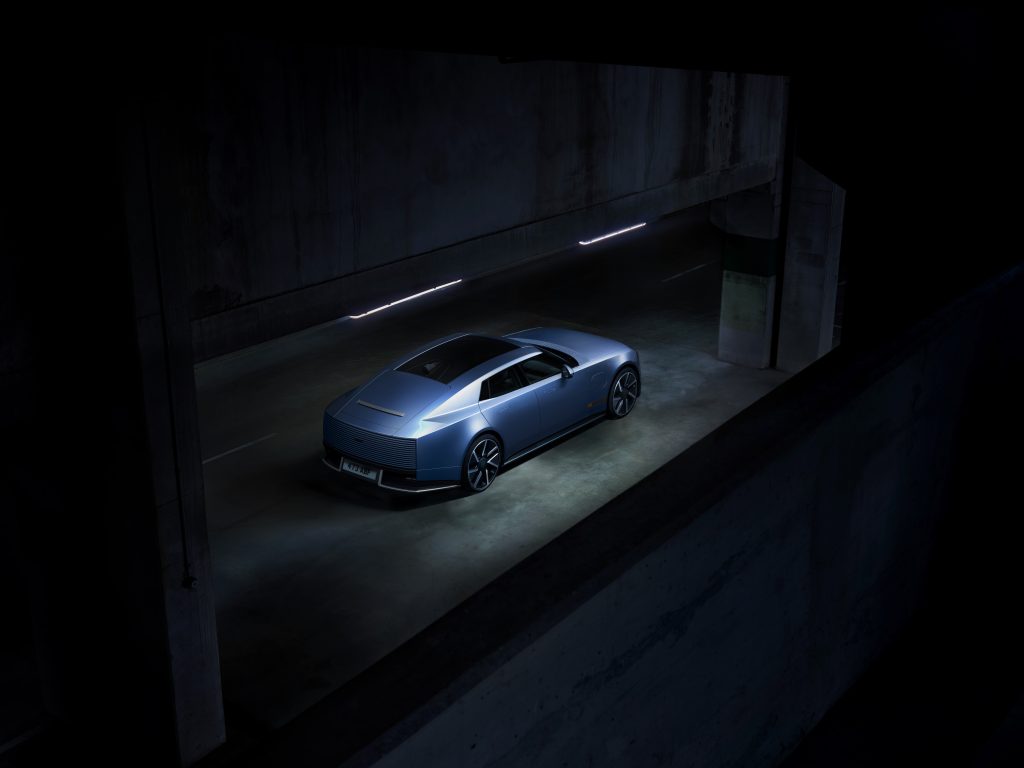
I love the rear three-quarter view, a work of art to my eye. The shoulders tapering towards the back panel recall old XJ6s, while the boot brings an E-type coupé to mind. The gill-like details and long bonnet offer other reminders, as does the 898mm between the front axle and front door. Jaguar’s “luxury gap” accounts for 17 per cent of the length, almost the E-type’s proportion, emphasised by the side finisher carrying a laser-etched leaper.
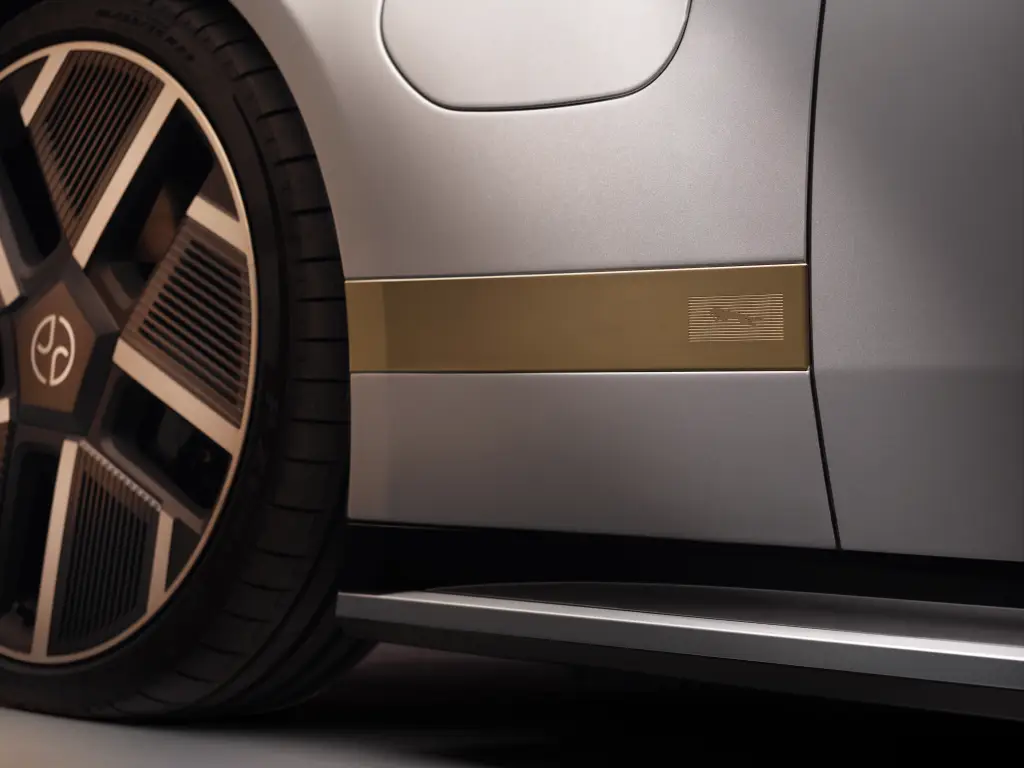
Nobody has to like it, but to say there is nothing of Jaguar here requires overlooking quite a lot to the point of utter blindness frankly. But the references concern proportions, shapes and form rather than familiar ornaments and badges and its low, long sleek profile is the envy of EVs world wide.
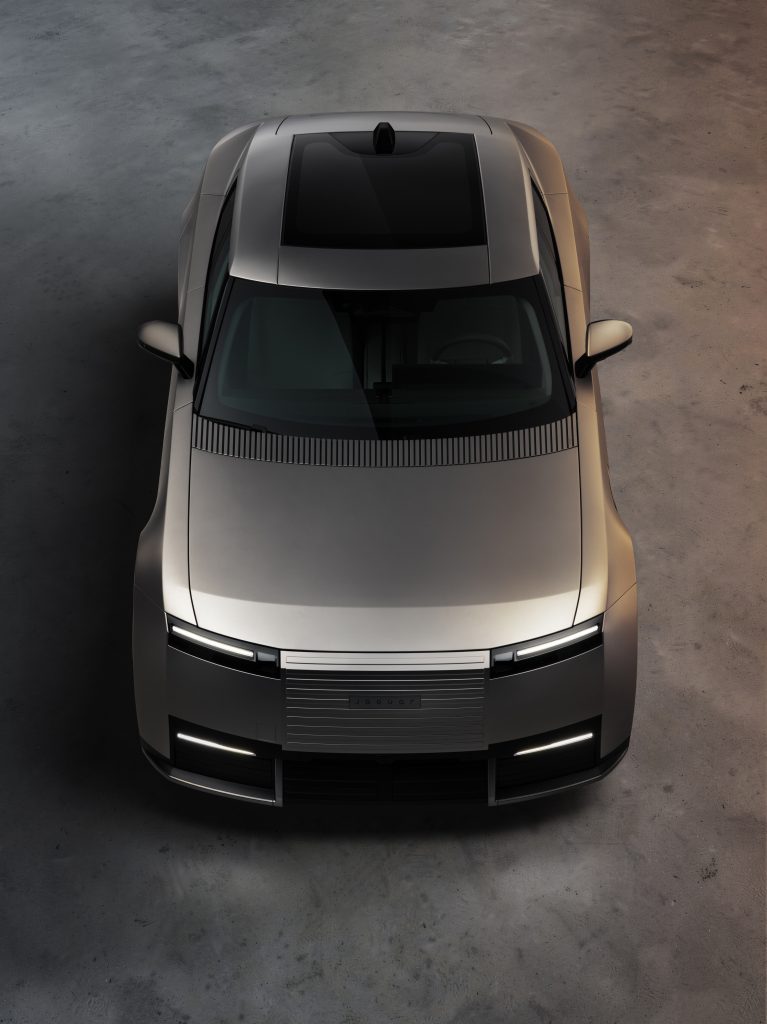
The front is taking longer to win me over, I’ll admit, although I know it will. Something about its production detailing reminds me of a Rover SD1, which is a compliment: it remains one of my favourite designs. There … I said it.
But it just goes to prove how subjective design is, you’ll probably think I’m mad for suggesting the similarities. I can’t help it. Just because I like it, others may not- and that’s OK you know. In market testing clinics this car received more 9 and 10 scores than any other Jaguar ..ever. But it also scored as many 1 and 2s. It was always going to divide opinion.
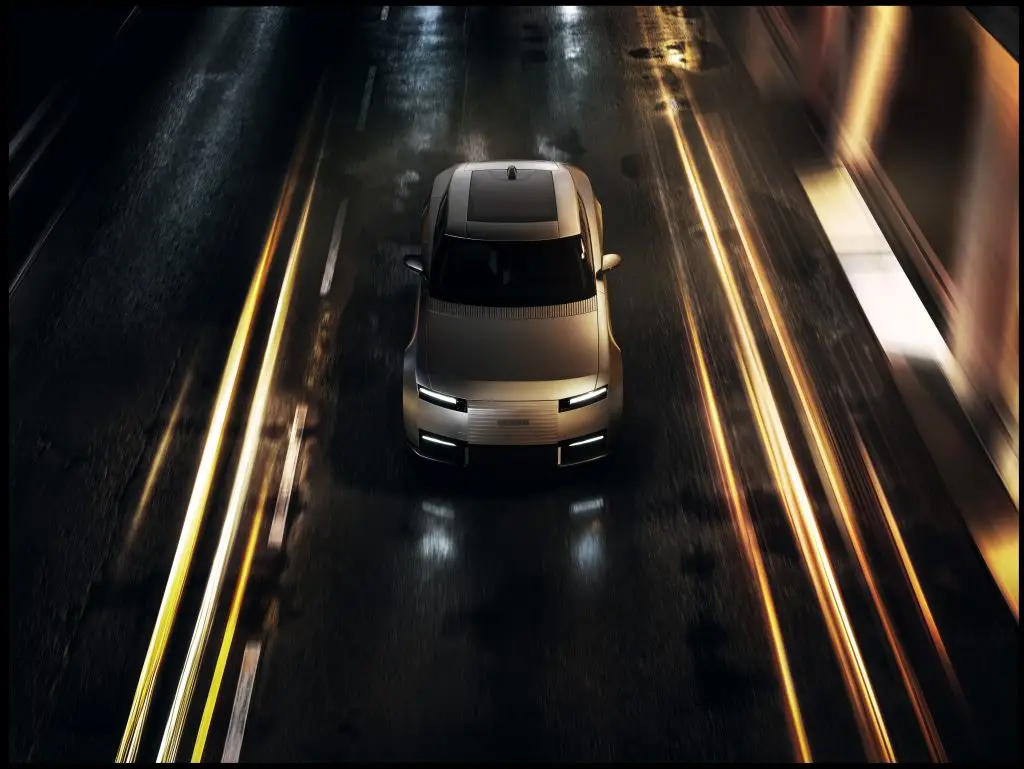
Whether you’re a fan or not, Jaguar now has a distinctive new face and, when this appears behind you at night, I doubt you will mistake it for anything else. That individuality is one of its greatest achievements in a world of personality deficient vehicles.
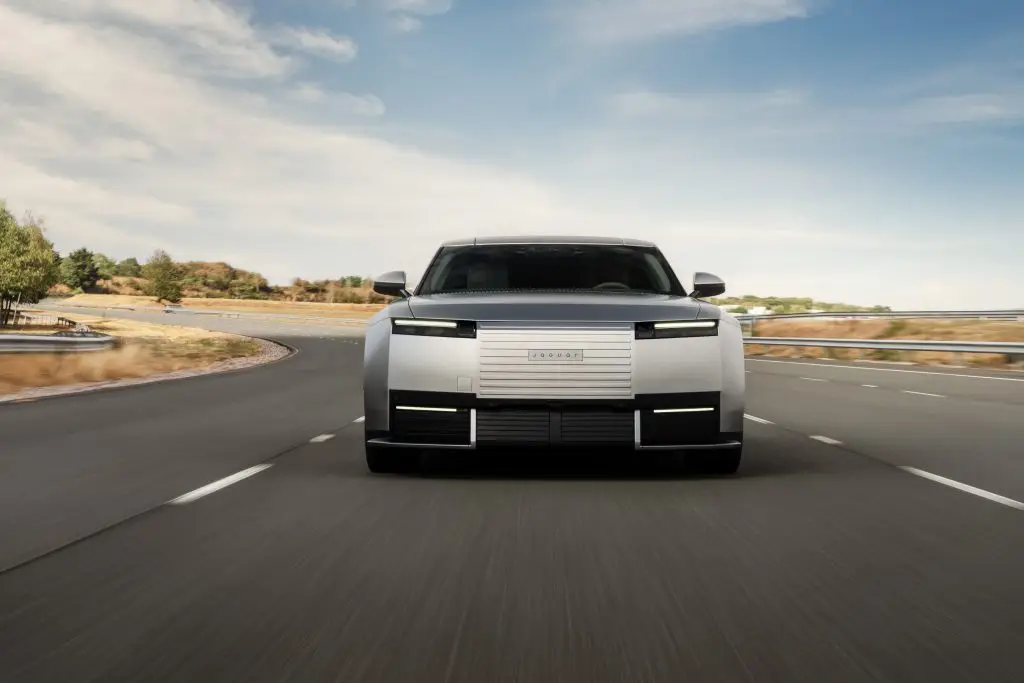
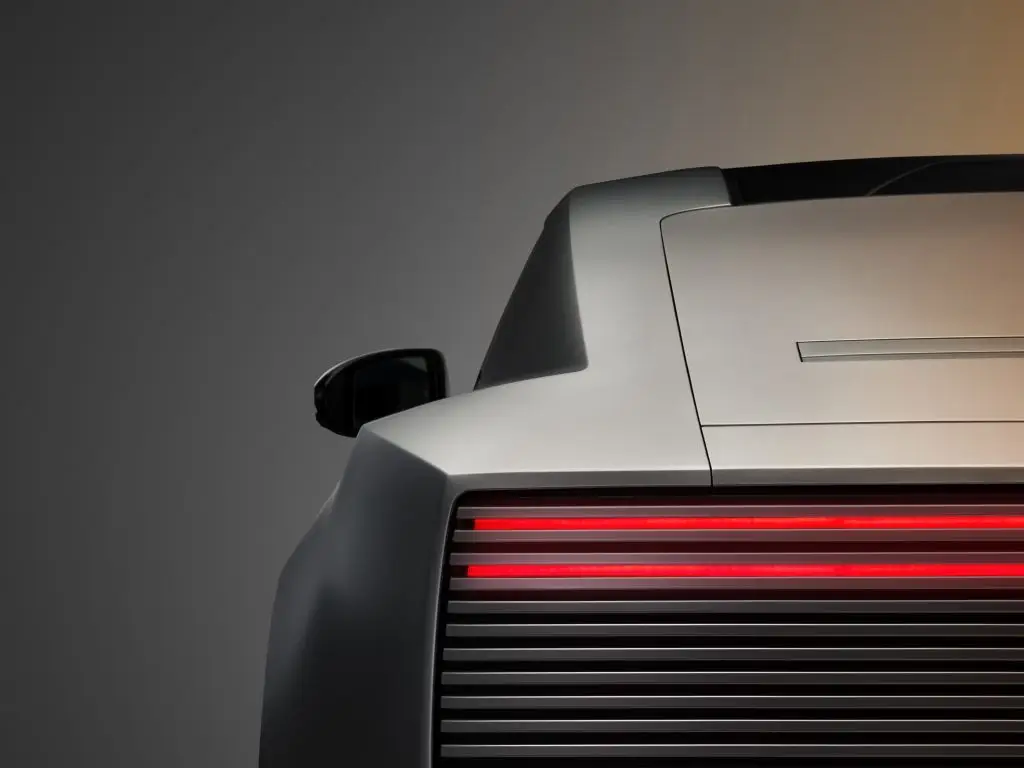
The apparent grille is largely a graphic of horizontal strikethroughs, with cooling openings in the darker area below. The headlights are just 84mm high, each containing 17,000 pixels, while Jaguar’s Active Vanes resemble Venetian blinds. They open for brake and powertrain cooling, closing to improve aerodynamics. Central vanes also support cooling during charging in extreme temperatures; Jaguar credits the system with up to 27 miles of additional range.
I still want to see the front wearing a British number plate, absent from several official photographs. The rear plate sits low beneath the strikethrough panel, but the front installation could noticeably change the nose. Number plates belong in the design discussion too.
Making those surfaces possible
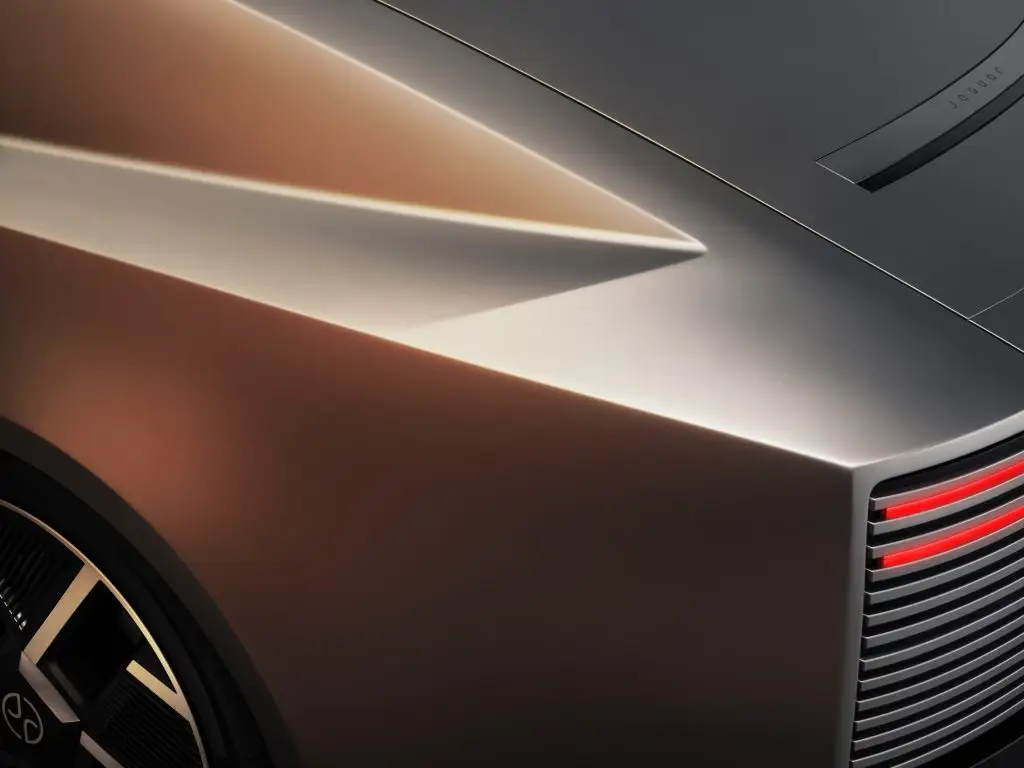
The rear wing’s “Impossible Panel” is the detail that makes me appreciate the people behind this car as much as its appearance. Five planes meet within a single aluminium pressing, with three feature lines converging at one point. Jaguar says established practice favours fewer planes and gentler curves; this shape demanded a different approach.
More than 1,500 hours went into perfecting a six-stage pressing process at Halewood, using 2,500 tons of force in a machine four storeys high. Jaguar says the result advances aluminium cold-forming without adding manufacturing time. The achievement is not simply making one difficult panel, but making it consistently enough to put on customers’ cars.
It’s all well and good producing a cool detail for a concept, but when the car goes into production it has to retain the precision of the original drawing every time it leaves the press. Traditional skills and a deep understanding of metal made that possible. This is the sort of innovation I want to hear about, because I can walk around the car and see what the effort achieved.
The windows involve similar ingenuity. Closed, the glass seems to disappear into the roof without surrounding frames or cosmetic strips. The cant rail above the door opening has not vanished: Jaguar’s patented compressed-radius hemming technique creates a tightly formed edge against which the frameless glazing closes, concealing the seals. The waistline receives similar treatment.
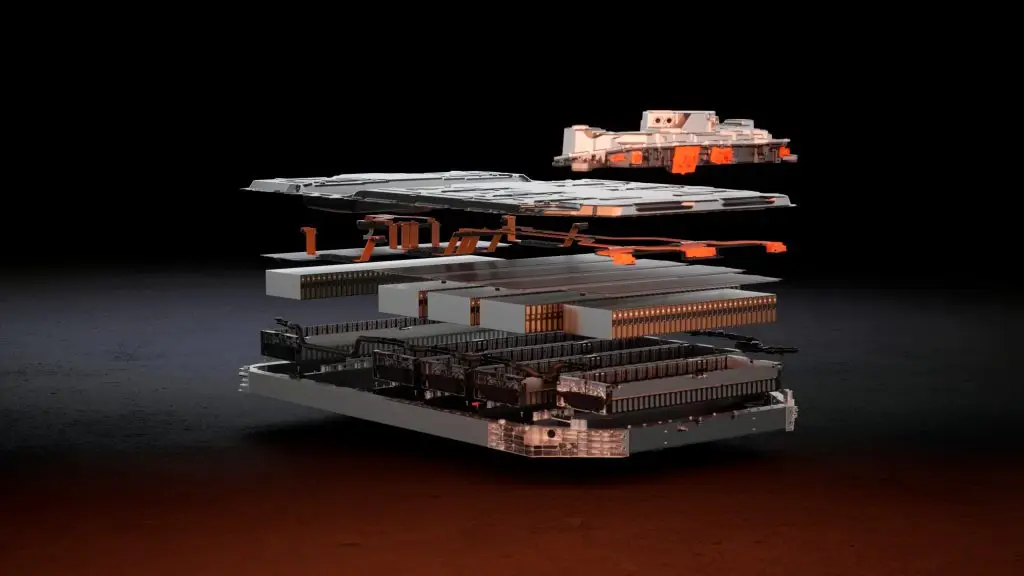
Jaguar reports more than 360 patent applications across the programme. Its new Jaguar Electric Architecture, JEA, uses a structure that is 73 per cent aluminium, with the battery integrated to contribute rigidity.
Part of the pack extends ahead of the passenger compartment, while the split underfloor arrangement creates rear-passenger legroom. Side-mounted cell connections save height, and a high-voltage junction box ahead of the bulkhead doubles as a front suspension brace. These are practical answers to the challenge of preserving that low silhouette, although protecting a design does not abolish every compromise inside it.
The Tri-Apex Node helps make that possible. These front structural elements distribute impact energy while allowing room for 32 additional battery cells. Jaguar attributes up to 70 miles of range and 150PS to the extra cells, already included in the car’s quoted totals. A structural detail therefore contributes to both the proportions and the performance.
Different surroundings, familiar comforts
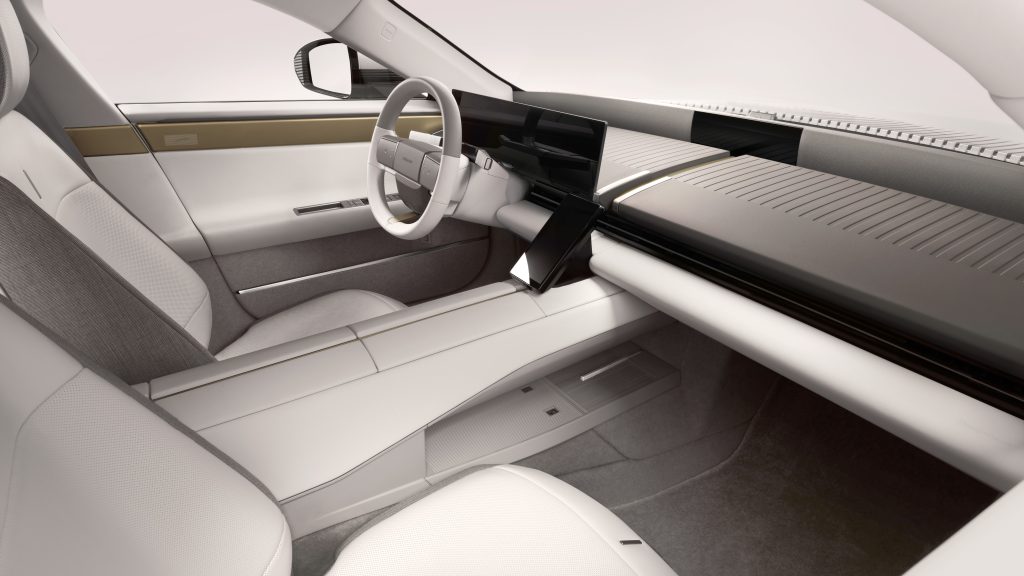
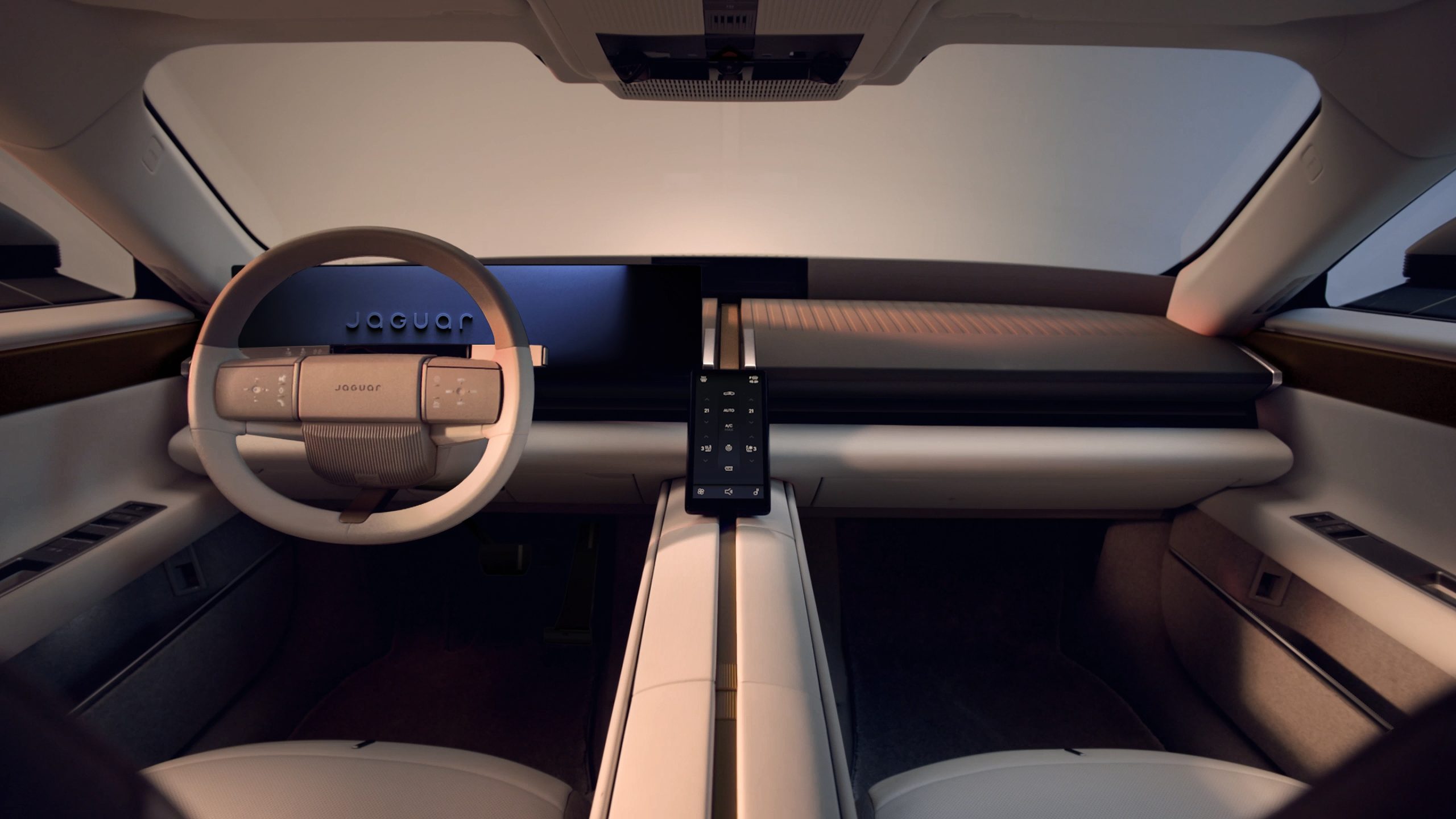
The carpeted door bottoms caught my eye immediately, bringing an unexpected reminder of the XJ-S. Whether intentional or not, the carpeting extending into the lower doors and pillars made these new surroundings feel welcoming and somewhat familiar.
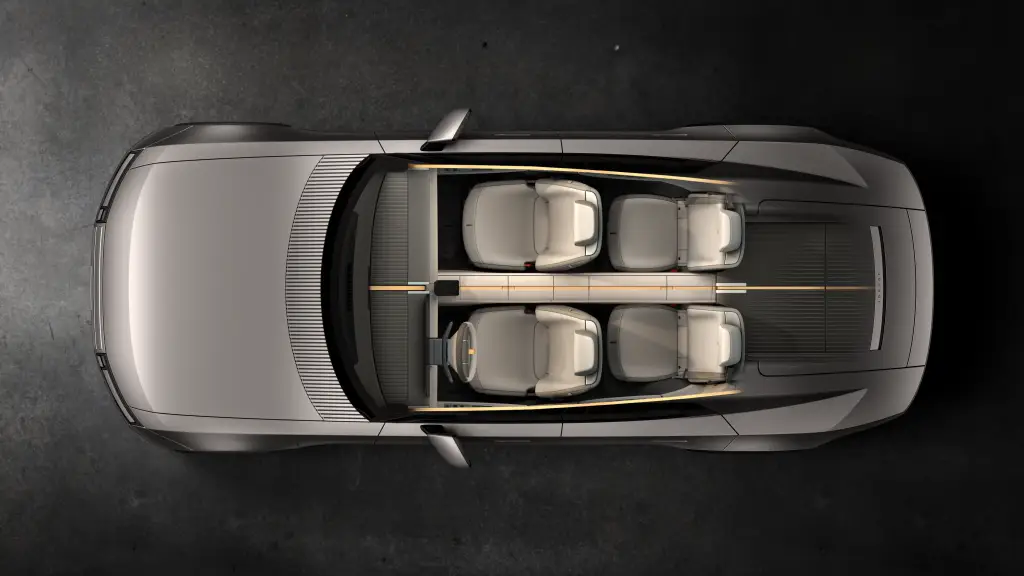
The usual leather, wood and brushed aluminium combination no longer defines the cabin. Slim surfaces and contrasting textures surround the central spine, whose survival from Type 00 surprised me. Continuing between the rear occupants, it creates four individual spaces, with concealed storage, cupholders and deployable air vents. It also carries major wiring harnesses needed for the fornt and rear pwertrains to comunicate withourt compromising the leg room or floor height.
Leather remains available in the Light and Dark interiors alongside Ultrafabrics NeoGrain. Design Vision combines Orchid White NeoGrain with Dusk Grey wool-blend textile, while the brass-inspired finishers are anodised aluminium, not solid brass. Travertine influenced the palette rather than becoming a slab inside the car.
Minimalism is not particularly my taste, but sitting here still feels like an occasion. Nothing I touched had the unpleasant, plasticky feel that can undermine an expensive-looking interior. The textiles have warmth and the detailing substance.
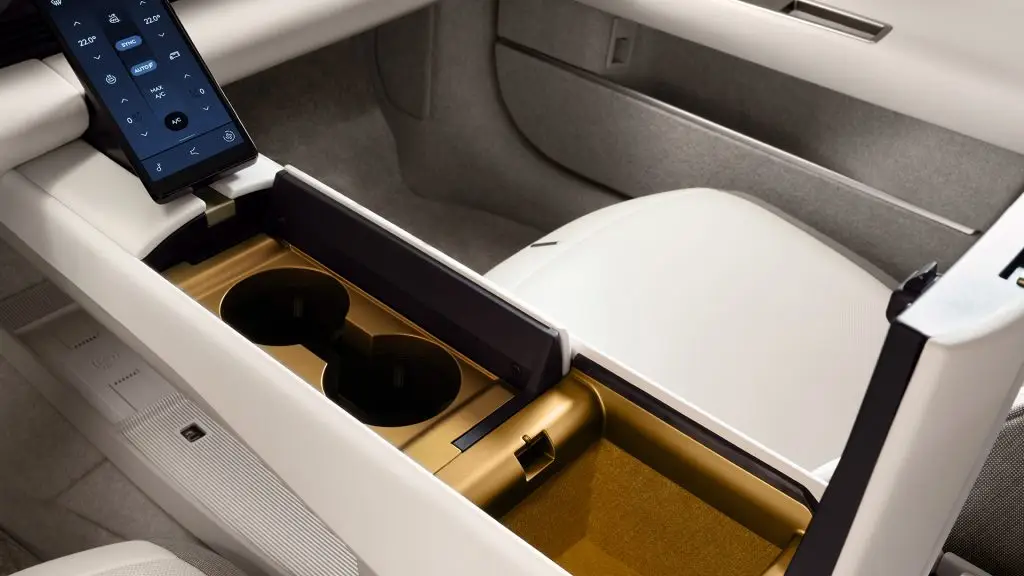
Settling between the substantial sills felt reassuringly familiar. That cosseting position and the beautifully judged steering weight remembered from the prototype supplied a Jaguar connection no dashboard shape could convey alone. It honestly feels like I’ve been here before, many times and I canlt help but think about driving my father’s XJS and so many other Jaguars I have driven for the pages of Jaguar Enthusiast Magazine.
The driving position is confined for such a large car, particularly when you are 6ft 4in like me, but I like that feeling because it reminds me of my old X300. My comfort is not proof that four tall adults will find generous touring space; a longer journey with passengers must confirm that. The rear occupants have been afforded their own footwells in the rear achieved by sitting inside the battery rather than on top of it. It remains to be seen how much vision is possible for the rear occupants. In the front though there is leg room aplenty oweing to the generous ‘luxury gap’ between the door and the back of the front wheelarch.
Comfort has practical support too: all four seats are heated and cooled, the fronts have 12-way adjustment and a hot-stone massage effect, and four-zone climate control lets occupants choose their own temperature. The standard panoramic roof’s adjustable virtual blind controls the light overhead.

I am less forgiving about the retreat from switches. My 2024 F-PACE lets me locate a control by feel while watching the road. Haptic feedback confirms I have touched something; it doesn’t help me find it. As an older millennial, I still have to concentrate when typing on a smartphone, perhaps its a skill I will learn over time – I know I’m in the minority now, but I just miss proper buttons damn it!
Type 01 uses a 24-inch OLED driver display, a seven-inch central touchscreen for climate and audio functions and another behind. Jaguar says most functions take two taps, and its conversational voice assistant offers an alternative, but I need to try both while driving before accepting them as progress.
There are no speakers in the front doors, yet Meridian’s system has 38, including 13 in the Panoramic Soundbar across the windscreen’s base. Sensory Audio transmits music through the front seats, while headrest speakers contribute to road-noise cancellation. I want to hear whether voices sound natural and instruments occupy a convincing space, not simply whether it goes loud. The system deserves a proper listening session, Vaughan Williams or Pink Floyd, you choose!
The soundbar also houses the ClearSight rear-view display, fed by a camera in the roof-mounted antenna pod. It replaces the conventional mirror and sits at the door mirrors’ height. How well it works after dark or in bad weather remains a road-test question. I also have a concern that for shorter drivers, it may not even be visible at all – but we’ll see when we get it out on the road for real.

The glassless tailgate stops your luggage being advertised to passing browsers, including those with a professional interest in other people’s belongings. Opening it reinforces the E-type association, revealing useful space behind the seats and a surprisingly deep compartment beneath a removable panel.
I could see that lower compartment holding things needed infrequently, leaving the upper area for everyday bags. Jaguar quotes more than 450 litres, expanding to 1,000 litres with the 50:50-split rear seats folded. Actual luggage will tell us more, but this was a welcome discovery beneath a shape I already admired, though I’m not certain how comfortable some will be about the lack of divide between the luggage area and the cabin.
The Jaguar I had already driven
Sitting in the finished cabin brought me back to the prototype drive. After sampling the heritage cars, I could recognise what the engineers wanted to preserve without expecting an electric powertrain to imitate a V12. At 150mph on Gaydon’s closed test track, I was talking to camera almost as comfortably as at ordinary road speeds. The acceleration was extraordinary; the composure made it feel like a true Jaguar in every sense and a phrase used amongst engineers to describe the sort of feeling a Jaguar should give you makes total sense to anyone familiar with driving Jaguars: ‘power in reserve‘.
The figures are staggering. Jaguar claims its most aerodynamic car – ever, with a drag coefficient of 0.23, alongside it beig their first ever car to achieve perfect 50:50 front-to-rear weight distribution. It is also the most powerful Jaguar road-car powertrain ever built. Up to 1,030PS, approximately 1,016bhp, and 1,365Nm deliver a claimed 0–62mph in 3.2 seconds and 62–112mph in just 4.0 seconds. It is that rolling acceleration which best illustrates that feeling and aura of having ‘power in reserve’ to use when you need it, such as nipping past that slow moving lorry on the road home, for example.
This is a tri-motor, rear-biased all-wheel-drive system: a 260kW motor at the front and two 310kW motors at the rear. The twin rear motors enable Intelligent Torque Vectoring, adjusting their outputs individually to help the car turn and maintain traction. Formula E experience informs the silicon-carbide inverters and traction management here and its no surprise that it is absolutely supreme – they are twice team World Champions and Formula E’s most successful ever team. When cruising gently, the rear motors can be deactivated, leaving the front to maintain progress efficiently.
The rear electric drive unit, or EDU, houses both permanent-magnet motors in one compact casing, preserving luggage space. Immersion cooling manages heat at the motor windings. That combination interests me: finding room for extraordinary performance without asking the occupants to leave their bags at home. They can slot into the hatch under the boot compartment floor.
Jaguar Drive Control lets you choose how the car responds. The comfort-oriented setting called ‘Jaguar’ (oddly) is default and limits power to a more manageable 750PS, while Efficient is the economy-focused alternative. Dynamic sharpens steering and throttle responses, stiffens the air springs and directs up to 87 per cent of power rearwards and unleashes the full power. Ice & Snow and the personalisable Curated mode complete the five choices. These change the car’s character; and give the driver extra levels of control.
I like the intention behind that breadth. There should be a difference between enjoying the performance and feeling permanently subjected to it. It takes the edge off the responses and settles the car down, making something with this capability remarkably relaxing to drive, unlike tohers int the market which boast faster acceleration figures. I rather like the fact that Type 01 doesn’t insist on reminding you of its performance every few seconds; you can tuck it away and simply enjoy the car, knowing that it remains there when you want it. The prototype’s appeal was having so much available without being obliged to use it, power in reserve, is precisely the quality I had enjoyed in the V12 XJ Coupé from the 1970s.
I’ll tell what else I enjoyed as well, it displayed a wonderful Jaguar characteristic of old… Bury the throttle in the deep pile carpet and the nose lifts gently skyward as the surge of power rushes it forward. Just like an old XJ used to do. It’s glorious – and a little addictive.
The steering has wonderfully chunky weight to it as well, giving the sense of having lots of feel with minimal electical numbness that you get from so many EVs and their fly-by-wire systems these days.
Where Jaguar’s Type 01 is really supreme however, is in the handling stakes, I had a chance to try it on the high speed corners at the Gaydon facility test track and it has an amazing knack of turning in , settling into a corner and all the activie systems then controlling the body roll and grip with minimal intrusion to the fun you are having as a driver. Its a delicate baalance but it makes this nealry three tonne GT feel, well nimble – and delicate!
Double-wishbone front and integral-link rear suspension work with switchable-volume air springs and twin-valve active dampers. Jaguar says the system monitors the road 500 times a second and adjusts damping 1,000 times a second. The engineering matters because comfort and control must coexist, rathjer than just concluding that a firmer ride automatically makes a car more sporting. That has been the problem with so mnay Nurburging focused performance cars in recent years. The Jaguar Type 01 is refreshing in its ability to waft, float and ‘breathe’ with the road – just as a Jaguar should. Another reason why it has such balance is that the centre of gravity sits 60mm below the driver’s hip point, giving you the senssation that the car really is revolving around you and your senses.
Jaguar also says the suspension can travel through the body structure, increasing wheel travel without raising the bonnet. It is another connection between the shape we admire and the space the suspension needs to deliver the comfort we expect.
All-wheel steering is separate from all-wheel drive. At low speeds, the rear wheels turn opposite to the fronts, by up to six degrees, reducing the wall-to-wall turning circle to 11.5 metres – yes, it took me a moment to get my head around that as well. At higher speeds, they turn in the same direction to support stability. Drivers can also choose High, Medium or Low regenerative braking, plus a Single Pedal mode.
More than 7,000 wind-tunnel tests helped refine the blunt-looking nose and the rest of the body. Alongside the vanes and underbody, a three-stage rear spoiler manages airflow; the car lowers 15mm when cruising with it active, changing the spoiler angle at higher speeds for stability.
Above 50mph, the spoiler deploys to seven degrees to reduce drag; beyond 96mph, it adopts a 21-degree setting generating up to 75kg of downforce. The different positions serve efficiency and stability, rather than simply making the car look more sporting.
The objective is to create a car willingly responds when requested to get up and go but that promotes calm and relaxation fr the driver when it is not. A finished-car test on ordinary roads is what I now need in order to establish how well that promise survives a long day at the wheel.
The important question of range
The 118kWh usable battery and 850-volt architecture support Jaguar’s estimates of up to 450 miles WLTP and 400 miles EPA, ahead of full certification. For touring, the separate claim of up to 320 miles at a constant 75mph interests me more. Temperature, speed, load and wheel choice will influence the result. ThermAssist manages heat between the motors, battery and cabin, helping preserve range and prepare the battery for charging.
Its construction is innovative too: 200 prismatic cells use Jaguar’s NMC chemistry, with side terminals and integrated longitudinal busbars replacing interconnecting cables. Jaguar says 80 per cent of the pack’s height is devoted to energy storage, helping retain that low seating position and roofline – soemthing that seemingly Ferrari struggled with in the Luce.
You notice its immense speed at charging when throwing it around the Gaydo test track. After a good session of some pretty hairy laps, yes the power is depleted, but there is plenty of miles left but what makes the difference is that is is full recharged in the time it took to sample JLR’s fine catering and hospitality over lunch, A cup of coffee will be all you’ll have time for before it is up to 80 % range from virtually empty. That’s a major leap forward.
At a suitable charger, up to 350kW DC charging promises up to 200 miles in as little as 13 minutes, or 10–80 per cent in around 22 minutes. Split-charging permits up to 250kW from suitable 400-volt equipment. These figures depend on the charger and the battery’s temperature, condition and starting charge.
AC sockets on both sides are a practical touch, supporting up to 22kW where the supply permits. That does not mean rapid DC charging is available from either side.
Navigation and app services combine route planning, charger availability and payment, while the battery warranty lasts eight years or 100,000 miles. The real measure will be how easily it covers distance with passengers and luggage, including the stops. An expensive grand tourer should be judged by the whole journey.
Has Jaguar come home?
Having examined the quality, I think Type 01 is rather cheap for what it offers. Its announced £130,000 starting price is hardly affordable in ordinary terms, but it is less than I expected for the engineering, finish and sense of occasion. The positioning recalls the luxury-GT territory occupied by the XJ-S and V12 XJ Coupé, rather than simply replacing a recent model at a higher price.
It invites comparison with Bentley and Rolls-Royce: the Continental GT starts above £200,000 and the Spectre above £330,000. These are different products, not proof of equivalent refinement or ownership, but the Jaguar feels credible enough to belong in that conversation. Desirable luxury for less than the most expensive alternatives is a familiar Jaguar proposition.
This differs from Ford’s pursuit of wider markets without dismissing the cars that followed. As an F-PACE owner, I appreciate broader access, while the XK8 demonstrated that glamour need not be sacrificed. Increasing exclusivity and widening ownership are different objectives; this positioning feels like Jaguar coming home to an earlier ambition.
It will not suit every longstanding owner’s tastes, budget or attitude to electric cars. Nobody deserves ridicule for that, but their reservations do not invalidate its appeal to somebody else.
Jaguar needs fewer sales than a broad executive-car range, but still enough profitable customers to justify its role within JLR. Type 01 is not a fixed limited edition, although the 60-car Chromatic Moments collection, in French Ultramarine or London Red, reinforces exclusivity.
Early signs
At our latest briefing, Jaguar claimed over 50,000 expressions of interest, 80 per cent from people new to the marque. Encouraging, certainly, but information requests are not paid orders. The admiration of those who are impressed with this stunning vehicle must now become a willingness to spend. That needs to be backed up by confidence in much more than the appearance and engineering, it needs the customer service and after care to match it.
The first of the new boutique retail outlets that will sell this Jaguar has opened in London’s West End. Knightsbridge promises individual commissioning, personalisation, immersive art and afternoon tea.
This is the bit that I hope Jaguar get as right they have clealry got the car. Beautiful commissioning will count for little if software frustrates, reliability disappoints or technical support becomes difficult. Luxury must include the confidence that ordinary things work and somebody takes responsibility when they do not.
Order books are due to open in January 2027, with the first cars expected to be available for customer drives from April. Jaguar has not publicly defined what success looks like in terms of annual volume, although my own expectation is that something around 10,000 cars a year would make sense for the position it is trying to occupy.
The starting price is £130,000. That buys the base car before personalisation, but even once options have been added it places Type 01 in an interesting position. It is considerably below the sort of money being asked for some of the most powerful electric GTs: Audi’s RS e-tron GT performance starts at £166,475, while Porsche’s 1,034PS Taycan Turbo GT begins at £189,200.
When I asked Jaguar what it was benchmarking Type 01 against, the answer was simply: nothing. That may sound like bravado, but I can see the logic. There are cars that overlap with it in performance, luxury, price or electric range, but very few that combine all of those things in quite the same way. Jaguar is attempting to create a niche of its own rather than simply enter somebody else’s.
For too long Jaguar found itself fighting in increasingly crowded parts of the premium market. XE and XF were good cars, but they placed Jaguar directly against established German rivals in segments where buyers already had enormous choice. Type 01 steps away from that battle completely. It also takes them out the battle with the incoming deluge of Chinese low cost luxury SUVs from the likes of MG and Jaecoo.
In doing so, it arguably takes Jaguar closer to the position it occupied during its great post-war years. The magic of Jaguar in the 1950s and 1960s was not merely that the cars were beautiful or fast. They offered performance, luxury and glamour in an aspirational way that appeared almost implausibly good value beside the most expensive alternatives. They were never an ‘affordable’ brand back then, but rather value for money luxury.
Jaguar may therefore have done something rather clever. Instead of chasing an existing segment, it has tried to define one around its own strengths. How large that market is remains the unanswered question.
Britain may not even be where the strongest demand comes from. Type 01 is deliberately ostentatious, and there is a strand of British culture that can be rather uncomfortable with conspicuous displays of wealth and success. Elsewhere, however, British luxury still carries enormous appeal. In the United States, Middle East and parts of Asia, British design, craftsmanship and provenance remain powerful selling points.
That would hardly be new territory for Jaguar. The marque has always depended heavily on exports, selling a particular idea of British performance and luxury to the world. Type 01 simply interprets that idea for another era.
So, has Type 01 saved Jaguar?
Type 01 has not removed the pressures we explored when JLR announced job cuts: Chinese competition, electrification costs, government intervention, uncertain exports and changing demand. Becoming electric-only is Jaguar’s chosen response, but you get the distinct impression that this is about more than just a product. The innovation is intended to express art, vision and design, but also the pride of the workforce behind it. It is about Britain, about the Midlands and, most importantly, about Jaguar’s place in our cultural history. What this car offers is a deeply personal reason to choose Jaguar that goes beyond specifications and price points.
I keep thinking about the team at Gaydon and the deep affection they show for Jaguars old and new. Some began their careers on the Jaguars we now celebrate; others come from families who have worked there for generations. Their enthusiasm looked like ours because it was. These are not people who have forgotten Jaguar, but people trying to give it a future, with production planned for Solihull, motors and battery packs from Wolverhampton and pressed panels from Halewood.
That deserves a fair hearing, not an exemption from criticism. I still want proper switches, find the rear-view camera display’s position at the base of the windscreen awkward and need a longer drive to judge the compromises of this cosy cabin within such a large car. None of that cancels out the quality I have touched, the engineering I have examined or the composure I experienced in the prototype.
Has it saved Jaguar? No launch can answer that, and neither can a comments section. But I believe Type 01 has already done something Jaguar desperately needed: it has moved the conversation. and made people who had stopped noticing Jaguar look again.
It has taken the brand out of the crowded middle ground and given it a reason to exist on its own terms. I can imagine someone seeing it in traffic, searching for its name and quietly thinking, “one day”. They might never have wanted a Jaguar before, yet that glimpse could begin a relationship lasting decades. For me, that is the real promise here. Jaguar does not have to recreate the car that made enthusiasts of us; it has to give someone else that first feeling and I can see Type 01 doing just that.
Type 01: performance in numbers
| Specification | Jaguar’s published figure |
| Maximum combined power | Up to 1,030PS (approximately 1,016bhp) |
| Maximum torque | 1,365Nm |
| 0–62mph / 0–100km/h | From 3.2 seconds |
| 62–112mph / 100–180km/h | 4.0 seconds |
| Motor layout | Tri-motor: 260kW front; two 310kW rear motors |
| Drive | Rear-biased all-wheel drive with Intelligent Torque Vectoring |
| Weight distribution | 50:50 front to rear |
| Steering | All-wheel steering; up to 6° opposite-direction rear steer at low speed |
| Turning circle | 11.5m, wall to wall |
| Suspension | Double-wishbone front; integral-link rear; switchable-volume air springs and twin-valve active dampers |
| Drive modes | Jaguar, Dynamic, Efficient, Ice & Snow and Curated |
| Regeneration | High, Medium, Low and Single Pedal settings |
| Aerodynamics | Claimed Cd 0.23; three-state active spoiler; up to 75kg downforce in the high-speed setting |
| Battery / electrical system | 118kWh usable / 850 volts |
| Range | Up to 450 miles WLTP; expected EPA range up to 400 miles; separate claim of up to 320 miles at a constant 75mph |
| DC charging | Up to 350kW; up to 200 miles added in as little as 13 minutes; 10–80% in around 22 minutes |
Manufacturer figures and claims, not independent road-test results. Individual motor ratings must not be added to replace the stated combined output. Range and charging depend on conditions; quoted gains from separate technologies are already reflected in the vehicle’s totals and must not be added together.
Want more tech? Read our Jaguar Type 01 Technical File here, with explanations and animated videos on the top 7 technical specifications we think you ought to know about.



4 Responses
A great man once said, “Everyone has a butt hole just like they have an opinion”. Now I don’t know who this great man was or if he was even great, but he was right.
Everyone will have an opinion on the new TYPE 01, electrification and the direction of Jaguar, and of course no one person’s opinion is right nor wrong, something we should all remember when the inner keyboard warrior wants to burst out. What we can all agree on as Jaguar enthusiasts is that like or loath new models, we want to see Jaguar succeed.
Remember that many Jaguar ‘fans’ threw their hands up in disgust when the XJ-S was launched. “Waste of time, not a successor to the E-type, will never sell”, “Doesn’t look like a Jag, bloody ugly!”, and so on. No doubt many old time Jag fans reading this muttered words along the same lines, yet the XJ-S proved to be a success. Some say due to Tom Walkinshaw’s racing success, maybe, but without the XJ-S to race there would not have been any racing success. Now people relish the sight and ownership of an XJ-S, and those that don’t, simply appreciate the success and part it played in keeping Jaguar alive. Nearly 21 years in production, not bad for a car branded “bloody ugly” and that “wouldn’t sell”.
Remember the XK8 and XKR? I do fondly and I also remember the conversations around it at the time of launch. “Looks like a proper Jag but not with a 4-litre engine, needs a V12 to be a proper Jag”, and ” Wouldn’t buy one, too expensive, not got a real Jaguar engine, won’t sell”. Went on to span two generations and become one of the most respected and cost-effective Grand Tourers of modern times loved and enjoyed by Jaguar enthusiasts all over the world.
Modern XJ (X351) anyone? Cue the comments on launch. “Shape is not that of the XJ, too modern, looks nothing like an XJ”, “Terrible headroom in the back, won’t use the seats but terrible”, “No grace, space or pace anymore” (despite being the fastest, best handling and having the quietest cabin of any XJ), and so on. As it turns out the modern XJ (X351) was and is a great car, now having an almost cult following, especially among previously non-Jaguar owners.
Oh, the F-PACE. Not quite a Chelsea tractor, more of Battersea boat. Cheaper than the obligatory Range Rover Sport you needed to turn up in at the school gates, the F-PACE was a new direction for Jaguar. “How could Jaguar build a 4×4 when they are a sports car and GT car manufacturer?” many asked. Well with the combined XJ range carrying the largest production numbers to date, you would think a 5-seater luxury vehicle to waft around in would make sense… wouldn’t you? “Jaguar don’t make jeeps they make sports cars”, “Just a Land Rover in all but name, who would buy one?” Seems like a lot of people did, approximately 250,000 which make it Jaguar best-selling model ever!
I-PACE, electric, what do you mean they are making an electric Jag! “No one will buy one”, “Jags aren’t electric, they are petrol”, “It will be a terrible car”. All these comments proven wrong. The I-PACE won multiple awards and was well ahead of the competition when launched, the lack of development throughout its production life stifled what was a great car at the time of its launch. Yes, it had problems, some more serious than others, but unfortunately that is a fact of new car ownership with most models and manufacturers now, although it shouldn’t be!
TYPE 01. To me its bold, its brash and it really does look like the love child of a Mafia Don and comic book harlot (think Vito Corleone and Jessica Rabbit)! It looks mean, has hard curves that make you sit up and pay attention, and it looks expensive and classy all at the same time. It’s electric. Pause for a sigh… Would I have loved a 5-litre Supercharged engine with 700hp with a hybrid system pumping up the power to over 1000hp or even more… bloody hell yes, I would! Unfortunately, in real world that is very hard to make happen. Government’s set emission targets and trading conditions that stifle companies like JLR, rightly or wrongly they limit what can be produced by introducing a myriad of environmental and other laws. JLR don’t plan for tomorrow, next week or next year, they plan 5-7 years or more ahead, so when regulations say for example that ICE cars are a no go from 2030, there is no point spending billions of pounds developing platforms to take an ICE when the lifespan will be so short. Sure, you could build hybrid and then drop in some more batteries and go fully electric at the cut-off point of 2030, but that takes more development money and creates a compromised product that will never drive or perform as well as it should. Jaguar didn’t spend billions developing a new electric vehicle architecture for vanity, they did it out of necessity. No vehicles that meet regulations come 2030, no Jaguar. Period.
TYPE 01 is fully electric, but it has been developed as fully electric, no compromise or backtracking, and that is why I have no doubt it is and will prove to be a great car. People I know that have driven in it or been lucky enough to drive it have said as much. With the exception of an ICE, it is everything we expect a Jaguar to be: Striking to look at. Fast and nimble. Comfortable and luxurious.
Will it sell and be successful? Time will tell.
Would I buy one? Yes.
Will I buy one at release? No. I will do what most Jaguar enthusiasts do, wait until they are year or two old and laugh in the face of the initial depreciation and the money I have saved can go toward another good old fashion gas guzzler to feed my need for petrol fumes!
With that in mind remember, most Jaguar owners and enthusiasts don’t buy their cars new, they buy them between 3-5 years old, once the initial soul-destroying deprecation has been absorbed by the first owner and the nice people at the finance and leasing companies. If we follow the recent trends that could mean that most new buyers of a new Jaguar, the TYPE 01, will previously have been non-Jaguar owners and that is important. From TYPE 01 comes their affection for Jaguar as a brand, from that comes the interest in its history, from that the purchase of a weekend toy, an F-TYPE, modern XK, or even an E-type.
What I am getting at here is that as owners and enthusiasts of classic, modern classic and modern Jaguars, it is not the oily parts, fuel tanks and engines that binds us as a community, it is the love of a brand that has endured ups and downs and been brought back from the brink more times than we would care to remember. We all have our favourite models and ones we don’t like, but we all rub along, chat, laugh and find a way to appreciate each other’s cars, even if they are “not one for me”. So, if the TYPE 01 is not the car for you, that’s fine, wish it the best and move on. But who knows, as the world changes in a few years’ time you may look at it differently just as many did with the XJ-S, XJ (X351), XF, XE and F-PACE, and as depreciation kicks in and prices drop, you may, just may buy one.
Perhaps time for me, aka grumblestiltskin, to step in. Too much to riposte in all Mike’s thoughts, so let’s just comment on the XJS. It didn’t sell well because it was shoddily built, had a plain interior and only a gas-guzzling V12 to power it. And it cost around three times that of the outgoing E-Type. From about 1980, the V12 was much improved, a straight 6 came along, interiors with wood and ‘proper’ instruments, a cabriolet, a convertible and, above all, better build quality. In other words, Jaguar made a car that people wanted to buy even though the exterior styling barely changed.
In the marketing of the Type 01, JLR have no consistency. Why try to make it ‘drive like a Jaguar’ and then go for a completely different market from existing Jag owners? Who would know, or care? Copy of nothing – so why a long bonnet to make it look like Jag saloons of old? Who, in the whole history of car making, has ever said ‘we’re not bothered if everyone doesn’t like it’? Of course you want people to like it; that’s how it will sell, be judged a success and keep the brand going.
And you *still* can’t buy one. I was discussing this with a Jaguar salesman who had the misfortune to give me a call. Ah, but Jaguar have delayed launch until they get the car right. Which company announces the car to be available at the start of 2025, cancels all ICE production in anticipation and then delays availability until mid-2027 (so far, but could be later) – and goes through more senior management changes that you can keep up with. Was that a plan?
I rather liked those Type 00 colours: they made the cars stand out. Then I see that the Type 01 palette is several variations on sludge. The salesman noted there was a limited edition available in blue or pink, already sold out, expecting me to be impressed. What use is that to me – there will always be speculators taking a punt on limited first editions.
As for (Wayne’s piece) 50,000 enquiries. Exhibit A – the Tesla Cybertruck. Two million actual orders before it went on sale. Musk quoted a build rate of 250k cars per year, whereas it is now selling at around 10% of that. And that’s with the introduction of a cheaper model and many Cybertrucks going to Musk’s other companies.
Finally (poor salesman, I’m sure he was regretting the call), I could buy an 01, but why would I buy from a company that has done so much to put me off – devaluing the investments people have made, decimating the sales network (there used to be 6 dealerships within 70 miles of me – there is now just 1), etc.
Maybe, as Mike notes, I will revisit the issue once depreciation has done its expected job. By then, a very important issue will have an answer.: will Jaguar’s use of a battery manufacturer that has no other customer prove to be the right one. Perhaps a further clue as to why the Type 01 isn’t on sale – the battery factory still isn’t ready for production.
What great articles Wayne and then Mike have written. All very admirable, attractive and true enough within limits.
I do note that Mike has skipped right over the S-Type, XF and XE period. He has probably never had one.
I for one am a Jaguar Enthusiast, so I do indeed want to see the brand survive and ideally thrive.
But I also want a car I can own, use and enjoy.
I’m a saloon, daily driver, owner who takes all my wife’s kit to the Cub Camps she runs and all my kit to the Oxfordshire JEC Region events I run, guy.
I can’t therefore see myself buying a Type 01 at any time, whatever the depreciation saving I might make. My home and drive don’t even have the space for one either.
Am I therefore to be left to use up 2nd, 3rd and perhaps even 4th hand XFs and so forth until they are gone ?
So, will Type 01 have saved Jaguar? Possibly. Will it remain part of UK collective consciousness ? I’m not so sure.
Will the bulk of the current Jaguar Community still have a home ? Well that’s what the Jaguar Enthusiasts’ Club is for. Hopefully, the JEC Board is, right now, down into the detail of consolidating and then strengthening that very offer whilst enabling us all to say tro those Type 01 owners “welcome”..
Great article and comments. The DNA of the XJ Series 1,2 and 3 has helped to give birth to Type 01. You can see it in the lines of the car. The more angular styling and waistline of the new car is a variation on the curves and waistline of the original XJ, which is such a curvaceous car in all its guises, including the Coupe. I think Sir William Lyons would be very proud of Type 01 and to know that his influence on the lines of the modern car lives on.
My XJ12 Series 3 is just over 5 metres long too! It is actually a very easy car to park and manoeuvre in modern traffic.
I don’t think anyone has mentioned the buttresses of the XJS. I can see them in Type 01.
Let us celebrate a great achievement by Jaguar.