

Jaguar’s transformation into an all-electric luxury brand remains firmly on track, despite parent company JLR announcing a broader shift towards offering customers more choice in how future Range Rover, Defender and Discovery models are powered.
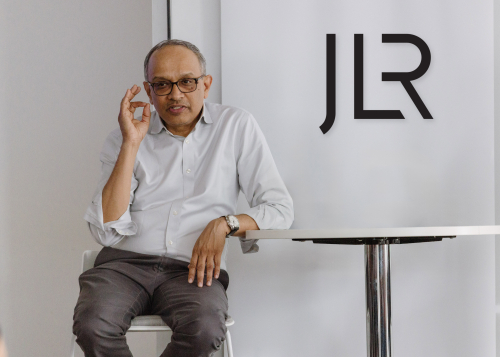
Speaking to investors at the company’s headquarters in Gaydon, Chief Executive Officer P.B. Balaji outlined the next phase of JLR’s Reimagine strategy, revealing how the business intends to deliver double-digit revenue growth while making itself more resilient in an increasingly uncertain global market.
For Jaguar enthusiasts, the key message is clear. Nothing has changed in the brand’s direction.
Jaguar will remain JLR’s dedicated electric marque, with production centred at Solihull. The company also confirmed that its new luxury four-door GT, known as Type 01, will be revealed later this year. Described as combining “exuberant design, pioneering technology and a refusal to compromise on the distinctive design and dynamic characteristics that mark all iconic Jaguars”, the car will become the first production model of Jaguar’s new era.
The announcement comes as JLR confirmed it will continue investing £18 billion in new vehicle platforms, software, artificial intelligence and future technologies through to the 2029 financial year.
More choice for Range Rover and Defender buyers
While Jaguar remains exclusively electric, JLR is adapting its plans for its other brands to reflect continued global demand for a wider mix of propulsion systems.
Range Rover and Range Rover Sport will continue to be built at Solihull on JLR’s flexible MLA architecture, allowing the company to manufacture mild hybrid (MHEV), plug-in hybrid (PHEV) and battery-electric (BEV) versions on the same production line. The long-awaited Range Rover Electric and Range Rover Sport Electric are both due to launch later this year.
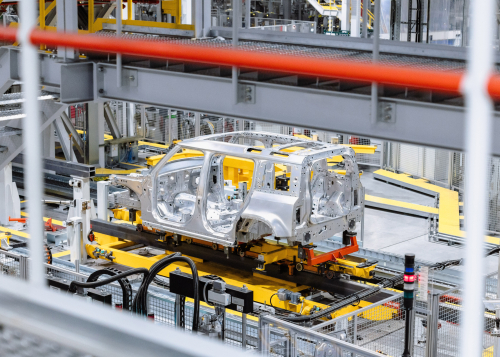
Later this year JLR will also reveal the first Range Rover model built on its new Electric Modular Architecture (EMA) platform at Halewood. Originally intended as a pure electric vehicle, it will now also be offered with a new full hybrid (HEV) powertrain. This creates a four-way choice for customers, with mild hybrid, full hybrid, plug-in hybrid and fully electric options all available across the Range Rover portfolio.
JLR confirmed that the second model to use the EMA platform will join the Defender family and will also be offered with both hybrid and battery-electric powertrains in future. The move reflects growing demand for greater flexibility in global markets while allowing the company to respond more quickly to changing customer preferences.
Discovery’s future remains secure
Although no new products were announced, JLR confirmed that Discovery will continue as a distinct brand within its House of Brands strategy. More than two million Discoverys have been sold since the original launched in 1989, making it JLR’s best-selling product ever.
The company says Discovery will evolve while remaining true to its roots as a practical, family-focused premium SUV. Future models will feature greater propulsion flexibility alongside new design and technology developments, with more detailed plans to be announced later.
North America becomes the priority
Alongside confirming future products, JLR also revealed that North America will become its principal growth market.
The company believes rising demand for luxury vehicles in the United States offers significant opportunities across its portfolio, particularly for the Defender brand. Following its recently announced memorandum of understanding with Stellantis, JLR will explore opportunities to develop new Defender products and technologies aimed specifically at North American customers.
Balaji said the ambition is ultimately to grow JLR’s US business until it is as large as the company’s entire global operation today.
Investment will also continue in other high-growth markets, including India and the Middle East.
Making the business stronger
Alongside new products, JLR outlined plans to improve profitability by reducing operating costs and making the business more efficient.
The company aims to save £1.7 billion over the next two years through lower material costs, reduced warranty expenditure and tighter control of fixed costs. It also hopes to reduce the number of vehicles it needs to build before breaking even to around 300,000 units annually.
Investment will continue in software, artificial intelligence and digital systems, while JLR says it is also focused on improving product launch quality and building a more agile, resilient organisation capable of responding more quickly to changing market conditions.
Taken together, the announcements represent an evolution rather than a change of direction. Jaguar remains committed to its all-electric future, while the company’s other brands are being given greater flexibility to meet customer demand in different markets around the world.


One Response
So disappointing to see this once prestige brand being driven to the sewage.
I noticed Aston Martin, Porsche and Mercedes at Lemans but no racing cat