

One of the most important developments in Jaguar Land Rover’s next generation of vehicles is something most drivers will never see.
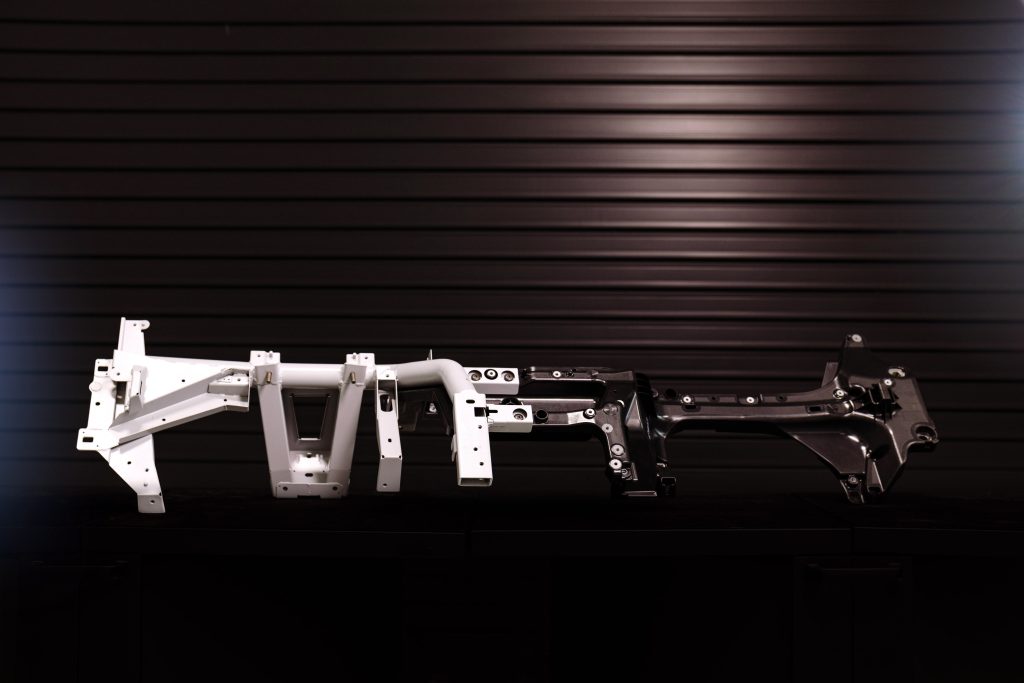
Hidden deep behind the dashboard sits a structural component known as the cross-car beam — a rigid backbone that supports the dashboard, anchors airbags, and contributes to the overall strength and refinement of the cabin. It’s a vital part of the vehicle’s architecture, helping manage crash loads while also reducing vibration and noise inside the cockpit.
Now, engineers at Jaguar Land Rover have completely re-engineered the component as part of the company’s wider push to reduce the environmental impact of its vehicles. The redesigned beam will be used in future models and is expected to cut more than 50,000 tonnes of CO₂ emissions every year across JLR production.
A small component with a large footprint
Traditionally, cross-car beams have been manufactured using magnesium, a lightweight but energy-intensive material to produce. While magnesium helps reduce vehicle weight, the manufacturing process carries a relatively high carbon cost.
JLR’s engineering teams have now replaced that structure with a hybrid design combining steel and fibre-reinforced plastic. The new approach removes the need for magnesium while maintaining the strength and rigidity required for safety systems and interior mounting points.
The company says the change delivers a significant reduction in manufacturing emissions without compromising structural performance.
Engineered for safety and refinement
Despite its hidden location, the cross-car beam performs several crucial roles inside the vehicle. It forms the mounting point for airbags, the steering column and many dashboard components, while also helping control vibration and structural stiffness across the width of the cabin.
For that reason, the redesigned component has undergone extensive testing to ensure it meets the same safety and durability standards as the magnesium structure it replaces.
The new beam will be introduced across next-generation Jaguar Land Rover platforms, forming part of the company’s broader engineering work to reduce lifecycle emissions across its vehicles.
Quiet progress behind the scenes
While it lacks the glamour of new engines or dramatic styling changes, developments like this illustrate how much of the automotive industry’s sustainability work happens out of sight.
In this case, a single component buried behind the dashboard may never feature in the brochure — yet across global production it could remove tens of thousands of tonnes of carbon emissions every year.
For enthusiasts, it’s also a reminder that even as Jaguars evolve for a new era of electrification and changing regulations, a great deal of careful engineering is still taking place beneath the surface.


One Response
Now in my mid eighties and struggling with certain health issues I find I am unable to participate in the events like I used to.I rely on the magazine to keep me upto date with all club activities.,I have particularly enjoyed the trackday events which the club promote and the vatious national events,and find I shall have to reduce my participation in same.I can say I have realy enjoyed my years of membership and the comirardery .within the club and being a member of the North Lincolnshire Region has added an enhanced enjoyment over the years .it is important to recognise the participation of the younger generation and the part they have to play in carrying the club forward.
Good luck to a wonderful organisation