
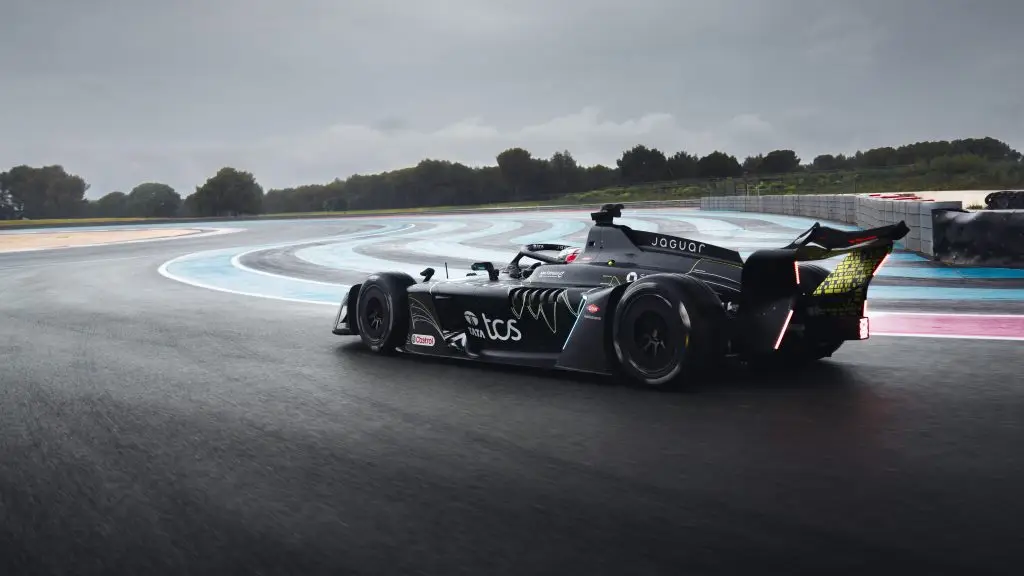
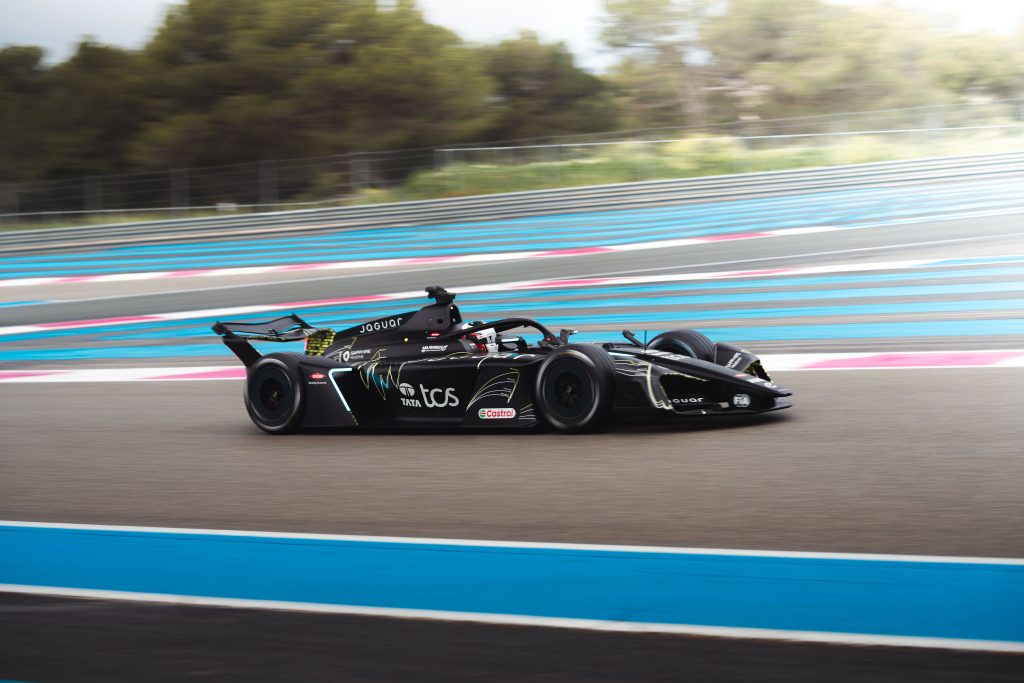
Jaguar TCS Racing might have ended Formula E’s GEN3 era as Teams’ World Champion, but there has been precious little time to admire the silverware. With another Jaguar-powered team joining the grid, TCS extending its involvement, an empty seat alongside António Félix da Costa and an extraordinary new GEN4 car waiting in the wings, the short off-season is proving anything but quiet.
There is a slightly odd feeling about talking about Jaguar TCS Racing during the Formula E off-season this year, because normally this is the point where we would take a moment to look back, consider what went right and wrong during the preceding campaign and perhaps allow the team a little time to enjoy its successes before starting all over again. Jaguar certainly has something worth celebrating after ending Season 12 as Teams’ World Champion, its second teams’ title in three seasons, but almost as soon as the silverware was safely back at base, attention had to turn towards what comes next because Formula E is about to change rather dramatically.
The championship was secured after a remarkable turnaround which ultimately delivered four victories, ten podium finishes and 288 points, while the Jaguar I-TYPE 7 ended its competitive life with ten victories and 17 podiums across its two GEN3 Evo seasons. There is an important distinction to make here because, despite the terminology sometimes becoming rather confusing, Jaguar won the Teams’ World Championship, while Porsche had already secured the separate Manufacturers’ World Championship. Nevertheless, viewed across the whole GEN3 period, Jaguar-powered cars have enjoyed a particularly successful run and the team heads into the next generation of regulations with something every racing organisation wants before a major reset: proof that the people behind the programme know how to win.
That does not mean there will be much continuity once the cars actually return to the grid. The I-TYPE 7 has finished racing, Mitch Evans has brought his extraordinary ten-year relationship with Jaguar to a close, a replacement driver has yet to be announced and GEN4 represents considerably more than another update of an existing Formula E car. Add another customer team, significant changes to the race format and an expanded technology partnership with TCS and you begin to appreciate why, for the reigning champions, this particular winter feels rather more like the beginning of something than the end.
More Jaguars, more information
One of the biggest pieces of news since the season ended is that there will be even more Jaguar-powered machinery racing when GEN4 begins, following confirmation that Fortescue Zero Racing will join long-standing customer Envision in using Jaguar technology. Fortescue has acquired the existing Penske Formula E operation and, subject to the required approvals, will become the first Australian-owned team in the championship. When its two cars are added to the two Envision entries and Jaguar’s own works machines, that means we should have six Jaguar-powered cars on the grid when the new season starts.
At first glance, it would be easy to see this simply as another supply agreement, but in Formula E the benefits of having another pair of cars running your technology go considerably deeper. Every driver brakes differently, approaches energy saving differently and places different demands on the car, while each engineering group will inevitably explore its own set-up directions. Put six cars through practice, qualifying and a race and you create an enormous amount of information about how the powertrain is behaving in different circumstances, which becomes particularly useful when everybody is learning an entirely new set of regulations at the same time.
Ian James summed up the significance neatly when he said that “having six Jaguar-powered cars competing for points, podiums and wins” demonstrated the strength of Jaguar’s Formula E programme. There is also rather more technical substance behind the Fortescue name than might initially be obvious, because the organisation is far from new to advanced electric engineering. Its background incorporates Williams Advanced Engineering and, perhaps most interestingly in this context, Fortescue already supplies the PIT BOOST charging technology used within Formula E, so Jaguar is not simply welcoming a new racing customer but an organisation that already understands the peculiar demands of extracting performance from batteries, charging systems and electric drivetrains in a competition environment.
That should become increasingly important because GEN4 gives manufacturers greater technical responsibility than they have enjoyed before. Jaguar’s development perimeter includes the motor, inverter, gearbox, cooling systems, driveshafts, rear suspension, active differential and the software controlling them, with the next regulations creating further opportunities around systems such as front and rear brake-by-wire and DC/DC conversion. The chassis and battery remain common components, which controls expenditure and prevents the championship from disappearing into an engineering arms race, but there is still a considerable amount of freedom in determining how effectively all those shared and manufacturer-developed pieces work together.
This is where having six cars starts to become very interesting indeed, because the gains available in modern electric motorsport are not necessarily found by discovering one enormous breakthrough. They can come through understanding hundreds of very small interactions – how much energy can be recovered under braking without upsetting the balance of the car, how aggressively torque can be distributed, how temperatures are controlled and where fractions of efficiency can be recovered over the course of a race. Multiply the opportunities to learn by putting your hardware into three teams rather than two and the logic behind Jaguar’s expanding customer programme becomes much clearer.

GEN4 turns everything up
If that sounds rather technical, the headline numbers produced by GEN4 are much easier to understand because they are, frankly, rather startling. The outgoing GEN3 Evo car races at 300 kW, but GEN4 raises that to 450 kW, which is roughly 600bhp, before allowing as much as 600 kW – around 815bhp – in qualifying and ATTACK MODE. Regenerative braking rises to a maximum of 700 kW, and there is more usable energy available as well, but perhaps the most fundamental difference is that the next generation Formula E car will make far more comprehensive use of its front motor.
GEN3 Evo introduced four-wheel-drive capability in defined circumstances, but GEN4 moves much further towards genuinely active all-wheel drive, with Jaguar saying there is around five times more power available through the front axle than before. That inevitably changes what the driver can ask of the car, particularly under acceleration and through slower corners, but it also gives the engineers another layer of control to exploit when balancing outright performance against how much energy is being consumed.
Put all of that together and Formula E expects the cars to be capable of more than 335km/h, or 208mph, with 0-100km/h taking somewhere around 1.8 seconds and 0-200km/h approximately 4.4 seconds. Those figures sound extraordinary enough in isolation, but the comparison with earlier Formula E machinery perhaps tells the story better. Jaguar’s own Monaco simulations have suggested its GEN4 prototype could be travelling at around 277km/h as it emerges from the tunnel, more than 30km/h faster than the outgoing I-TYPE 7 and approaching 80km/h quicker than Jaguar’s original GEN1 Formula E car. For a championship that only welcomed Jaguar back into international racing ten years ago, that is an enormous rate of development.
What I find particularly interesting, though, is that Formula E has resisted the temptation simply to turn everything up and make the races shorter. Efficiency remains central to what the championship is trying to achieve, and that is why the GEN4 car effectively has two personalities, with high- and low-downforce aerodynamic configurations being used to create two distinctly different styles of racing at double-header events.
The new ‘E-Prix Unleashed’ format will be a 30-minute race using the higher-downforce specification, with six minutes of ATTACK MODE and no PIT BOOST. The intention is fairly obvious: give the drivers more grip, allow them to exploit more of the car’s enormous performance and create a sprint race in which outright pace assumes greater importance. The conventional E-Prix then remains a longer 45-minute contest using the lower-downforce body configuration, where reduced drag, energy management and strategy once again come to the fore, alongside eight minutes of ATTACK MODE and the mandatory PIT BOOST rapid-charging stop.
I rather like the thinking behind it because Formula E has occasionally struggled to communicate just how quick its cars have become. Watching drivers lift early and save energy makes perfect sense once you understand the strategy unfolding beneath it, but to a more traditional motor racing audience it can appear counter-intuitive when the purpose of racing is assumed to be travelling as quickly as possible. GEN4’s new format should give us both sides of the equation: one race demonstrating what these cars can do when performance is pushed towards the foreground, followed by another where the clever use of energy matters every bit as much as raw speed.

Where TCS fits into all of this
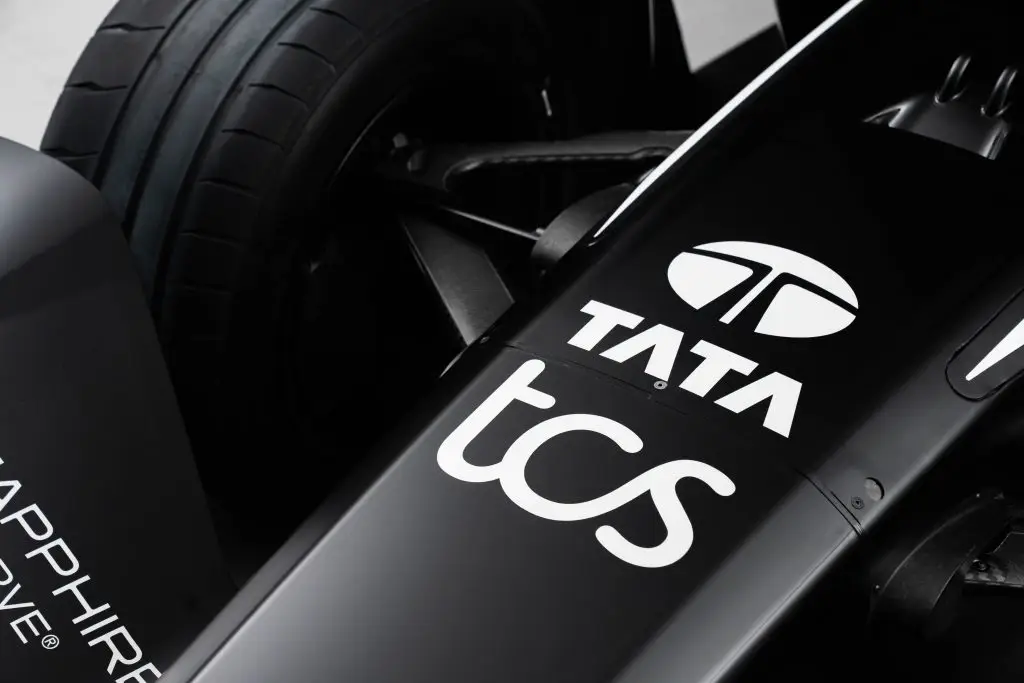
Once you start looking at GEN4 in those terms, the second major announcement from Jaguar during the break begins to make more sense as well. Tata Consultancy Services has extended its title partnership with Jaguar TCS Racing for multiple years and will also expand its technical involvement by becoming the team’s Official AI Partner, building upon a relationship that has now accompanied Jaguar through both its 2024 and 2026 Teams’ World Championship victories.
That phrase – AI Partner – risks sounding a little like corporate jargon unless we put it into the context of what actually happens during a Formula E weekend. A modern race car produces an extraordinary amount of information and the engineering challenge is no longer simply collecting it, but working out quickly enough which bits actually matter. Battery and track temperatures, energy targets, regenerative braking, power delivery, torque distribution, tyre condition, traffic and the behaviour of rivals can all alter what the driver and engineers should do next, while every decision taken affects several of those variables in return.
TCS already supports Jaguar with cloud computing, simulation and the Virtual Vehicle Validation Model, or V3M, which enables engineers to test software changes and explore different scenarios virtually before committing them to the physical racing car. The expanded partnership is intended to take that process further, using AI and data analysis to identify useful patterns and help the team make decisions more effectively. JLR Motorsport Chairman Chris Thorp describes it as “a clear vision for how data and AI can elevate motorsport performance”, and with GEN4 giving manufacturers more control over software and vehicle systems, the timing is hardly accidental.
There is also an obvious Jaguar road-car connection here. Formula E has always been presented by the company as a technical laboratory as well as a racing programme, but that relationship becomes particularly interesting now Jaguar itself is preparing to enter a completely electric era with Type 01. Nobody is suggesting that components simply move from a Formula E car into a luxury GT, because the requirements are entirely different, but knowledge certainly can. Understanding how to manage battery temperatures, distribute torque, maximise regeneration or extract greater efficiency from software is valuable whether the resulting vehicle has a racing number on its nose or a registration plate on its tail.
In that sense, Formula E now feels more closely aligned with Jaguar’s road-car direction than at any point since the racing programme began. When Jaguar arrived in the championship in 2016, electrification was still something the company was beginning to explore publicly; ten years later, both its racing operation and road-car business are entering new electric generations at almost exactly the same time.

The seat everybody is watching
For all the talk about software, batteries and kilowatts, of course, there remains one question that most Jaguar supporters will probably ask before any other: who is going to drive the second car?
We know António Félix da Costa remains and there is plenty of logic in retaining the experience of a former Formula E World Champion at a time when the team is learning a completely new machine. His first Jaguar season ended with another Teams’ Championship to his name, so he provides some valuable continuity in a garage where one of the longest-running partnerships in modern motorsport has just come to an end.
Mitch Evans and Jaguar effectively grew up in Formula E together. He was there when the marque returned to international motor racing in 2016 and remained there for the entirety of Jaguar’s first decade in the championship, developing from a promising young driver into the most successful Formula E racer in the company’s history with 16 Jaguar victories. He finished his final season third in the Drivers’ Championship and, perhaps more importantly from the team’s perspective, departed with ten years of accumulated knowledge about the engineers, systems and peculiar tactical demands of Formula E.
Replacing that is about more than finding somebody capable of driving quickly. Formula E asks a great deal of its drivers mentally, particularly when races become complicated by energy targets, ATTACK MODE, changing strategy and constant communication from the pit wall, so whoever steps into the second Jaguar will be learning not only a new team but an entirely new generation of racing car at the same time. As we go to press, Jaguar has not announced who that will be, with its latest official communication simply confirming that António’s new teammate will be named later in 2026. It remains the most obvious missing piece of the Jaguar GEN4 picture and, understandably, one we will be watching particularly closely.

A new car deserves new circuits
The surroundings are changing too, because Season 13 begins with a Jeddah double-header on 18 and 19 December 2026 before developing into a record 21-race championship. Familiar Formula E cities, including Monaco, São Paulo and Tokyo remain, but there is a greater emphasis on permanent circuits as well, with Circuit of the Americas and Zandvoort among the additions.
For those of us in Britain, however, the most intriguing change is much closer to home because the London ExCeL venue disappears from the calendar and Formula E instead heads to Brands Hatch on 29 and 30 May 2027. I enjoyed ExCeL for what it was – there was something wonderfully peculiar about racing through an exhibition centre before bursting outside into London’s Docklands – a sort of Monaco crossed with a karting rink type vibe, but it was never going to show us a GEN4 car in quite the same way as Brands Hatch should.
Anyone who has driven or even stood beside Paddock Hill Bend will understand why. Brands is a circuit defined by elevation, compression and commitment, with corners that reveal how confidently a car changes direction and how much trust a driver has in it. Put an 800-plus horsepower Formula E car with active all-wheel drive into that environment and we should gain a completely different appreciation of just how far the technology has moved. There is something quite appealing, too, about the most advanced electric racing Jaguar yet appearing at one of Britain’s most traditional racing venues – new technology being judged on very old-fashioned qualities such as balance, bravery and speed.
All of which leaves Jaguar in a fascinating position as we count down towards December. Normally, becoming World Champion gives a team a stable platform upon which to build the following year, whereas Jaguar has claimed the title only for Formula E to hand everybody an almost clean sheet of paper. The championship-winning I-TYPE 7 has retired, GEN3 is over, Evans has moved on and the technical and sporting regulations have changed substantially, yet around that upheaval there is a reassuring amount of strength. Ian James has delivered a championship in his first season leading the team, da Costa remains, Envision continues with Jaguar power, Fortescue expands the family to six cars and TCS is becoming more deeply involved in the technology that sits behind the racing operation.
Perhaps that is why this particular off-season doesn’t really feel like an off-season at all. Jaguar has reached the end of one Formula E generation at the top, but there is very little opportunity to stand still and enjoy it because the next car is faster, more powerful and more sophisticated; the way the races work is changing, and there is still a new driver waiting to be revealed.
When those six Jaguar-powered cars eventually roll onto the grid in Jeddah, we will be looking at the unusual sight of a reigning World Champion team effectively starting again. After everything Jaguar achieved during GEN3, finding out whether it can do the same all over again might prove to be one of the most interesting stories of the new era.