Editor Wayne Scott was invited down to a Jaguar Classic Driving Experience day to see what it is all about – and find out why you should save up the pennies and give it a go…
There are plenty of driving experiences where, for a few quid, you can spend a handful of laps wrestling a rev limited supercar around a race circuit (or car park!), being upsold spurious ‘insurance’ and extras – before climbing out, collecting a certificate and heading home. The Jaguar Classic Driving Experience couldn’t be more different. This isn’t about chasing lap times or ticking another car off a bucket list; it’s about spending a day immersed in Jaguar’s history, driving some of the company’s most significant road and competition cars on a proving ground where the next generation of Jaguars is being developed, and leaving with an understanding of the marque that simply can’t be gained from standing behind a rope at a museum or admiring them at a show.
The idea first came to me during a visit to Jaguar Classic, when somebody suggested I should experience one of its driving days rather than simply write about them. It sounded like a dangerous suggestion – spending a day driving Jaguar’s own historic collection around one of its most important development facilities was hardly likely to end with me deciding it wasn’t worth the money. Even before I arrived, I suspected this would be one of those experiences that stayed with me for a very long time.
A few weeks later, on a glorious June Saturday morning, I turned through the security gates at Fen End.
I’ve visited the proving ground countless times over the years. Long before Jaguar Land Rover owned it, I knew it as Prodrive’s facility, attending product launches, prototype drives and the occasional car club track day. Back then it was little more than an old airfield with a handful of functional buildings. It served its purpose perfectly well, but creature comforts were hardly the priority. Today it is almost unrecognisable.
Jaguar Land Rover acquired Fen End in 2014, transforming one of Britain’s foremost vehicle testing facilities into a state-of-the-art engineering centre. Before that, it had served as RAF Honiley, where Hurricanes, Spitfires and later de Havilland Vampires operated during and after the Second World War before the airfield finally closed in 1958. That aviation heritage still lingers in the vast open spaces and long straights, although today they are more likely to be occupied by camouflaged prototypes than fighter aircraft.
Millions have since been invested in the site. Modern engineering buildings, a smart visitor centre and a hospitality suite now overlook the circuit, while barriers, coded gates and access-controlled roads remind you that tomorrow’s Jaguars and Land Rovers are being developed here, far from curious eyes. It lends the place an atmosphere unlike any circuit I’ve visited before. You are acutely aware that this isn’t an attraction created for visitors; you’re being allowed behind the scenes at somewhere the public rarely gets to see.
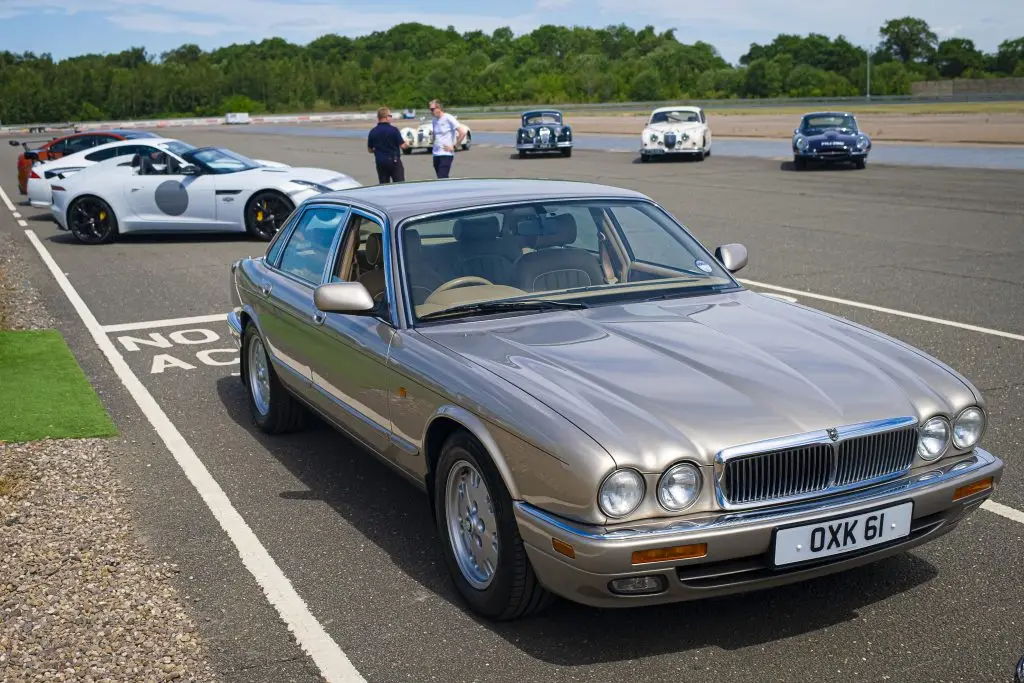
That sense of exclusivity begins almost immediately. After checking in at reception, there’s no walk to the hospitality suite because it is simply too far away – deep within the facility. Instead, a chauffeur appears in what might be the most appropriate shuttle imaginable: an immaculate Jaguar XJ8 (X308). It would have been easy to use a pool car, but details matter here. Before you’ve even reached the briefing room you’ve already been reminded that this experience has been designed by Jaguar Classic, for enthusiasts.
Over coffee and breakfast pastries, the lead instructor explain how the day will unfold. There is a safety briefing, an introduction to the circuit and a fascinating insight into Fen End’s history before attention turns to the cars themselves. Track etiquette is covered too because this remains a working proving ground.
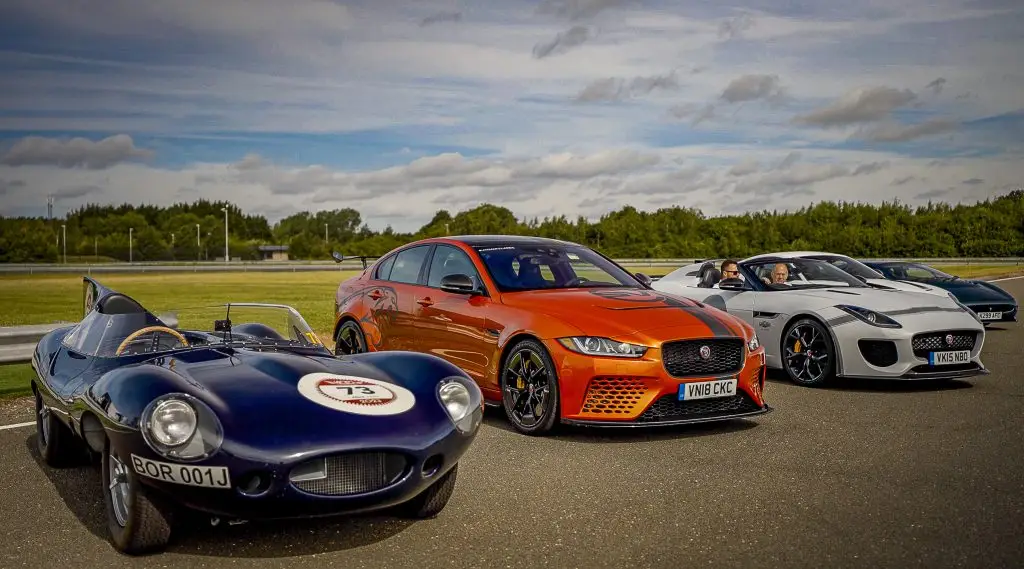
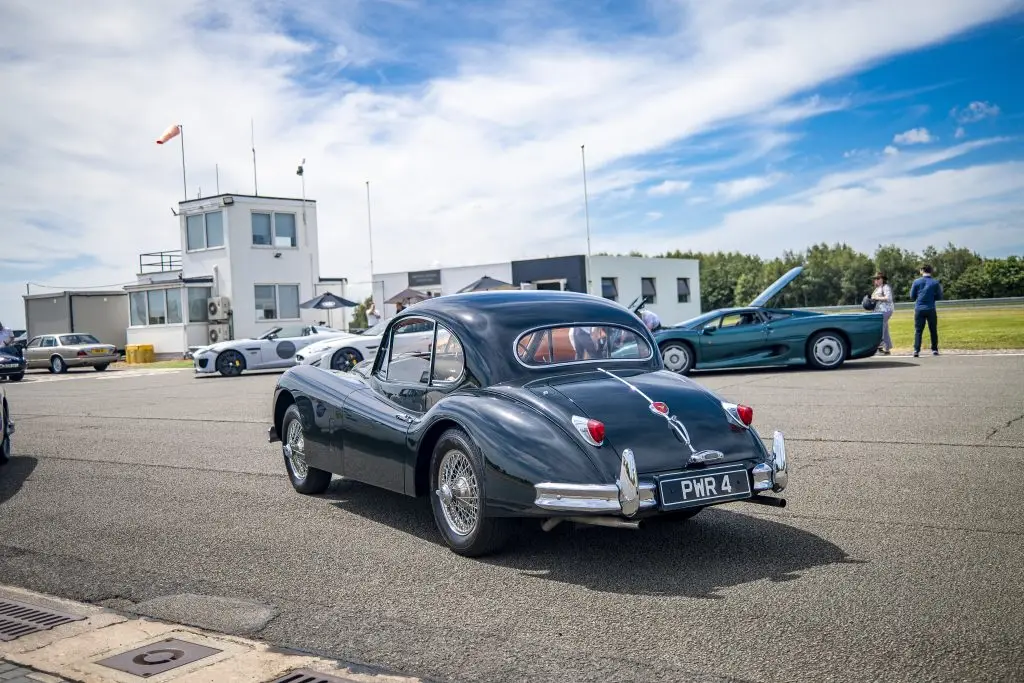
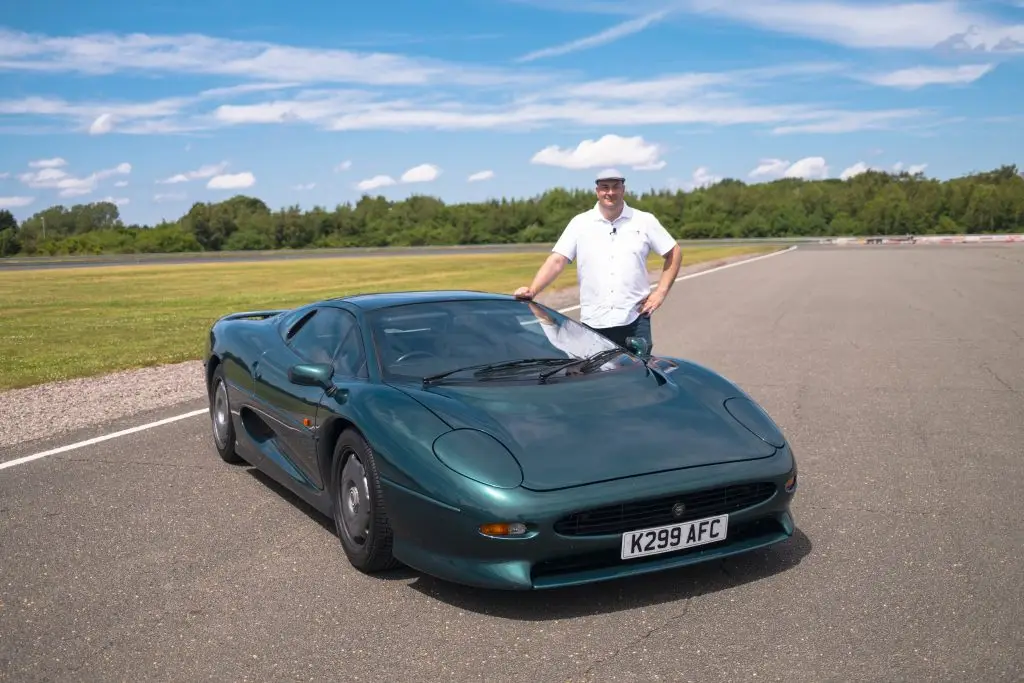
Parked outside is a line-up that would stop almost any Jaguar enthusiast in their tracks. Arranged in a neat V-formation are cars that collectively tell the story of the marque, from the XK120 that established Jaguar on the world stage to Project 8, the most extreme production Jaguar ever built. Between them sit an XK140, a John Coombs’ inspired FIA Mk2 racer, the beautifully prepared ‘Purple Haze’ E-type, an XKR-S GT and Project 7, while waiting for passenger rides later in the day are two icons in their own right: the D-type and the XJ220.
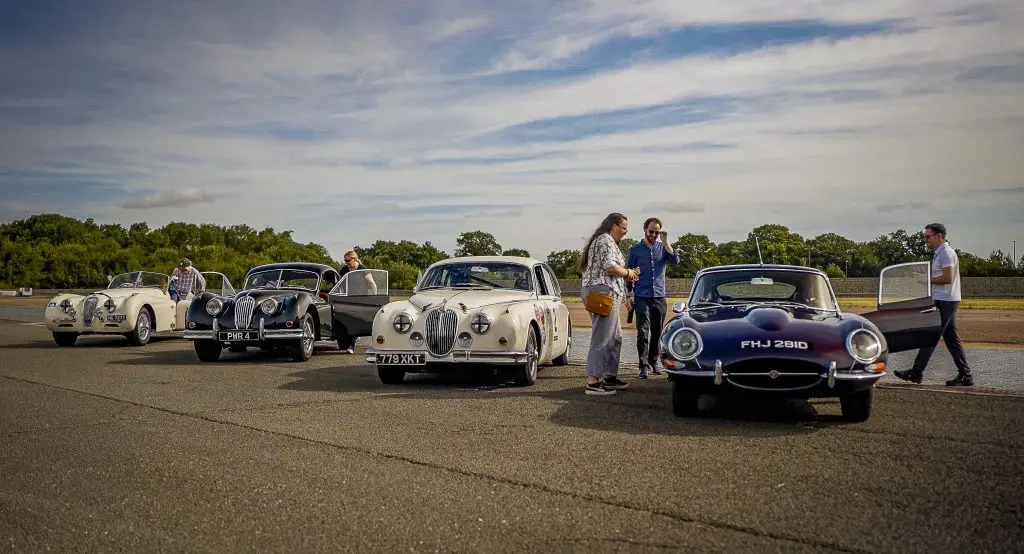
You are free to tackle them in whichever order you choose. Some drivers head straight for the modern machinery before working backwards through history. Tempting though that was, I wanted to experience Jaguar’s evolution exactly as it happened, so there was only one place to begin. The XK120 was waiting.
Everyone taking part is paired with an instructor who remains with you throughout the day, from the first turn of a wheel until the final passenger ride. Mine happened to be a familiar face. Readers of Jaguar Enthusiast will know Ray Ingman as the Magazine’s long-suffering sub-editor (and TrackSport ARDS instructor), but away from the pages of the Magazine he is also one of Jaguar Classic’s dedicated instructors. It made for a reassuring introduction, although it quickly became apparent that, familiar face or not, everyone receives exactly the same level of guidance and encouragement.
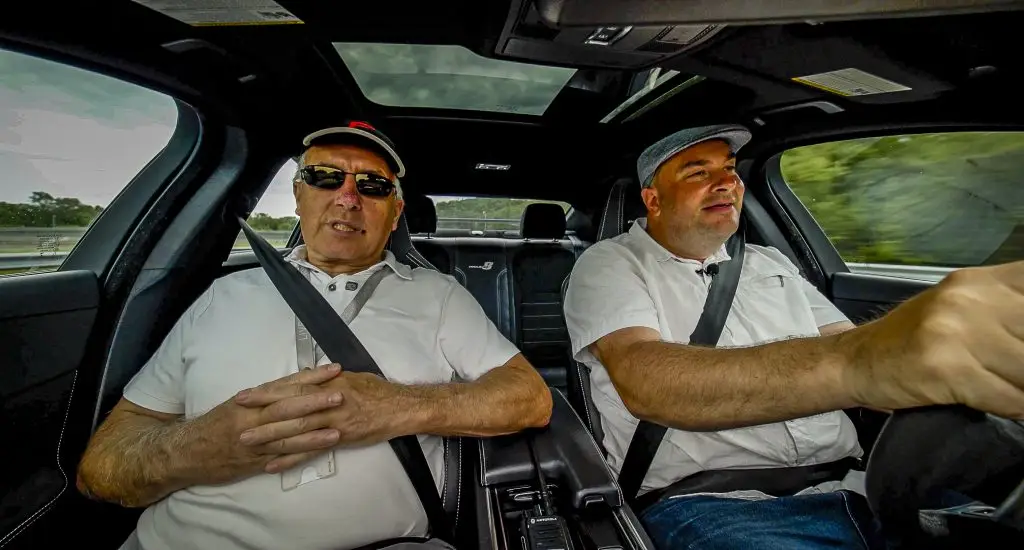
Before I was allowed anywhere near the driver’s seat, Ray climbed behind the wheel for an orientation lap. As we pulled away from the hospitality suite, he talked me through the circuit, explaining the different lanes, the minimum speeds, how to negotiate the security barriers and, perhaps most importantly, the etiquette of driving on an active proving ground. This isn’t a race circuit hired for the day; it remains one of Jaguar Land Rover’s principal development facilities, so if an engineer appears in your mirrors in a heavily disguised prototype with a testing programme to complete, the polite thing to do is move aside and let tomorrow’s Jaguar (or Range Rover) rush past into the distance – and future!
This ensures that you are familiar, and comfortable, with the venue – wasting not a moment when you get behind the wheel.
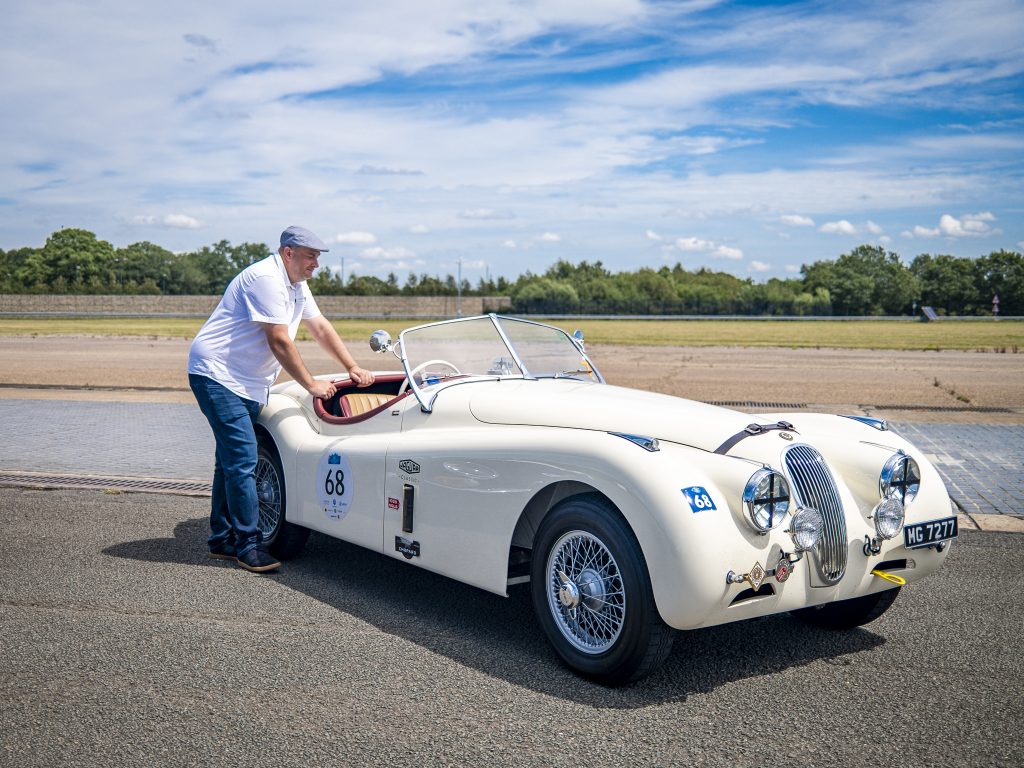
Once it was my turn to drive, Ray’s role became much more than simply offering directions. He watched the mirrors, kept an eye out for traffic approaching from behind, operated the access barriers and, throughout the day, offered just enough advice to help me get the very best from each car without ever making the experience feel over-managed.
“What we really enjoy,” he explained as we waited for the barrier to open, “is seeing people’s confidence grow. Most of us are so used to modern cars that the first few miles in something with a Moss gearbox, manual ‘box’ steering and drum brakes can be quite daunting. Then, suddenly, it clicks. They stop fighting the car, start working with it and you can see the smile getting bigger every lap.”
Few production cars have changed a company’s fortunes quite like Jaguar’s XK120. Launched at the 1948 London Motor Show to showcase the firm’s all-new twin-cam XK engine, it was never intended for production. Sir William Lyons simply needed an attractive way to display Jaguar’s latest engineering masterpiece, but public demand forced the company to think again. Capable of 120mph, it became the world’s fastest production car and immediately established Jaguar as a serious contender on the international stage. More importantly, the XK engine beneath that impossibly long bonnet would power Jaguar’s sports cars and saloons for the next four decades.
What immediately struck me was the condition of the car. These aren’t tired old workhorses enduring clutch dumps and missed gear changes from nervous drivers. Every car comes from Jaguar Classic’s own collection at Ryton-on-Dunsmore and is maintained to an exceptionally high standard. This XK120 was magnificent—one of the finest examples I’ve ever driven.
If you’re reading this thinking, “I already own one, why would I want to drive another?“, let me assure you that even for somebody whose job regularly involves driving old Jaguars, there was something almost childlike about climbing in and out of these cars and comparing them back-to-back.
The first few hundred yards demanded concentration. The Moss gearbox rewards patience rather than haste, the brakes require a firm shove that would feel excessive in anything built this century, and the steering is heavy at low speed before becoming beautifully communicative as the car begins to flow.
What always amazes me about the XK120, though, is the contradiction of the driving position. There seems to be acres of beautifully sculptured bonnet stretching ahead of you, yet somehow almost nowhere to put your legs. At six feet four inches tall, I found myself negotiating an uneasy truce with the steering wheel and wondering how on earth people crossed continents in these cars. Then, after only a couple of laps – I simply stopped thinking about it.
My feet found the pedals instinctively and the car began to feel like an extension of me. Instead of concentrating on where my knees were, I found myself looking much further down the road, listening to the wonderful smoothness of that XK engine and beginning to appreciate exactly why this car caused such a sensation in 1948. The discomfort never disappeared entirely, but it became completely irrelevant because I was enjoying the experience far too much to care.
From sports car to racing car
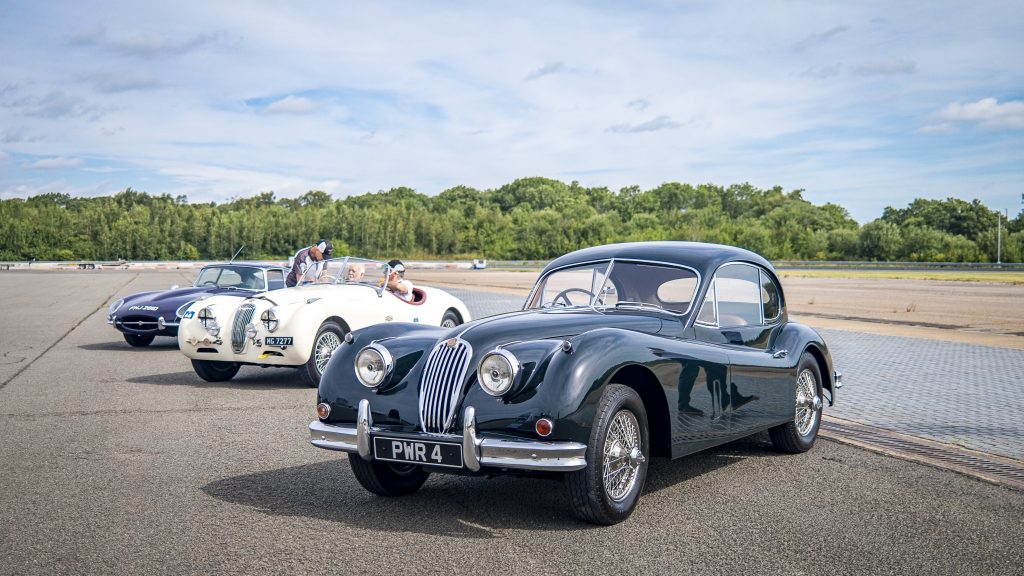
Climbing out of the open XK120 and straight into a fixed head XK140 is one of the great privileges of this experience because it allows you to appreciate something owners have known for decades. The XK140 wasn’t conceived because the XK120 was lacking; it was Jaguar’s way of refining an already outstanding sports car.
Introduced in 1954, it retained the unmistakable silhouette of its predecessor while addressing many of the criticisms owners had voiced. Jaguar liberated a little more room for the driver, improved the steering by the introduction of rack and pinion and created a more civilised grand tourer without sacrificing the character that had made the XK120 such a sensation.
The additional legroom might not sound significant on paper, but for somebody built like me it transformed the driving position. I no longer found myself negotiating quite such an intimate relationship with the steering wheel, while the steering inspired a little more confidence and the whole car felt that touch more relaxed and refined.
Driving the two cars back-to-back was fascinating because every improvement suddenly made perfect sense. Had I climbed into the XK140 on its own, I’d simply have thought, “That’s a lovely old Jaguar.” Experiencing it minutes after the XK120 allowed me to appreciate the quiet evolution taking place beneath the familiar bodywork. You could almost sense Jaguar’s engineers listening to their customers and polishing an already exceptional design into something even better.
The next set of keys belonged to a very different Jaguar.
John Coombs was one of Britain’s best-known Jaguar dealers and racing team owners during the 1950s and ’60s. His competition Mk2s, driven by the likes of Roy Salvadori, Graham Hill, Jack Sears and Mike Parkes, became some of the most successful saloon racers of their era, making the chance to drive one inspired by these icons, a privilege very few enthusiasts will ever enjoy.
Where the XK140 welcomed you with polished wood and gentlemanly charm, the Mk2 greeted me with exposed metal, competition harnesses and an unmistakable sense of purpose. Oddly enough, I felt at home almost immediately. There was considerably more room in the cockpit, the four-point belts pulled reassuringly tight across my shoulders and, looking through the windscreen, there was no doubt whatsoever about what this car had been built to do.
Knowing Ray as well as I do, he understood my own driving background, so there was perhaps a little more freedom to explore the car’s character than some drivers might choose. That prompted me to ask whether he changes his approach depending on who’s sitting beside him.
“Absolutely,” he replied. “You quickly get a feel for each driver and what they want from the day. Some people simply want to enjoy being in the cars and soak up the atmosphere at road speeds, and that’s absolutely fine. Others are more interested in understanding the handling and performance, so we’ll help them explore that within the limits we have to work to. The important thing is making sure everyone gets the experience they’re hoping for.”
That flexibility is one of the great strengths of the day. Whether you’re an experienced track driver or somebody whose lifelong ambition has simply been to get behind the wheel an E-type, the instructors instinctively seem to know how much guidance to offer.
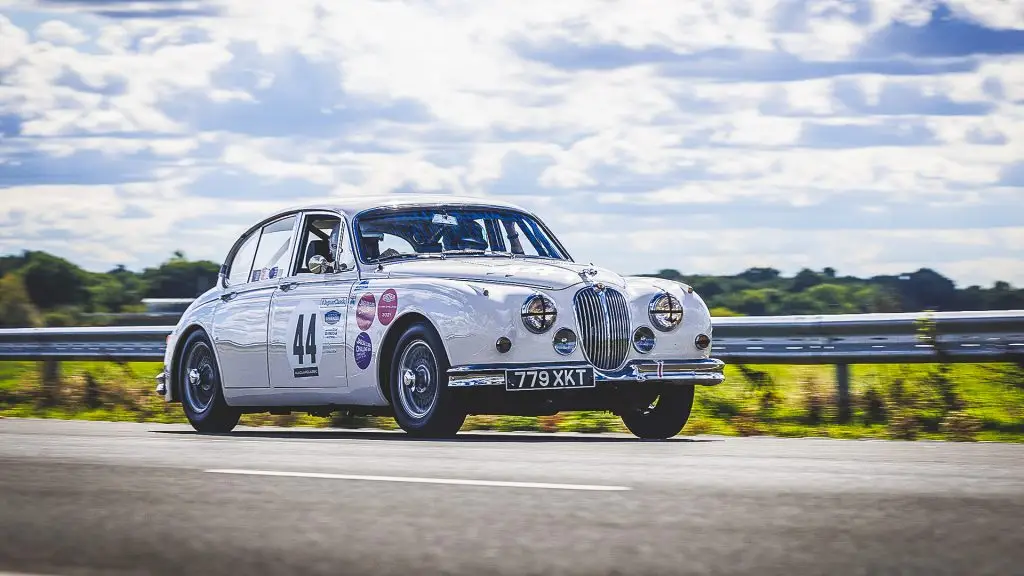
The Mk2 itself is utterly intoxicating. Gone are the carpets, veneer and civility of the road car. In their place is a machine stripped back to the essentials, lighter, louder and fizzing with mechanical energy. The race-prepared XK engine bellows just inches ahead of the bulkhead, every gear change accompanied by a purposeful whine that no modern performance car can hope to replicate.
Then there is the smell. How do you describe the aroma of warm oil, hot brakes, race fuel and decades of motorsport history wrapped into one cockpit? It is one of those things that simply has to be experienced because no amount of writing can recreate it. If the engine provides the soundtrack, the smell provides the atmosphere, transporting you back to an era when touring car racing was gloriously raw, wonderfully physical and just a little bit heroic.
Reluctantly, I climbed out, but waiting next to me, was a genuine John Coombs masterpiece.
‘Purple Haze’
If there is one Jaguar almost everyone dreams of driving, it is an E-type.
Enzo Ferrari’s description of it as “the most beautiful car ever made” may have become cliché through repetition, but standing beside one today it remains difficult to argue. The example waiting for me, however, wasn’t just any E-type.
Known affectionately as ‘Purple Haze’ (because of its unique factory colour scheme), this beautifully prepared machine is a car shaped by John Coombs in period. Retaining all the elegance that made the E-type an icon, it benefits from carefully judged engine and breathing modifications that give Jaguar’s legendary XK engine a noticeably sharper edge without compromising its character.
Sliding behind the wheel, everything immediately feels more modern than the earlier XK models. The driving position is more natural, the controls lighter and within a few hundred yards the car seems to shrink around you.
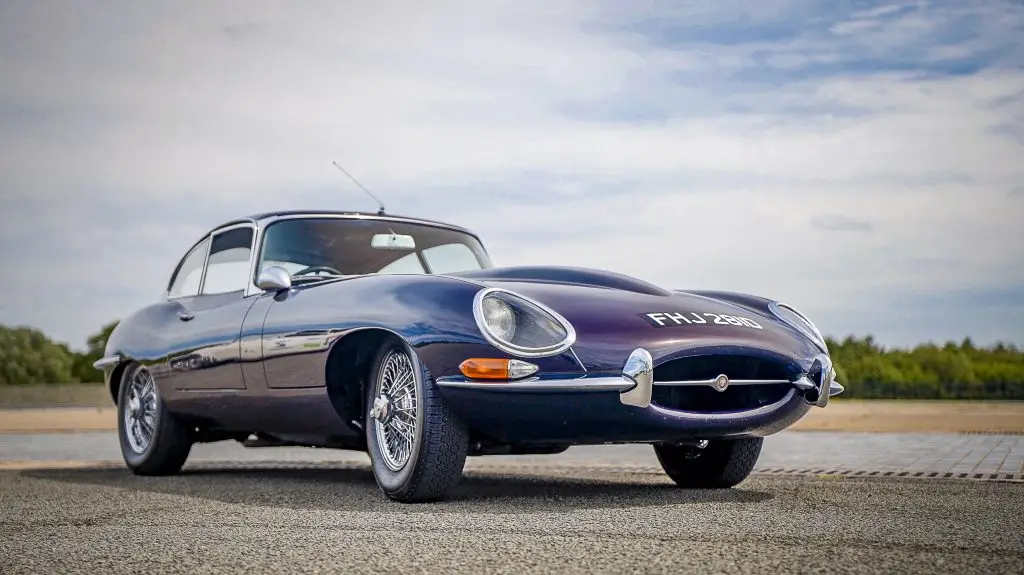
The 4.2-litre XK engine pulls effortlessly from low revs, but it’s the Coombs modifications that really define the experience. Every time the engine comes on cam, the car surges forward with renewed enthusiasm, accompanied by a hard-edged bark that ricochets around the proving ground and encourages you to seek out the next straight. Gear changes are rendered more ‘user friendly’ by the presence of an all-synchro transmission.
The steering dances delicately in your hands, the nose instinctively finds the apex and every input reminds you why the E-type earned such legendary status among drivers as well as admirers. It is every bit as rewarding from behind the wheel as it is to admire standing still.
By now the morning had carried me from the birth of the XK engine through Jaguar’s golden era of sports cars and touring car racing. Waiting after lunch would be three of the fastest road cars the company has ever built.
Lunch could hardly have arrived at a better moment.
The hospitality suite buzzed with conversation as everyone compared notes and debated favourites. One driver couldn’t believe how loud and raw the Mk2 had been, another was still grinning about Project 7, while somebody else had clearly fallen hopelessly in love with the E-type.
It struck me that, despite everyone driving exactly the same cars, no two people seemed to be taking away quite the same memories. That’s one of the Jaguar Classic Driving Experience’s greatest strengths. The instructors never tell you what your favourite should be; they simply help you discover each car for yourself.
Waiting outside after lunch were three of the fastest and most technically advanced road cars Jaguar has ever produced—and they were about to demonstrate just how far the company had travelled from the elegant XK120 I’d driven only a few hours earlier.
Modern icons
Walking from the E-type to the XKR-S GT felt rather like stepping through a time portal.
The XKR-S GT was one of those wonderfully uncompromising projects that probably couldn’t exist today. Revealed in 2013 and limited to just thirty examples, it was developed by Jaguar’s newly formed Special Operations division as the ultimate evolution of the aluminium-bodied X150 XK. Based on the already rapid XKR-S, it gained extensive aerodynamic revisions, adjustable motorsport-derived suspension, bespoke dampers and carbon-ceramic brakes. Officially, Jaguar described it as a road car capable of lapping the Nürburgring faster than any production Jaguar before it. Unofficially, it felt as though the engineers had simply been told to remove every compromise they could find.
Only a couple of weeks earlier I’d experienced this very car from the passenger seat at the Goodwood ‘Mike Hawthorn’ trackday with Le Mans winner Andy Wallace at the wheel. Now it was my turn.

The transition from the heritage cars was immediate. The steering felt feather-light by comparison, the brakes required little more than a gentle squeeze and the whole car responded with a precision that would have seemed unimaginable back in the era of the XK120.
Yet what impressed me most wasn’t the outright performance but how it delivers that within the package of comfort and relaxed driving intrinsic to the X150 XKs.
The supercharged 5.0-litre V8 delivers its power with enormous authority, gathering speed with effortless determination rather than brute force. Despite all its circuit-focused hardware, the suspension never feels nervous or uncompromising, and before long you begin to understand exactly what Jaguar set out to achieve.
If the XKR-S GT represented the ultimate evolution of the XK bloodline, Project 7 was something altogether more raw.
Unveiled as a concept at the 2013 Goodwood Festival of Speed before entering limited production the following year, Project 7 celebrated Jaguar’s seven outright victories at Le Mans. Just 250 examples were built, each hand-finished by Jaguar Land Rover’s Special Vehicle Operations team and instantly recognisable by the distinctive aerodynamic fairing behind the driver’s head, recalling the legendary D-type.
The moment I accelerated onto the circuit, I understood why so many owners describe it as one of the greatest driver’s Jaguars ever built. The steering is wonderfully responsive and its lightness takes a moment to adjust to. The car is the epitome of balance and the supercharged V8 answers every movement of the throttle with a bellow that reverberates around the proving ground, each upshift punctuated by that addictive crack from the exhaust that has become synonymous with Jaguar’s V8 performance cars.
Project 7 changes direction with remarkable eagerness, remaining beautifully composed as the pace rises. Rather than intimidating you, it encourages you to explore a little further, brake a little later and carry just a little more speed through each corner.
Then came Project 8 and even before climbing aboard there was a sense that this would be different. Since its launch in 2017, Project 8 has achieved almost mythical status, becoming not only the most powerful production Jaguar ever built with its 592bhp supercharged V8, but also the car that demonstrated exactly what Jaguar’s Special Vehicle Operations division was capable of when freed from convention.
Developed in a limited run of less than 300 cars, Project 8 was conceived to prove that a four-door Jaguar saloon could outperform some of the world’s most exotic sports cars. Every vent, every aerodynamic surface and every engineering decision exists for one purpose alone: to make the car faster.
That philosophy becomes obvious the moment you climb aboard. Where Project 7 feels playful, Project 8 immediately feels purposeful, confident and grippy – though the short feeling wheelbase may catch some out on a more spirited drive. The seating position is lower, the cabin wraps itself around you and everything hints at serious intent.
Jaguar fitted Project 8 with carbon-ceramic brakes and they are nothing short of astonishing. “Hit the brakes”,Ray shouted, “Hit them hard!” The first time I leaned on the pedal with any conviction, the car stopped with such force that I thought internal organs may have been rearranged. Ray explains about the first time he drove the car during its launch events, “They were so effective that I almost needed to accelerate again before reaching the corner I’d originally planned to brake for!”
“This is exactly why we encourage people to experience these cars properly,” he explained. “It’s easy to think performance is all about horsepower, but every one of these cars has something that makes it special. Sometimes it’s the steering, sometimes it’s the chassis, sometimes it’s the brakes. We want people to discover those differences because that’s what the engineers were trying to achieve.”

Like every Project 8, the car is left-hand drive because the transfer box for its sophisticated all-wheel-drive system occupies the space where the steering column would otherwise sit. It’s one of those fascinating engineering compromises that says everything about the programme. Rather than accepting a less capable solution for the sake of convenience, Jaguar simply built the car the way it needed to be built.
Driving Project 7 and Project 8 back-to-back gave me a brilliant insight, and it will for you as well when you book on to the experience day.
Project 7 is wonderfully extroverted. With the roof removed and that glorious supercharged V8 filling the air around you, every mile feels like an occasion. Project 8 is different. There is still enormous character beneath the surface, but relentlessly efficient. Every input produces exactly the response you hoped for, making it one of those rare cars that encourages you to drive faster simply because it feels so utterly composed and confidence-inspiring.
Together they represent two of the finest performance Jaguars ever built, and comparing them only minutes apart is an experience very few enthusiasts will ever enjoy.
As I climbed out of Project 8, I couldn’t help reflecting on the extraordinary journey the day had already taken me on. In the space of a few hours I’d travelled from the delicate controls of the XK120, through Jaguar’s golden era of motorsport and into the astonishing capabilities of Special Vehicle Operations.
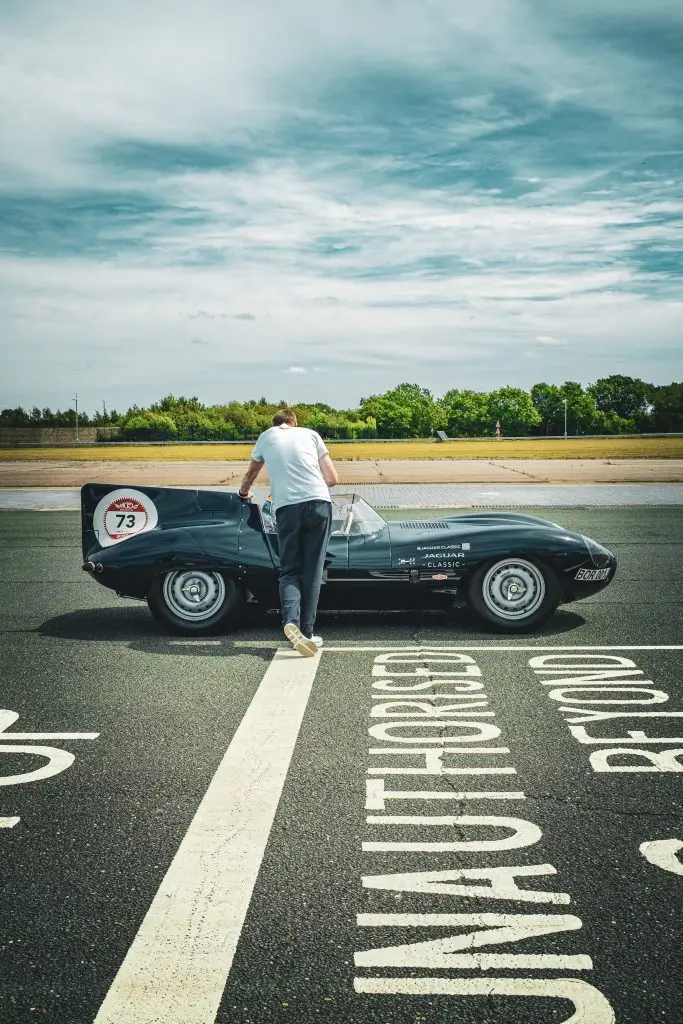
It would have been a fitting place to end the day, except that there was one final experience still waiting. A machine woven into the very fabric of Jaguar’s history – the D-type.
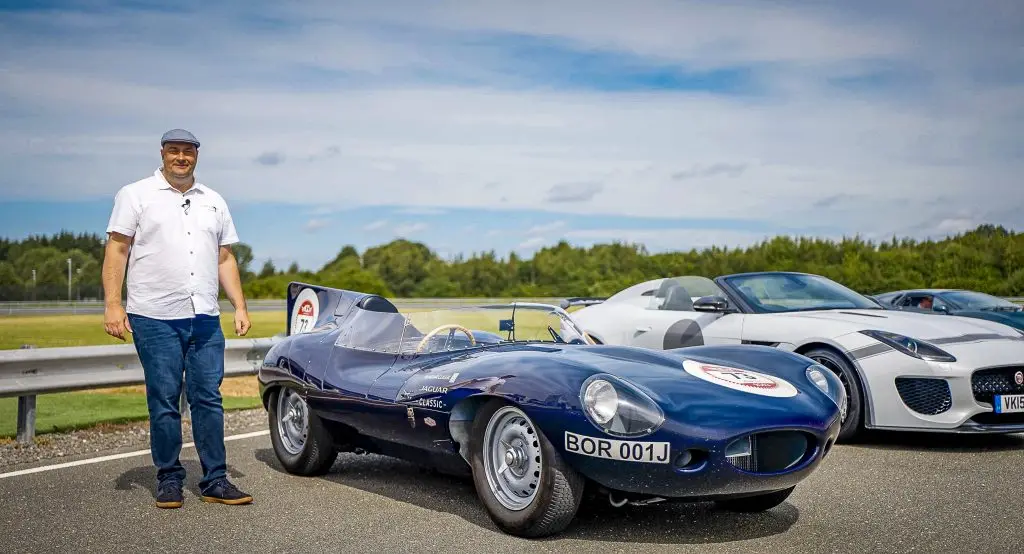
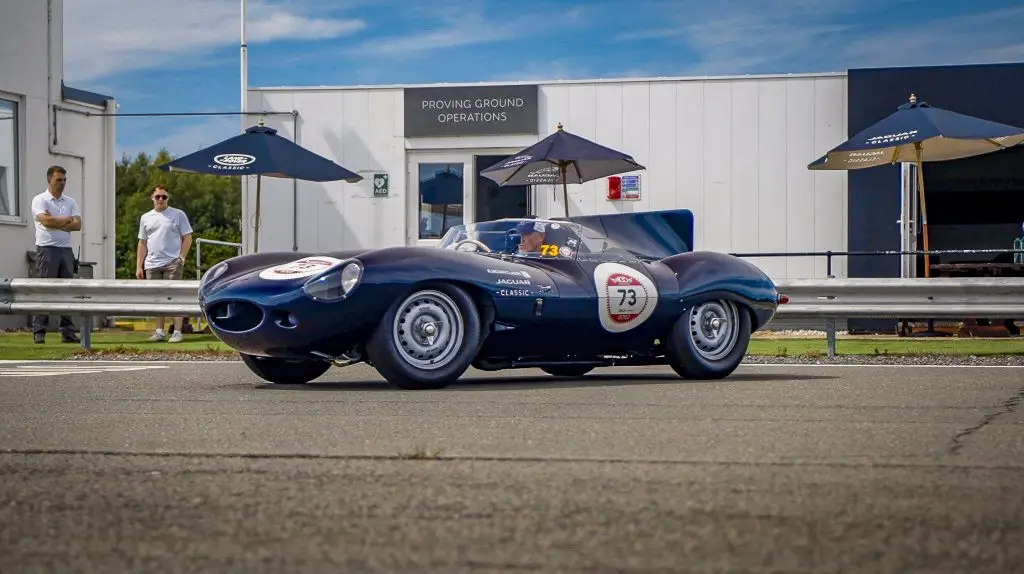
On your experience day, you will experience this incredible machine from the passenger seat alongside one of Jaguar Classic’s professional drivers and, in truth, you wouldn’t want it any other way. The D-type deserves to be experienced being driven by somebody who truly understands what it was designed to do and this is what you will have in store…
Introduced in 1954, it represented a revolution in racing car design. Malcolm Sayer’s aerodynamic thinking, combined with Jaguar’s pioneering monocoque construction and the proven XK engine, created a machine unlike anything else on the grid. Three consecutive victories at Le Mans between 1955 and 1957 cemented Jaguar’s reputation as one of endurance racing’s dominant forces and established a legacy that still defines the marque almost seventy years later.
You sit low, your legs stretched almost horizontally ahead of you, with little separating you from the aluminium bodywork or the mechanical components beneath it. Every surface has been shaped by function rather than fashion. The engine bursts into life with a crisp metallic bark unlike any of the road-going Jaguars I’d driven throughout the day. There is no veneer of refinement here. This is a racing engine, impatient to get moving.
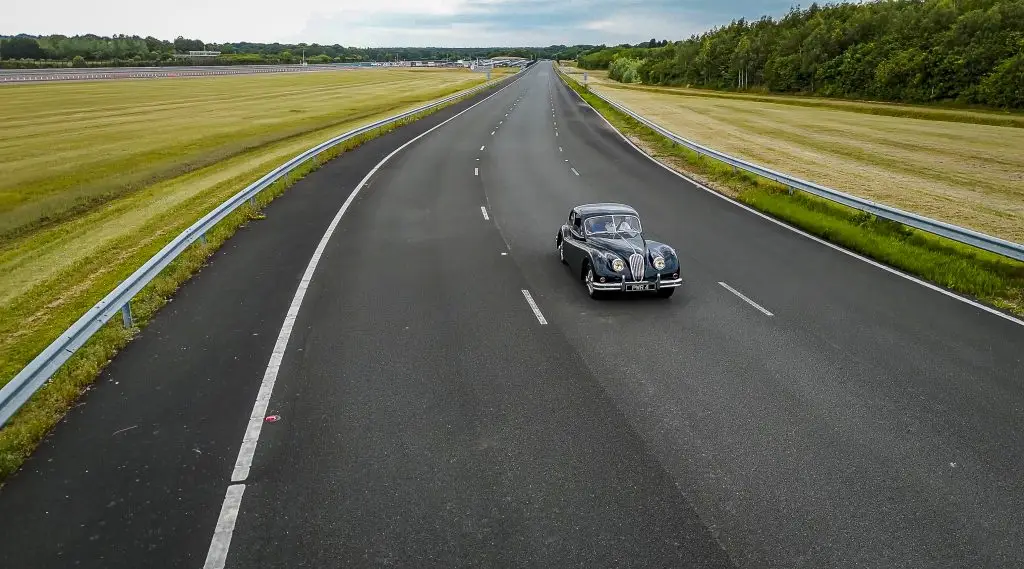
As the mile- long straight opened up in front, I found myself imagining the Mulsanne Straight in the mid-1950s. Headlights piercing the darkness, the XK engine singing hour after hour while drivers such as Mike Hawthorn, Ivor Bueb and Ron Flockhart chased victory through the French night. For a few brief minutes, that history didn’t feel distant; it felt and smelt very real. I’d like you to explain more of what the D-type is like, but I can’t do it justice. You’re simply going to have to experience it for yourself!
Is it worth it?
It isn’t simply an opportunity to drive some exceptionally valuable Jaguars, although that alone would justify the trip. It is the chance to understand how the company evolved, one remarkable car at a time. From the revolutionary XK120 to the Le Mans-winning D-type, from the Coombs racers to the extraordinary achievements of Jaguar’s Special Vehicle Operations team, every car tells another chapter of the same story.
By the end of the day, I realised I hadn’t simply driven a collection of Jaguars. I’d driven through almost seventy years of Jaguar history. For me, the session was a combination of exhilaration, admiration and, perhaps above all else, a sense of privilege.
Because that’s ultimately what the Jaguar Classic Driving Experience delivers.
As enthusiasts, we’re often guilty of admiring these cars from behind ropes at concours events, in museum displays or through the pages of books and magazines. We talk about them, debate them, and dream about them, but very few of us ever experience them as their creators intended or get a chance to compare them back-to-back.
Jaguar Classic gives you that unique opportunity and for one unforgettable day, history stops being something you simply look at – you properly experience it. I, for one, will remember that day for a very, very long time indeed.
If you have any questions regarding this experience, please contact the Classic Experiences Team by email: classicevents@jaguarlandrover.com
*Please note that there will be an additional charge for spectators. Please send an email to the address listed above for more information.