
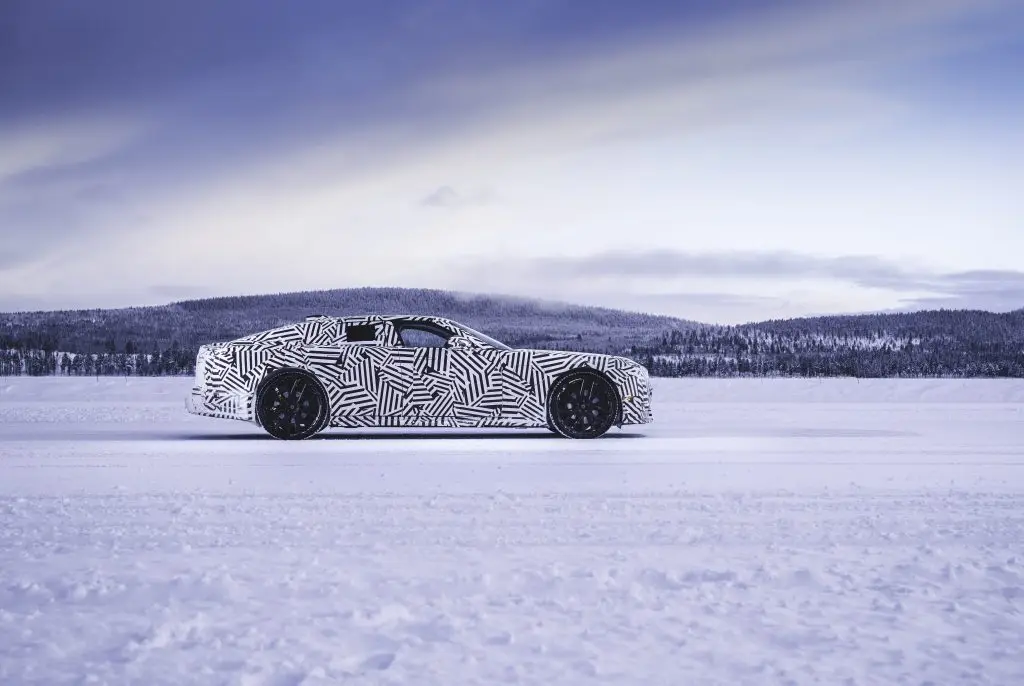
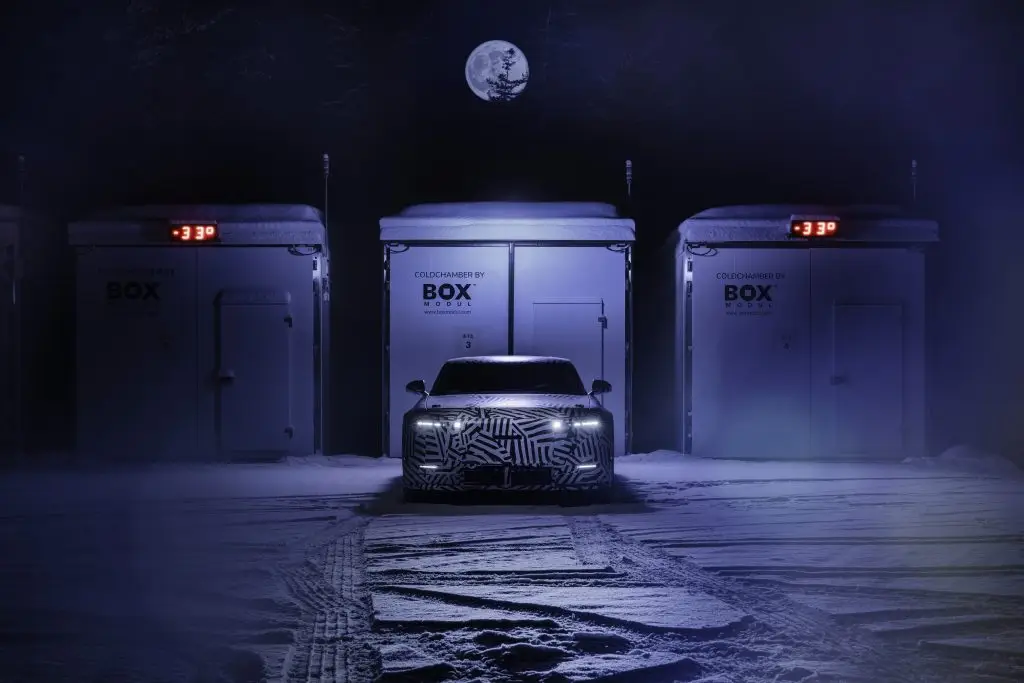
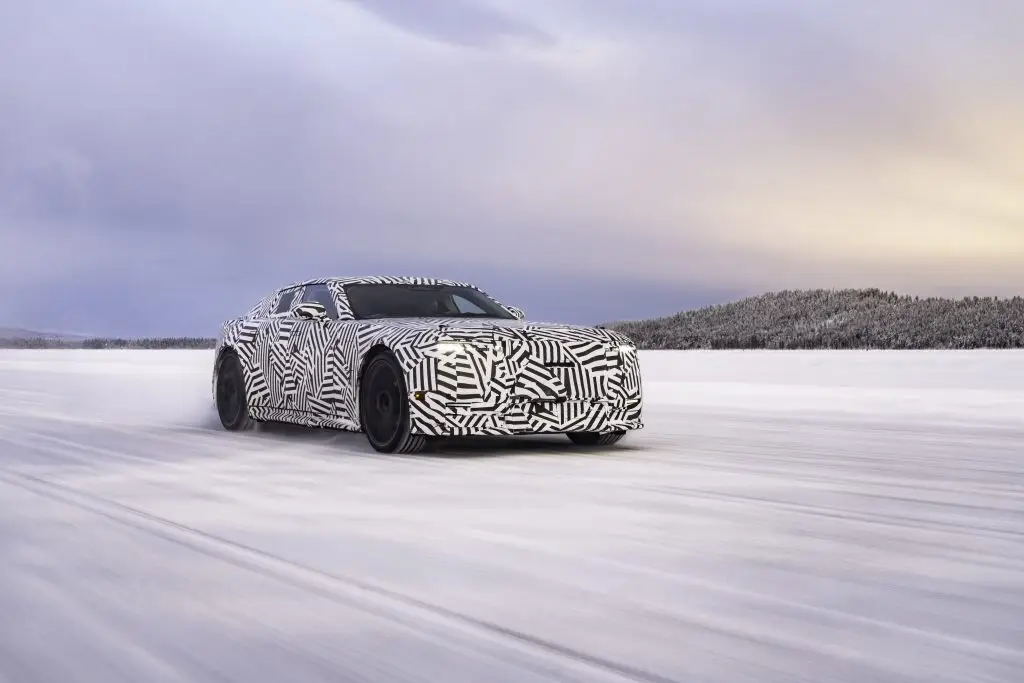
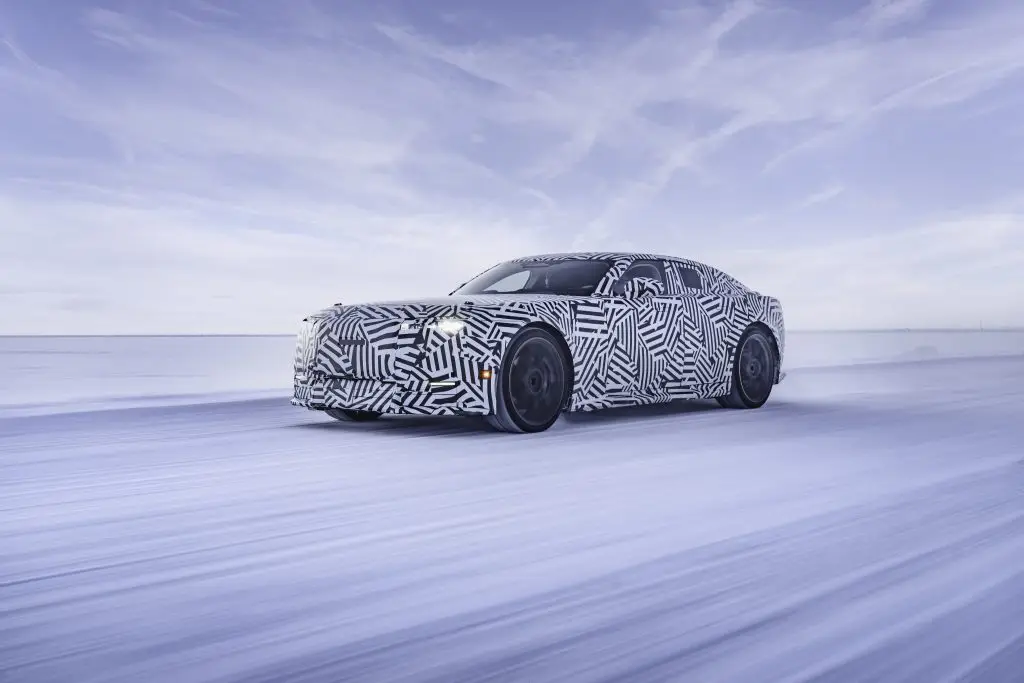
On the frozen lakes outside Arjeplog, deep inside Sweden, near the Arctic Circle, prototypes of Jaguar’s new all-electric four-door GT have just completed their latest and most revealing phase of winter testing. With temperatures plunging to –40°C, this is a real test for the prototype machines and a chance to refine their calibration, control, and character.
Jaguar describes this as the most comprehensive development programme in its history, with more than 150 prototypes covering hundreds of thousands of miles across deserts, frozen lakes and advanced virtual environments. Sweden plays a crucial role in that process, exposing how the car behaves when grip is scarce and systems are pushed to their limits — conditions that reveal a car’s true nature rather than disguise it.

Engineering focus, at last!
On the ice, engineers are concentrating on the fine details that define how the GT will feel on the road. The interaction between its tri-motor all-wheel-drive system, intelligent torque vectoring, air suspension, active twin-valve dampers and all-wheel steering is being carefully tuned to deliver calm, instinctive responses rather than attention-grabbing behaviour.
With more than 1,000PS on tap, this will be the most powerful Jaguar road car ever made. Yet power is not the central theme here. Winter testing is being used to ensure that the car remains composed and reassuring in low-grip conditions, while still offering the relaxed, long-distance character expected of a luxury GT.
Matt Becker, Jaguar’s Vehicle Engineering Director, puts it simply, “The car is designed to be comfortable when you want it to be, engaging when you ask more of it, and always with power in reserve.“
Whilst the media have whipped up a storm around the assumption that Jaguar has abandoned its history, the reality is that the Jaguar engineers have done the exact opposite. They drove just about every performance GT in the Jaguar Daimler Heritage Trust and used the feel and experience they gained from testing those old models to ensure the new car behaves just like a Jaguar should. It is a car designed to deliver all the handling characteristics of a traditional Jaguar in the current EV age. Just because we are driving electric, doesn’t mean it shouldn’t feel like a Jaguar.
So, after Jaguar Enthusiast Magazine joined the development engineers for a drive around the facility at Gaydon, others have been flown out to Sweden to test drive the car themselves. So, what did they think?
What the journalists found
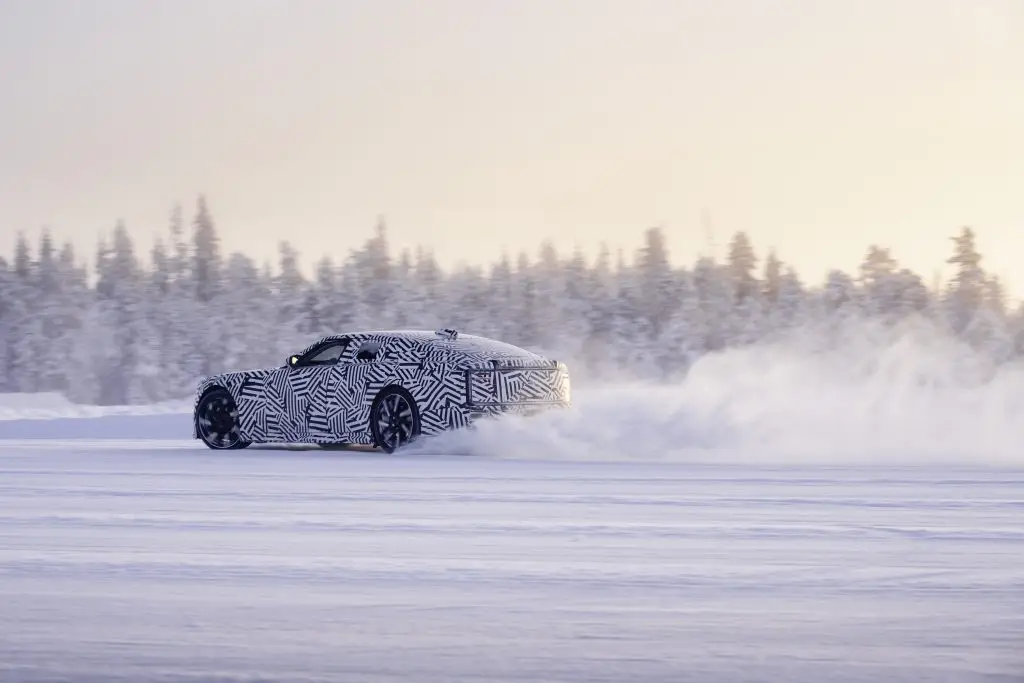
That philosophy of Jaguar going back to its roots in terms of handling and driving experience is reflected strongly in the impressions of journalists who joined Jaguar in Arjeplog and drove the prototypes on snow and ice. Across the reports, there is a clear consensus that this is not a car engineered to chase the sharp-edged sports saloon brief set by rivals such as the Porsche Taycan.
Auto Express was particularly struck by the GT’s ride quality and demeanour, noting that “the plushness of its ride and calmness of its steering are closer to a Bentley <than a Porsche Taycan> … the body is free to move on its springs and absorb bumps in the snow-covered surface.” It is a telling observation, and one that positions the new Jaguar firmly in the luxury GT space rather than among hard-riding performance EVs. It’s an opinion that aligns with our own from January’s edition of Jaguar Enthusiast Magazine.
PistonHeads echoed that view, suggesting that outright acceleration figures are not the defining feature. Instead, the focus is on balance, comfort and cohesion — a character they described as feeling more authentically Jaguar than chasing EV headline stats. Despite the scale of its performance and expected long-range capability, the car was reported to feel measured and composed rather than aggressive.
Autocar also highlighted how, despite being an entirely new kind of Jaguar mechanically, the way it rides and responds still carries familiar traits. The emphasis on suppleness, stability and driver confidence drew comparisons with past Jaguar saloons and GTs rather than modern performance benchmarks. Even when provoked into controlled slides on ice, the car was described as progressive and predictable.
Cold weather, warm ambitions
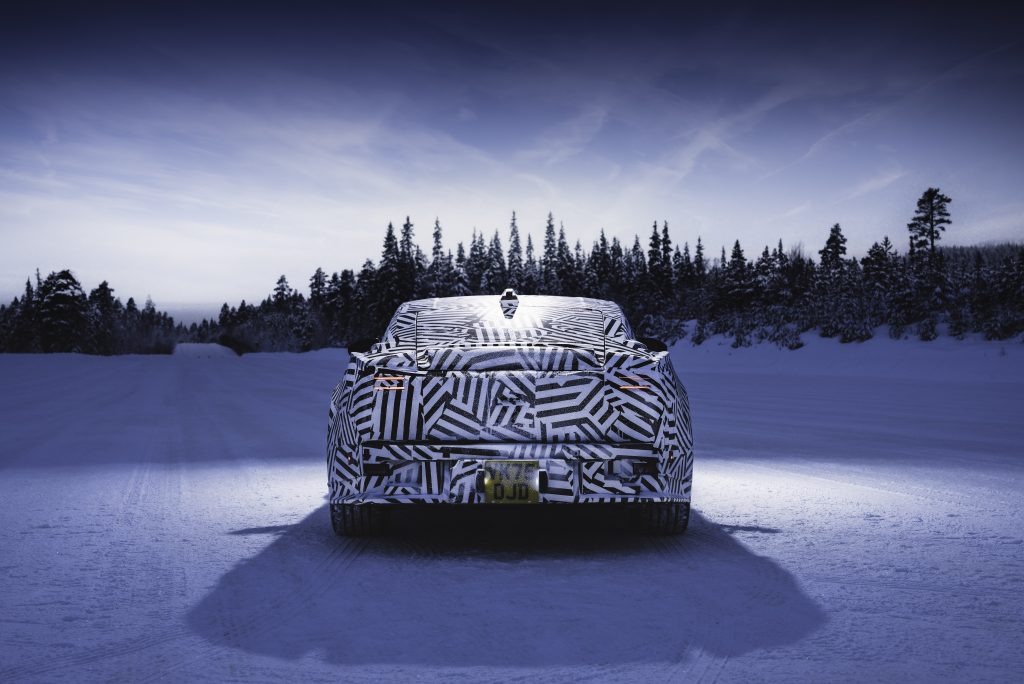
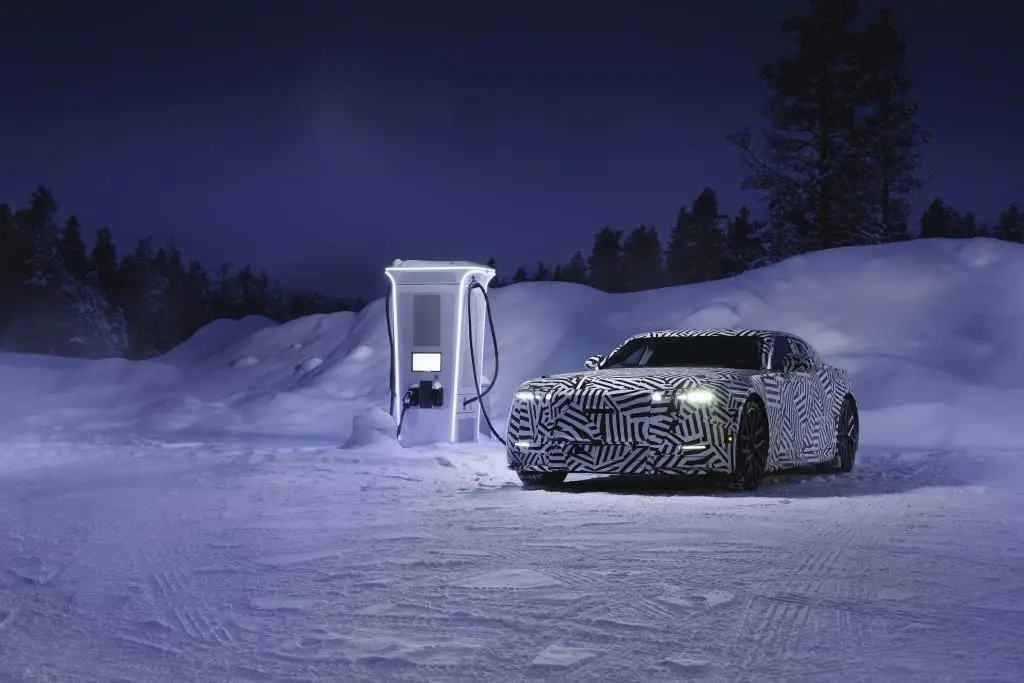
The Arctic conditions are also being used to validate Jaguar’s new ThermAssist™ thermal management system, designed to reduce heating energy consumption by up to 40 per cent while maintaining range in extreme cold. For a luxury electric GT intended for long-distance use, this is a critical part of the engineering story rather than a footnote.
All of this work feeds into a car that Jaguar positions as the first true production expression of its new design and engineering era, previewed by the Type 00 concept. The full reveal will come later this year, but the message from Sweden is already clear.
It seems that both engineers and journalists all point towards a modern electric grand tourer — fast when required, but defined primarily by refinement, composure and effortlessness. On the ice at Arjeplog, that intent is already firmly established.
See the video:
Gallery of images:





One Response
Waiting to see the real. Getting used to the shape too. My cars from Jaguar span from 1952 to the 2019 IPACE.
Regards, best of luck for the future.